Polish Foreign Minister Radosław Sikorski has urged US President Donald Trump to put greater pressure on Russia rather than Ukraine to end the war, arguing that diplomatic efforts should focus on the country responsible for launching the invasion rather than the nation defending itself.
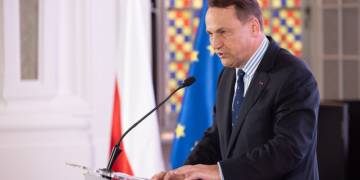
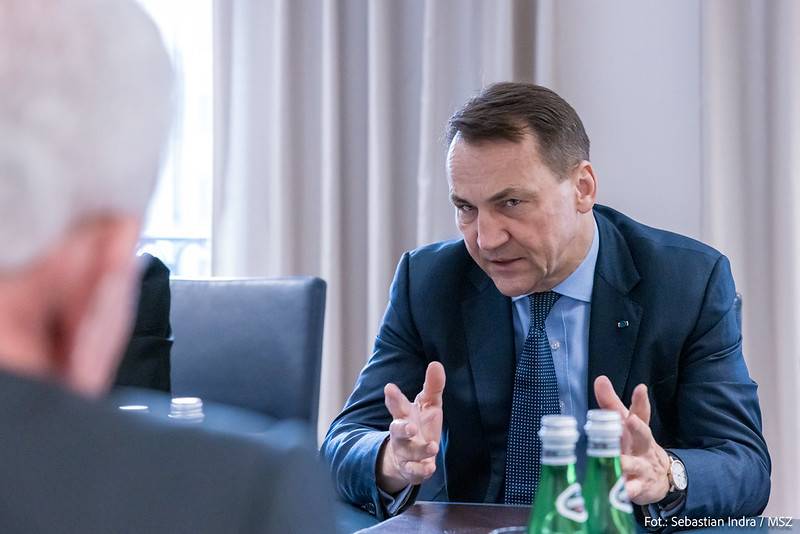
Speaking in an interview with Bloomberg published on Monday, 12 October, Sikorski said Poland appreciated Trump’s involvement in attempts to end the conflict but believed that American pressure would be more effective if directed towards Moscow.
The Polish foreign minister said the objective should be to pressure the aggressor rather than the victim of aggression, according to the interview.
- Find more news from Poland on our Homepage .
His comments came amid renewed tensions between Washington and Kyiv following Trump’s criticism of Ukrainian President Volodymyr Zelenskyy, a controversial American agreement concerning Russian diesel exports and uncertainty over a purported ceasefire covering attacks on energy infrastructure.
The intervention reflects Warsaw’s concern that diplomatic efforts to end the war should not place disproportionate demands on Ukraine while Russia continues its military campaign.
Poland challenges the direction of US pressure
Sikorski’s central argument was that successful negotiations require stronger incentives for Russia to end its invasion rather than further restrictions on Ukraine’s ability to defend itself.
The minister said Poland valued Trump’s engagement in diplomatic efforts, but believed results would come from putting pressure on Moscow.
In remarks circulated from the Bloomberg interview, Sikorski called for pressure on the aggressor, not the victim.
His comments were directed at the approach Washington has taken during its latest attempts to bring Russia and Ukraine towards a negotiated settlement.
Trump has repeatedly expressed frustration with Zelenskyy over the difficulty of securing an agreement.
On 10 October, the American president suggested Ukraine needed new leadership, arguing that Zelenskyy had failed to take opportunities to reach a peace deal.
The comments marked a further deterioration in relations between the two presidents.
Zelenskyy rejected the suggestion that Washington should determine Ukraine’s leadership, maintaining that the choice belonged to Ukrainian voters.
Ukraine has remained under martial law since Russia’s full-scale invasion in February 2022, preventing normal wartime elections from taking place.
Sikorski did not present the disagreement as an irreparable diplomatic rupture. According to reporting of his interview, he expressed hope that the two presidents would resolve their differences.
Trump’s energy ceasefire announcement deepens tensions
The Polish minister’s intervention followed another development that exposed differences between Washington’s diplomatic announcements and the positions of the two countries fighting the war.
On Sunday, 11 October, Trump announced that Russia and Ukraine had agreed to an immediate halt to attacks on each other’s energy infrastructure.
However, neither Moscow nor Kyiv had publicly confirmed accepting a mutually agreed arrangement when the announcement was made.
The Kremlin subsequently said discussions were continuing but stopped short of confirming that Russia had accepted the ceasefire.
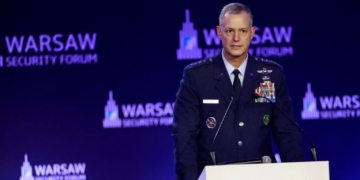
Speaking remotely at the Warsaw Security Forum on Monday, Zelenskyy questioned the effectiveness of the announcement, saying Russian forces had continued striking Ukrainian power facilities.
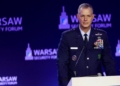
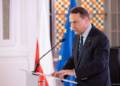
In his official address to the Warsaw conference, Zelenskyy said Ukraine supported the idea of a reciprocal halt to energy attacks but would respond if Russia refused to comply.
The Ukrainian president reported further damage to energy infrastructure, including a power station in Kharkiv.
The exchange highlighted a fundamental obstacle to the proposed arrangement: Trump’s announcement did not establish that both sides had accepted the same terms or agreed to stop attacks.
It also came as Washington sought to ease international fuel shortages through an agreement concerning Russian diesel supplies.
Russian diesel deal adds another source of disagreement
Trump’s agreement with Moscow to allow additional Russian diesel exports has attracted criticism from American lawmakers and European officials.
The arrangement was presented by Washington as an attempt to ease fuel prices at a time of significant disruption to global energy markets.
However, critics have argued that allowing additional Russian fuel exports could provide Moscow with revenue while it continues its invasion of Ukraine.
An Associated Press investigation into the diplomatic and energy developments reported that Sikorski had also raised doubts about Russia’s capacity to supply additional diesel, pointing to fuel shortages affecting the country.
Ukraine has targeted Russian oil refineries and other energy facilities with long-range drones, seeking to damage infrastructure that supports the Russian economy and military operations.
Trump has criticised those Ukrainian strikes, arguing that attacks on Russian refining capacity worsen global fuel shortages.
Kyiv, meanwhile, has maintained that it is entitled to attack infrastructure supporting Russia’s war effort while Russian missiles and drones continue striking Ukrainian cities and energy facilities.
The disagreement illustrates how global energy prices have become increasingly intertwined with Washington’s approach to the war.
Warsaw maintains its support for sanctions against Moscow
Sikorski’s latest comments are consistent with Poland’s longstanding position that economic and diplomatic pressure should be concentrated on Russia.
In June, the Polish Foreign Ministry confirmed that Sikorski had called for tougher sanctions during a meeting of EU foreign ministers.
He urged European governments to tighten restrictions affecting Russian financial, military, industrial and energy interests.
Poland has also supported measures targeting Russian covert operations in Europe and efforts to limit Moscow’s ability to finance the war.
As Ukraine’s western neighbour, Poland has played a major role in supporting Kyiv since the full-scale invasion, including through military assistance, logistics and diplomatic coordination.
Warsaw has generally supported continued American engagement in European security while arguing that Ukraine must retain the means to defend itself.
That position is increasingly significant as European governments shoulder greater responsibility for financing military assistance to Kyiv.
Despite his criticism of the direction of American pressure, Sikorski did not call for Washington to abandon its diplomatic efforts.
Instead, his argument was that successful diplomacy would require greater pressure on Russia to change its conduct.
A growing difference over how to end the war
The diplomatic dispute comes at a difficult moment for Ukraine, which faces continuing Russian attacks and mounting pressure on its electricity and heating infrastructure ahead of winter.
Zelenskyy has indicated that Kyiv remains open to an energy ceasefire, provided Russia accepts and observes equivalent restrictions.
Moscow has not publicly accepted the immediate arrangement described by Trump.
The United States remains an important source of military technology and intelligence for Ukraine, even as European partners finance an increasing share of its weapons requirements.
For Poland and other countries bordering or supporting Ukraine, the concern is that a negotiated settlement should not leave Russia free to resume its military campaign.
Sikorski’s Bloomberg interview therefore adds another European voice to the disagreement over how Washington should use its influence.
His message was not that the United States should stop trying to negotiate peace, but that pressure intended to end the war should be directed primarily at Moscow rather than Kyiv.