Poland’s Foreign Ministry has warned citizens planning to visit Christmas markets in Germany to remain vigilant and follow local security instructions, citing the history of terrorist attacks and attempted attacks in the country. The advice comes as the festive season begins and millions of visitors prepare to attend traditional Christmas markets across Germany.
The ministry’s guidance was highlighted on Monday, 23 November, through Poland’s Odyseusz travel-information system, which provides official advice to Polish citizens travelling abroad.
According to Polish Radio’s reporting on the advisory, travellers are encouraged to exercise particular caution during events in public spaces and follow instructions from local police and security personnel.
- Find more news from Poland on our Homepage .
The ministry’s warning refers to the possibility of terrorist attacks in Germany, particularly in crowded locations such as railway stations, airports and shopping centres.
However, Polish authorities have not announced a specific imminent threat against a German Christmas market or advised citizens to cancel their trips.
Poland advises vigilance during the Christmas market season
Germany’s Christmas markets are among Europe’s most popular seasonal attractions, drawing visitors to historic city centres for festive food, crafts and entertainment.
Large crowds and open public spaces can present security challenges, particularly at events where thousands of people gather.
Poland’s Foreign Ministry advises travellers to pay attention to official announcements and follow directions issued by local authorities.
The advice also highlights the risk of theft, particularly in major cities and busy tourist districts.
Railway stations, public transport and crowded shopping areas are among the locations where visitors should take additional care with personal belongings.
The ministry recommends avoiding demonstrations and large public gatherings unrelated to organised tourist events, as circumstances can change quickly and police intervention may become necessary.
Travellers who encounter an emergency in Germany can contact the police on 110 or the emergency services on 112.
Germany’s Christmas markets have faced deadly attacks
The security reminder comes against the background of previous attacks on Christmas markets in Germany.
In December 2016, a lorry was deliberately driven into crowds at a Christmas market near Berlin’s Breitscheidplatz, killing 12 people.
Another deadly attack occurred in December 2024, when a vehicle was driven through a Christmas market in Magdeburg, killing six people and injuring hundreds.
Those incidents have influenced how German cities organise and protect large seasonal events.
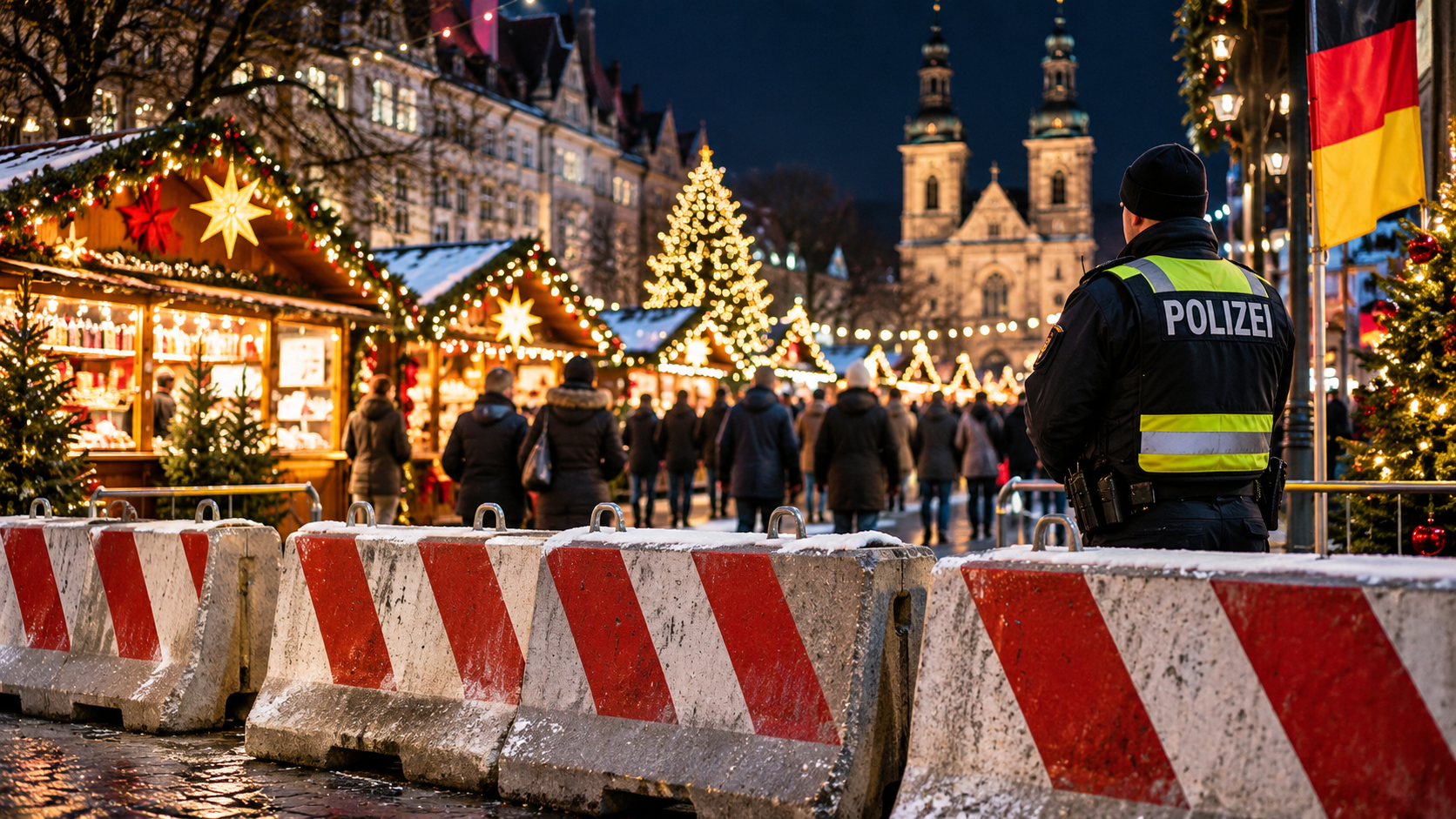
Security measures at Christmas markets now commonly include vehicle barriers, controlled access routes, increased police patrols and emergency-response planning.
According to German public broadcaster MDR, Magdeburg has introduced extensive security barriers around its 2026 Christmas market.
Hundreds of protective elements have been installed to prevent unauthorised vehicles from entering the market area.
The measures reflect continuing security concerns, but they do not mean that a new attack has been identified as imminent.

Has Poland advised against travelling to Germany?
No.
Despite the warning, Germany remains classified at Level 1 — normal precautions in Poland’s official travel-advice system.
This is the lowest of the ministry’s four warning levels.
The distinction matters because a recommendation to remain vigilant is not the same as advising people to avoid a destination.
The ministry’s general warning about the risk of terrorist attacks in Germany also appeared in travel advice issued before the Christmas market season.
The latest reminder brings that longstanding concern into focus as seasonal events attract larger crowds.
Other governments maintain similar guidance.
The United States Department of State advises its citizens to exercise increased caution in Germany because of terrorism risks.
Australia’s official travel advice for Germany also identifies Christmas markets among public places that could potentially be targeted, while maintaining a general recommendation to exercise normal safety precautions.
What Polish visitors should know before travelling
Polish citizens can normally enter Germany using a valid national identity card or passport.
Travellers should ensure their identification documents remain valid throughout their stay and check the latest entry and border-control arrangements before departure.
The Foreign Ministry recommends monitoring local announcements, paying attention to unusual situations and following instructions from police officers or event organisers.
Visitors are also advised to keep valuables secure, particularly when travelling by public transport or moving through crowded market areas.
Polish citizens can use the official Odyseusz travel-information service to check current warnings, register their journey and receive relevant security updates.
The system provides country-specific guidance and enables Polish consular authorities to communicate with registered travellers when necessary.
German Christmas markets remain open
Despite concerns about security, Germany’s major Christmas markets are proceeding with their seasonal programmes. In Poland, Gdańsk’s Christmas market, voted Europe’s best, has also reopened for the 2026 festive season.
Local authorities and organisers have invested in protective measures, including physical barriers and increased security arrangements.
The city of Magdeburg, for example, has announced temporary traffic restrictions connected with security arrangements for its 2026 market.
For Polish travellers, the Foreign Ministry’s message is therefore one of caution rather than avoidance.
Visitors are encouraged to enjoy Germany’s festive attractions while remaining aware of their surroundings and complying with local safety measures.
The advice reflects a broader security challenge facing European cities as they balance popular public celebrations with measures intended to protect residents and tourists.