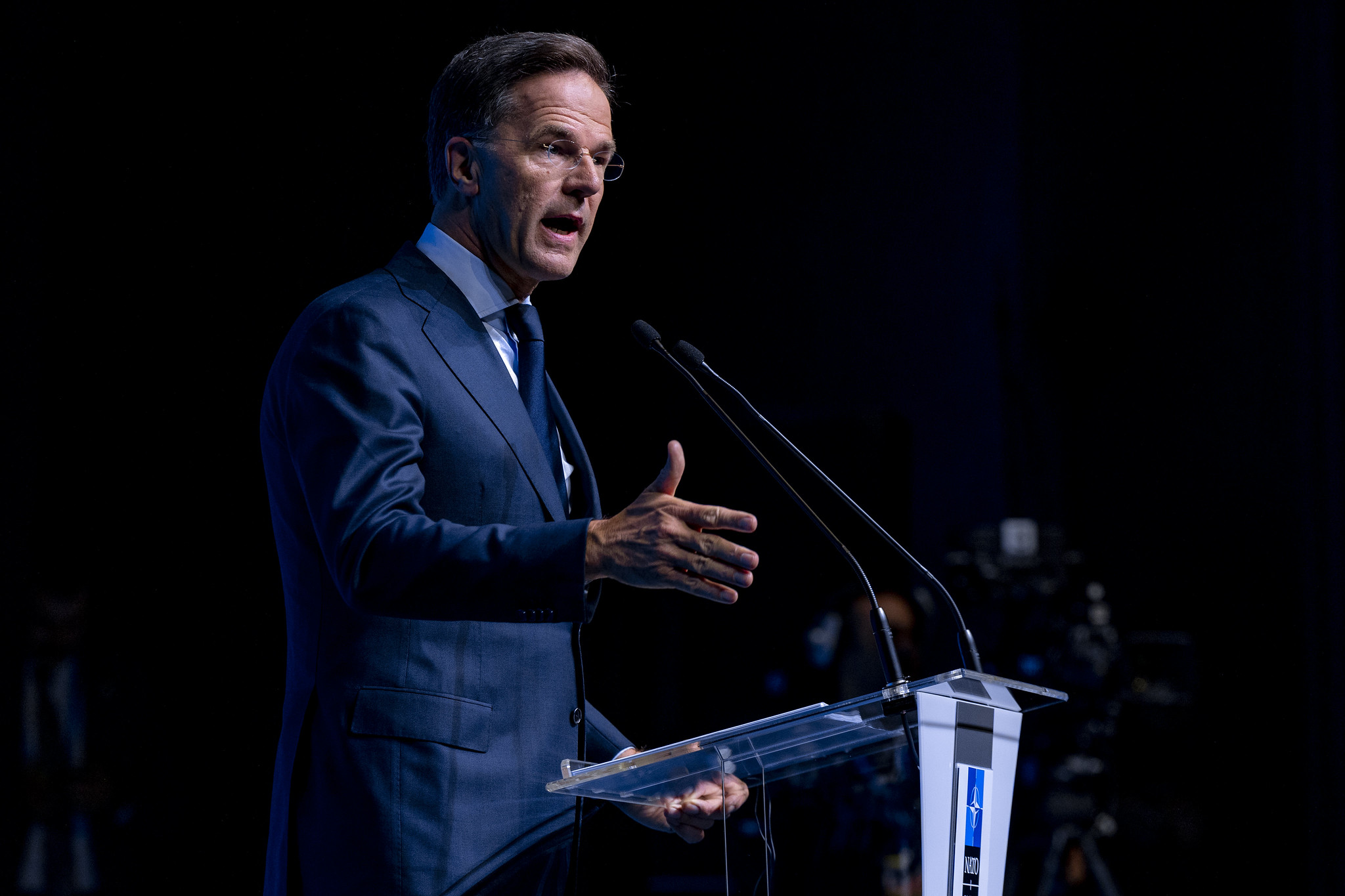
NATO Secretary General Mark Rutte has called for greater defence spending and faster weapons production across the alliance, warning that Russian sabotage, cyberattacks and airspace violations are creating increasingly serious security threats. His remarks came on Monday, 23 November, just days after Russian missiles entered Polish airspace.
Addressing the NATO Parliamentary Assembly in Berlin, Rutte said allied countries were facing an intensifying range of hostile activities, from attacks on transport infrastructure to incidents involving drones and military aircraft.
He argued that the term hybrid threats, commonly used to describe hostile actions that fall short of conventional warfare, no longer adequately conveyed the seriousness of some of these incidents.
- Find more news from Poland on our Homepage .
The warning comes amid heightened security concerns on NATO’s eastern flank, including Poland, where three Russian missiles entered national airspace on 20 November.
Rutte warns of growing threats across NATO
Speaking at the assembly’s 72nd annual session, Rutte pointed to sabotage, cyberattacks and violations of allied airspace and maritime territory as examples of an increasingly challenging security environment.
According to Polish news-agency reporting published by Bankier, he suggested that NATO should consider stronger terminology to describe the activities.
The secretary general also warned that Russia’s wartime economy was unlikely to return immediately to a peacetime footing even if the war in Ukraine eventually ended.
His message was that NATO governments must prepare their armed forces and defence industries for a prolonged period of heightened security demands.
The remarks follow several incidents involving NATO territory, including suspected sabotage operations, cyberattacks and airspace violations.
Speaking in Berlin, Rutte also referred specifically to the recent security incident in Poland and developments in the Black Sea region.
Russian missiles in Poland raise security concerns
Poland’s security situation has become an immediate focus for NATO following the Russian airspace incursions on Friday, 20 November.
Three objects entered Polish airspace during a major Russian attack on Ukraine.
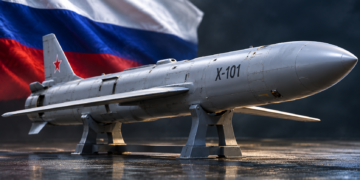
Polish prosecutors subsequently identified wreckage from all three objects as Russian Kh-101 cruise missiles, correcting an earlier assessment that one of the objects was probably a drone.
During his visit to Warsaw on Saturday, Rutte assured Poland that NATO would defend its territory and said the alliance would examine whether additional defensive measures were necessary.
In Berlin on Monday, he again described the Polish incident as dangerous but avoided concluding that the missiles had entered NATO territory deliberately.
He said the question of intent required an assessment by the relevant authorities and that he would not speculate before the evidence had been examined.
The distinction is important: although the missiles’ Russian origin has been established by Polish investigators, an intentional attack on Poland has not been established.
The incidents have renewed attention on the effectiveness of NATO’s air and missile defences along its eastern borders.
NATO aims to produce four million artillery shells annually
Alongside his security warning, Rutte emphasised the need to expand the alliance’s defence-industrial capacity.
He said NATO countries were making progress in increasing ammunition production and projected that their combined capacity could reach approximately four million artillery shells annually in 2027.


That would represent almost twice the production capacity recorded in 2025.
The figure refers to expected manufacturing capacity rather than ammunition already produced or delivered.
The expansion is intended to address shortages revealed by Russia’s war against Ukraine and improve NATO’s ability to sustain military operations.
Rutte also praised Germany’s efforts to increase military spending and industrial production.
He noted that Berlin plans to raise its core defence expenditure to 3.5% of gross domestic product by 2029.
Germany has also become a major supplier of military assistance to Ukraine, including air-defence systems and other equipment.
NATO’s 5% defence spending commitment
Rutte’s latest appeal comes as NATO governments work towards a substantially higher collective defence investment target.
At the June 2025 summit in The Hague, allies agreed to allocate 5% of GDP annually to defence and related security investments by 2035.
Under the official NATO commitment, the total is divided into two components:
- At least 3.5% of GDP for core military requirements, including armed forces, equipment and operational capabilities.
- Up to 1.5% of GDP for broader defence- and security-related investments, including critical infrastructure protection, cybersecurity and civil preparedness.
Allies are expected to demonstrate credible progress towards the target, with a review of the spending trajectory scheduled for 2029.
Monday’s remarks did not establish a new target or bring forward the agreed 2035 deadline.
Instead, Rutte pressed governments to translate their existing commitments into military capabilities and industrial output.
Where Poland stands on defence spending
Poland has already substantially increased military expenditure in response to Russia’s invasion of Ukraine and the worsening security situation in the region.
According to Poland’s Ministry of Foreign Affairs, the country’s 2026 defence budget, including the Armed Forces Support Fund, was planned to exceed PLN 200 billion.
That represents approximately 4.8% of GDP under the government’s budget presentation.
NATO’s internationally comparable expenditure calculations can differ from national budget figures because of accounting definitions and the treatment of specific expenditures.
Poland’s spending is directed towards modernising its armed forces, expanding personnel numbers and acquiring new equipment, including air-defence systems, artillery and combat aircraft.
Its eastern location, shared borders with Ukraine and Belarus, and proximity to Russia’s Kaliningrad region make NATO’s collective defence arrangements particularly important to Polish security planning.
The latest missile incidents have added urgency to discussions about radar coverage, interception capabilities and the protection of Polish airspace.
Parliamentary support for defence investment
Rutte delivered his remarks during the NATO Parliamentary Assembly’s annual meeting in Berlin, which brought together legislators from alliance countries and partner nations.
The assembly provides a forum for parliamentary debate on defence and security policy. It is distinct from NATO’s decision-making North Atlantic Council.
In its official reporting from the Berlin session, the assembly stressed that higher budgets must translate into deployable forces, operational readiness and improved military capabilities.
Participants also highlighted the importance of strengthening European defence industries and increasing cooperation with Ukraine.
For Poland, the discussions underline a central challenge facing NATO’s eastern members: ensuring that increased military budgets produce sufficient equipment, ammunition and defensive capacity to address the threats identified by the alliance.
Rutte’s message in Berlin was that spending commitments alone would not be enough without the military readiness and industrial capability to support them.