A Polish horror film drawing on the supernatural beliefs and traditional stories of Kashubia has found an appreciative audience thousands of miles from home, winning an award at a New York genre-film festival.
Òpi, the feature-length fiction debut of Polish director Marta Giec, received the Bronze Audience Award at the 11th Brooklyn Horror Film Festival, placing third in voting by festival audiences.
The recognition followed a sold-out screening in Brooklyn on 19 October 2026, where the film was presented to an international audience with members of its creative team in attendance.
- Find more news from Poland on our Homepage .
The result, publicly reported in Poland on 28 October, marks an early international achievement for a production that brings a distinctive part of Poland’s regional heritage into contemporary horror cinema.
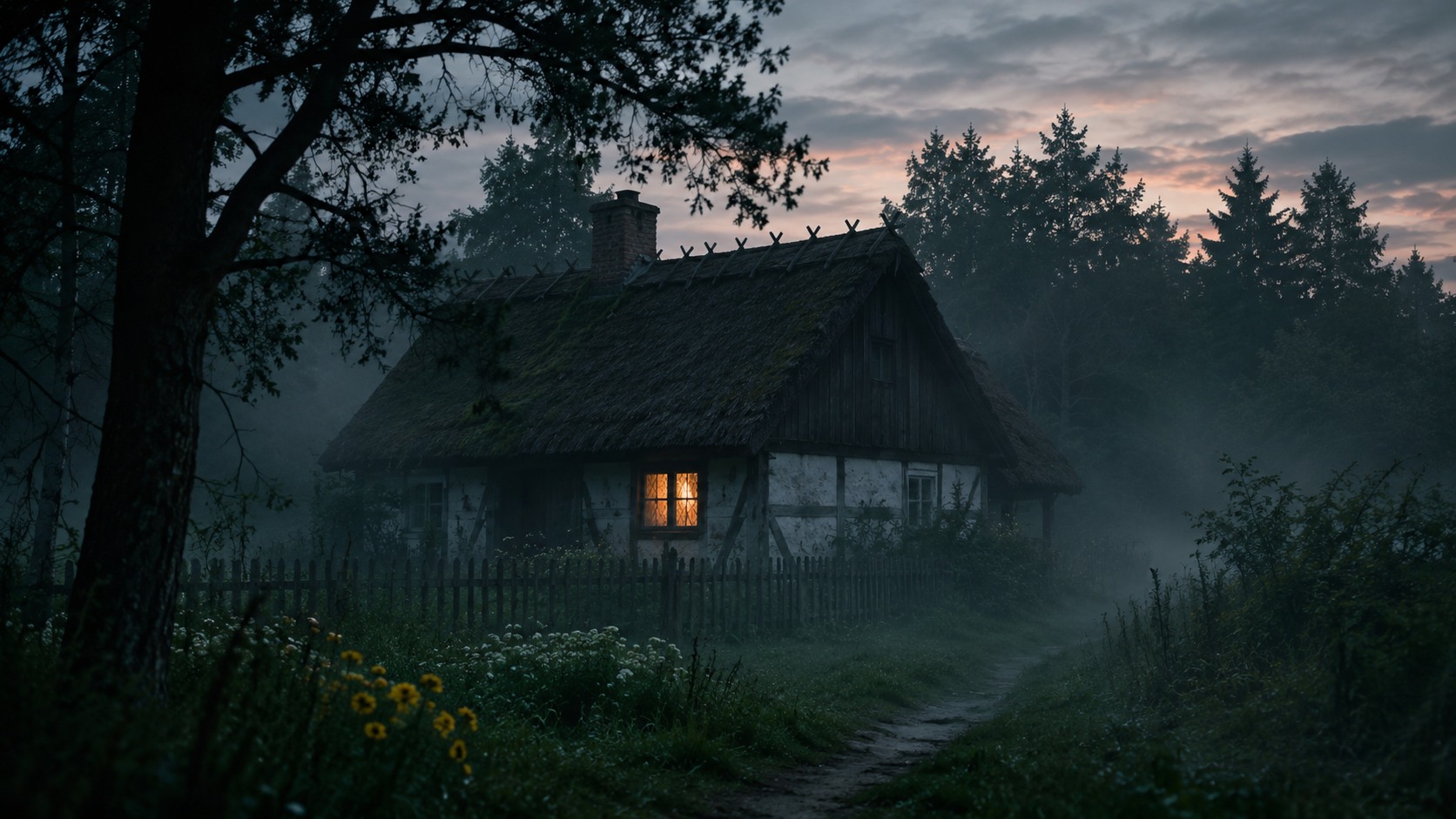
Rather than drawing on more familiar Hollywood supernatural mythology, Òpi takes inspiration from Kashubian beliefs, combining unsettling folklore with a psychological story about family relationships, inherited trauma and the struggle for independence.
A Polish horror story rooted in Kashubian folklore
The film is set in Słupsk, northern Poland, in 2002.
Its central character is Trina, played by Wiktoria Kruszczyńska, a teenager approaching her eighteenth birthday who dreams of escaping the oppressive atmosphere of her family home.
Her plans are disrupted when two relatives arrive unexpectedly: a mysterious aunt named Helena and her paralysed grandmother Regina.
Their presence begins to expose troubling family secrets.
As tensions grow between the generations, ordinary domestic life becomes increasingly entangled with strange visions, nightmares and supernatural beliefs drawn from Kashubian tradition.
The film uses these elements to explore how family histories and unresolved experiences can shape the lives of subsequent generations.
Alongside Kruszczyńska, the principal cast includes Gabriela Muskała, Magdalena Boczarska and Iwona Bielska.
Giec co-wrote the screenplay with Dominika Kłoczewiak, who also collaborated on the direction.
The production combines psychological drama with folk horror, a genre that explores fear through local mythology, religious beliefs, rural traditions and supernatural stories.
Bringing Kashubia’s distinctive heritage to international audiences
One of the film’s most interesting features is its connection to Kashubia, a region of northern Poland with a distinctive cultural and linguistic heritage.
The Kashubians have maintained traditions, customs and a West Slavic language that developed alongside, but separately from, standard Polish.
Kashubian is recognised under Polish law as a regional language and continues to be taught and used in parts of Pomerania.
The region’s traditions include stories about spirits, supernatural beings and the boundary between the world of the living and the dead.
The title Òpi refers to a figure drawn from this body of folklore.
The Lund Fantastic Film Festival’s description introduces the òpi as a child believed to be destined to return as a ghostly being after death.


Within the film, these ideas provide the supernatural background for a story that also explores recognisable human fears.
For international viewers unfamiliar with Kashubia, the film offers an unusual introduction to a regional culture that rarely features prominently in mainstream cinema.
That cultural dimension was also part of the response in New York.
A sold-out screening and recognition from American audiences
The film’s New York screening formed part of the Brooklyn Horror Film Festival in October 2026.
According to an official announcement published by Agora, the screening sold out and attracted considerable interest from the audience.
Following the festival, Òpi received the Bronze Audience Award, representing third place in audience voting.
The distinction is separate from the festival’s jury-awarded prizes and should not be confused with its overall top film award.
Kłoczewiak, who co-wrote the screenplay and collaborated on the direction, said American viewers had shown curiosity about both the Kashubian beliefs and the psychology of the characters.
She described the response as encouraging because audiences familiar with horror cinema had encountered something distinctive in the Polish film.
Giec also welcomed the recognition, emphasising the particular importance of appreciation expressed directly by cinema audiences.
The comments were included in the film team’s announcement and subsequently reported by Polish Radio.
For a debut feature-length fiction film, the result provides a promising introduction to international genre audiences ahead of its wider cinema release.
From Polish film festivals to New York and Sweden
Òpi was produced by Platige Films, with financial support from the Polish Film Institute.
The film was selected for the Perspectives Competition at the 51st Polish Film Festival in Gdynia, providing an important domestic showcase before its international festival appearances.
Its autumn festival programme subsequently expanded beyond Poland.
Following the Brooklyn screening, the film was also listed for the Méliès d’Argent competition at Sweden’s Lund Fantastic Film Festival, with a screening dated 29 October.
It also featured in the programme of Poland’s Splat!FilmFest, which specialises in horror, fantasy and other forms of genre cinema.
The film’s distributor, NEXT FILM, also arranged advance screenings associated with Halloween, introducing the production to Polish audiences before its general release.
According to NEXT FILM’s official release announcement, Òpi is scheduled to enter cinemas across Poland on 1 January 2027.
The Brooklyn result therefore comes at an important point in its journey from festival screenings to wider public distribution.
Polish folklore finds a new audience
The achievement of Òpi demonstrates how regional cultural traditions can provide a distinctive foundation for contemporary filmmaking.
The film does not rely on a universally familiar monster or a previously established horror franchise.
Instead, it builds its atmosphere around beliefs associated with a particular part of northern Poland, combining them with a story about relationships and experiences that audiences elsewhere can recognise.
The Bronze Audience Award is not the festival’s overall top prize, but it represents recognition from viewers attending a specialist American horror festival.
For Giec and her collaborators, it provides an encouraging early result as the film continues its international journey.
And for Kashubian cultural heritage, it offers something less conventional: a place in a modern horror film that has already caught the attention of audiences on the other side of the Atlantic.