Inside a centuries-old church in northern Poland, something extraordinary happens when the organist begins to play.
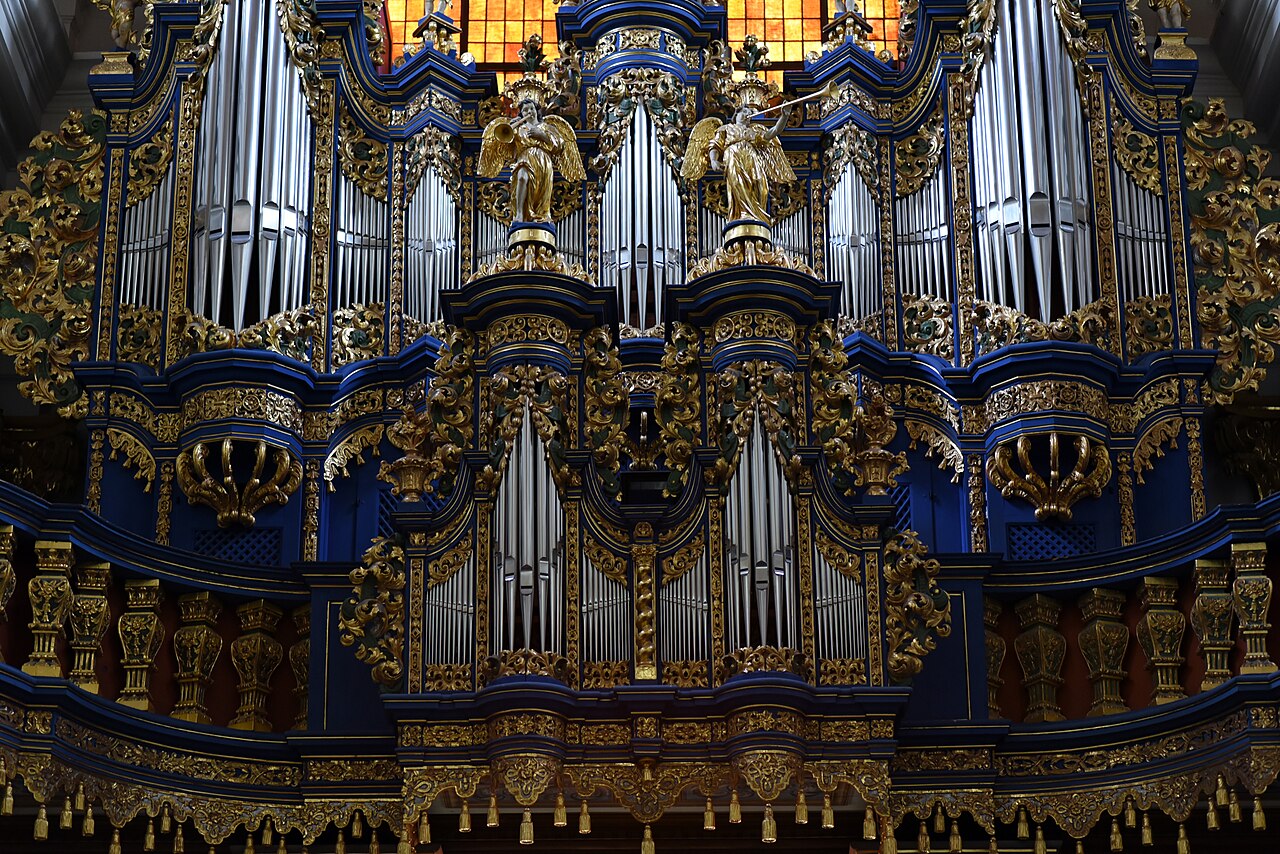
High above the congregation, gilded angels appear to come alive. Some turn with their musical instruments, others move tiny bells, while rotating stars add movement to the elaborate Baroque display.
Then, among the towering organ pipes, the Archangel Gabriel bows towards the Virgin Mary, who responds by gently nodding her head.
- Find more news from Poland on our Homepage .
This remarkable mechanical performance can still be witnessed at the Sanctuary of Our Lady in Święta Lipka, a historic pilgrimage church in Poland’s Warmian-Masurian region.
The instrument, originally constructed between 1719 and 1721, combines music, sculpture and mechanical ingenuity in a way that few modern visitors would expect from a church organ.
But its survival is also a story of destruction, rebuilding and one Jesuit brother’s determination to bring the silent figures back to life.
An organ that tells a story through movement
The spectacular instrument dominates the organ gallery at the western end of the Basilica of the Visitation of the Blessed Virgin Mary.
Its richly decorated blue-and-gold casing rises towards the church’s painted vaults, combining gleaming pipes with carved foliage, architectural towers and golden sculptures.
The moving figures are more than decorative entertainment.
Together, they depict the Annunciation, the biblical moment when the Archangel Gabriel tells Mary that she will become the mother of Jesus.
Gabriel bends forward, while Mary acknowledges him with a nod. Around them, smaller angels appear to play instruments, including trumpets and a lute, while others move bells.
The visual performance is created by mechanical devices that animate the sculptures during organ presentations.
As explained in the Adam Mickiewicz Institute’s history of Poland’s organ traditions, the instrument’s animated façade is an important surviving example of Baroque organ craftsmanship.
The concept reflects an artistic tradition in which music, architecture and religious imagery were designed to work together.
For worshippers, the movement illustrated a sacred story. For modern visitors, it also provides an unusual glimpse into the engineering imagination of eighteenth-century craftsmen.
Built by a master organ maker from Königsberg
The original organ was created by Johann Josua Mosengel, an accomplished organ builder working in Königsberg, then part of Prussia and today known as Kaliningrad, Russia.
Construction began in 1719 and was completed in 1721.
The project became considerably more ambitious than initially planned.
By the time it was finished, the instrument had three manual keyboards, a pedalboard and 40 stops, allowing the organist to produce a wide range of musical sounds.
Its air supply was originally generated through four large wedge-shaped bellows operated by assistants.


Mosengel’s workshop was also responsible for the elaborate Baroque organ case, whose carved decorations and moving figures remain among the sanctuary’s defining features.
However, the instrument heard today is not entirely the same one that Mosengel completed.
In 1905, organ builder Bruno Goebel substantially reconstructed its interior, replacing much of the original Baroque sound-producing mechanism with one reflecting the Romantic musical tastes of the period.
The instrument was reduced to two manual keyboards and a pedalboard, while its original mechanical key action was replaced by a pneumatic system.
The historic decorative façade survived these alterations, preserving the appearance of Mosengel’s remarkable creation even as its musical machinery changed.
The figures stopped moving for generations
The twentieth century brought further damage.
During the two world wars, the organ suffered significant losses and alterations. Particularly destructive events in 1945 left much of its pipework damaged or missing.
Repairs followed in the post-war decades, including extensive work to replace pipes and restore the instrument’s musical capabilities.
Yet the famous moving sculptures remained inactive.
Their revival came through the efforts of Jesuit brother Waldemar Strzyżewski, who arrived at Święta Lipka in 1964 and subsequently spent decades caring for the organ.
Working on the mechanisms, he restored the movement of the figures after their long period of inactivity.
According to historical accounts published by the regional Catholic newspaper Gość Niedzielny, the restored figures were brought back into operation on 29 March 1970.
It was a significant moment in the instrument’s modern history.
The statues that had stood motionless for generations could once again perform their mechanical movements above the congregation.
Further conservation work took place in 2009–2010, helping protect the historic instrument and its ornate decoration.
The organ that visitors encounter today is therefore both an eighteenth-century artistic creation and the product of generations of restoration work.
A Baroque sanctuary with medieval roots
The church itself has a history older than its famous organ.
Święta Lipka’s pilgrimage tradition is associated with medieval legends describing a statue of the Virgin Mary placed in a linden tree.
The sanctuary’s official historical account traces these traditions to the fourteenth century, although their earliest details survive principally through stories recorded much later.
The present Baroque church was constructed between 1687 and 1693 and consecrated on 15 August 1693.
Over the following decades, the Jesuits developed an elaborate religious complex with surrounding cloisters, chapels and richly decorated interiors.
The result is one of northern Poland’s notable examples of Baroque religious architecture.
In 2018, the Polish state formally designated the Święta Lipka pilgrimage complex a Pomnik Historii, or Monument of History, recognising its exceptional historical, architectural and cultural significance.
The sanctuary also developed an important musical tradition.
A music school associated with Święta Lipka trained generations of musicians, including the Polish composer Feliks Nowowiejski, who later wrote the music for Rota, one of Poland’s best-known patriotic songs.
A centuries-old performance visitors can still experience
Święta Lipka remains an active place of worship administered by the Jesuits, but its musical heritage also attracts visitors interested in history, architecture and traditional craftsmanship.
The sanctuary continues to organise short organ presentations lasting approximately 15 minutes.
These allow visitors to hear the instrument and observe the movements of its elaborate mechanical figures.
Presentation times vary throughout the year, with more frequent performances during the warmer months. Visitors can check the sanctuary’s official schedule before travelling.
The basilica also hosts Świętolipskie Wieczory Muzyczne, a series of summer musical evenings that has become part of the sanctuary’s modern cultural identity.
For all its architectural grandeur, however, one of the most memorable details remains remarkably small.
A carved angel bows. Another figure answers with a movement of her head. Tiny bells stir among the golden decorations as the sound of the organ fills the church.
More than 300 years after Mosengel completed his instrument, the centuries-old spectacle of music and moving sculpture remains part of life at Święta Lipka.