Polish Prime Minister Donald Tusk has warned that neither Russia nor the United States can determine Europe’s future security arrangements without the involvement of European governments, as Washington explores a possible new security agreement with Moscow alongside negotiations to end the war in Ukraine.
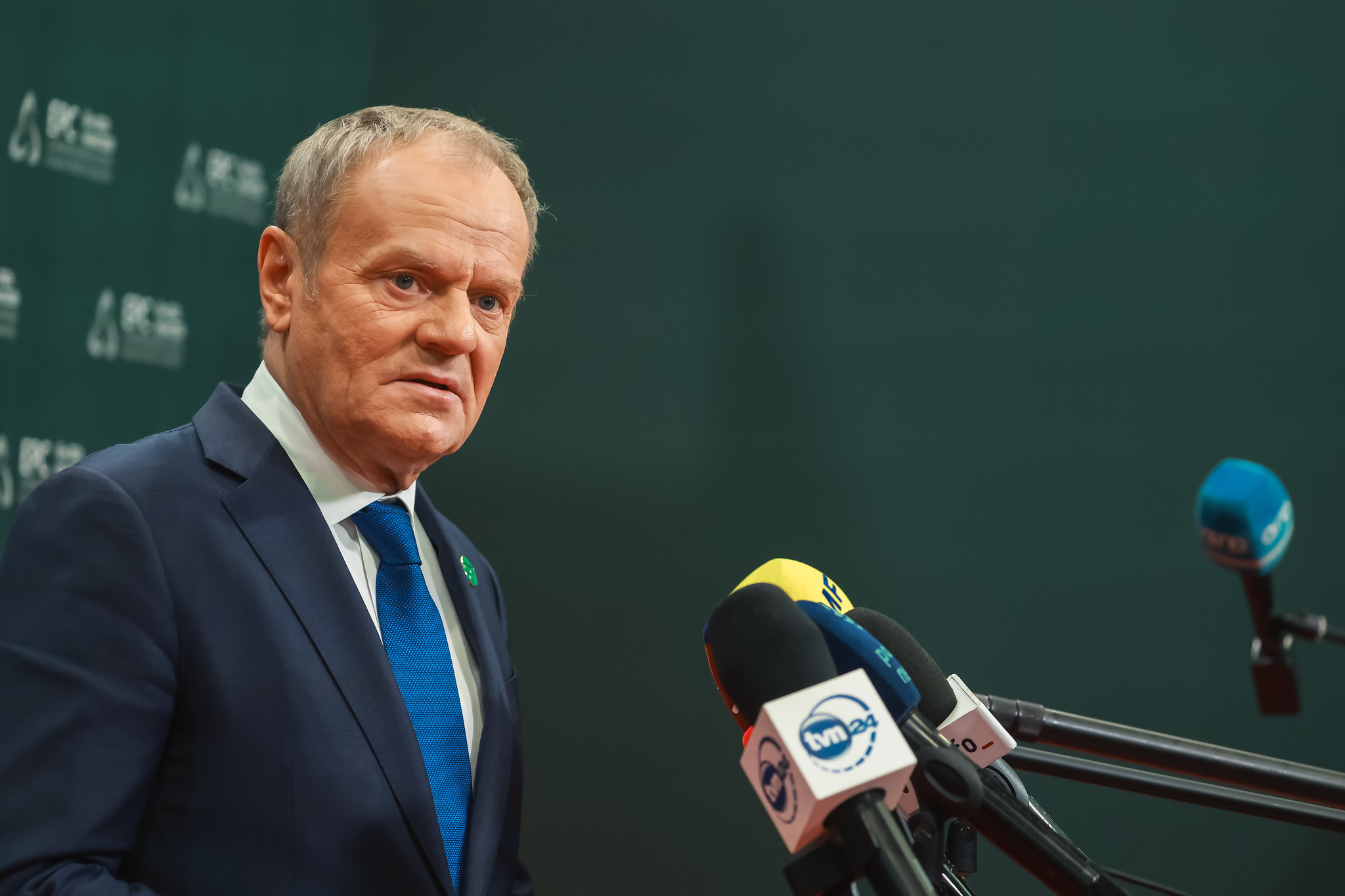
Speaking at the European Political Community summit in Dublin on Thursday, 12 November, Tusk insisted that Poland and its European partners would not accept security arrangements negotiated without their participation.
“Under no circumstances will we allow anyone to establish new security rules in this part of the world over our heads,” Tusk said, according to remarks reported by TVP World.
- Find more news from Poland on our Homepage .
He made clear that Europe would not agree to changes simply because they were sought by Russian President Vladimir Putin or officials in Washington.
The warning followed reports that the administration of US President Donald Trump had asked Russia to submit proposals for a possible agreement governing future security relations between Moscow and Europe.
The prospect carries particular significance for Poland, a NATO member bordering Ukraine, Belarus and Russia’s heavily militarised Kaliningrad exclave.
Washington asks Moscow for security proposals
According to an Axios investigation published on 11 November, American negotiators have asked Moscow to outline its demands for a future European security agreement and identify measures Russia would be prepared to take to reduce tensions.
The request was reportedly made during US-mediated negotiations involving Ukrainian and Russian representatives in Abu Dhabi on 10 and 11 November.
Two sources familiar with the discussions told Axios that US presidential envoys Steve Witkoff and Jared Kushner wanted Russia to move beyond presenting its own security demands and explain what reciprocal commitments it could offer European countries.
The proposed framework would be considered alongside negotiations to end Russia’s war against Ukraine.
However, the American position is more complicated than an agreement to accept Moscow’s demands.
Axios also reported that US negotiators wanted European representatives involved in future peace talks and had indicated that Washington would not agree to a security arrangement without European and Ukrainian support.
Those assurances were reported by Axios rather than established in a publicly released negotiating document.
No proposed treaty text has been published, and there is no indication that Washington and Moscow have agreed on the terms of a new European security framework.
Why Poland is particularly concerned
For Warsaw, the discussions recall Russian demands made shortly before the full-scale invasion of Ukraine in February 2022.
In December 2021, Moscow proposed sweeping changes to Europe’s security arrangements, including an end to further NATO enlargement and restrictions on the deployment of allied military forces in countries that joined the alliance after 1997.
Poland became a NATO member in 1999, alongside the Czech Republic and Hungary.
The Russian proposals would therefore have affected the military arrangements of Poland and numerous other NATO members in Central and Eastern Europe.
The demands were rejected by NATO and the United States at the time. A NATO account of its relations with Russia explains the alliance’s longstanding opposition to arrangements that would undermine its collective defence commitments.
Poland has spent recent years strengthening its armed forces, expanding military infrastructure and seeking a greater American military presence on its territory.
You May Also Be Interested In
Earlier in November, Poland-24 reported that Foreign Minister Radosław Sikorski had warned European allies against excluding countries most exposed to Russia from negotiations about the continent’s security.
Tusk’s latest intervention extends that message directly to the possible creation of a new European security framework.
His concern is not simply whether Russia and Ukraine can reach a peace agreement, but whether a broader diplomatic settlement could affect the strategic arrangements protecting Poland and other NATO members.
Poland joins European declaration on security
Tusk’s remarks were reinforced by a joint European declaration adopted at the Dublin summit.
The Declaration on key principles of European security, published by the French presidency on 12 November, lists Poland among its signatories.
The document establishes that decisions affecting Europe’s security must involve European governments, while negotiations over peace in Ukraine must involve Ukraine itself.
It also reaffirms the sovereign right of European countries to choose their international partnerships and military alliances.
For NATO members, the declaration reiterates the importance of collective defence and the alliance’s Article 5 security commitment.
The document does not reject future dialogue with Russia. Instead, it supports discussions on risk reduction and European stability once the necessary conditions have been met and peace has been restored.
European Council President António Costa expressed a similar position in his opening remarks at the summit.
Costa argued that any future security discussions must respect existing principles, including national sovereignty, internationally recognised borders and the right of states to select their own alliances.
The declaration provides a formal diplomatic expression of the position Tusk outlined to reporters.
European involvement in future peace talks
The dispute over Europe’s role comes as American negotiators attempt to restart substantive peace discussions between Russia and Ukraine.
After talks in Abu Dhabi, Witkoff and Kushner travelled to Moscow on 12 November for discussions with Putin.
Following that meeting, Witkoff said European representatives would participate in the next round of Ukraine peace negotiations.
According to Reuters’ account of the Moscow discussions, Ukrainian President Volodymyr Zelensky welcomed the prospect of European involvement.
The Kremlin, however, did not independently confirm the proposed participation during its subsequent briefing.
Important disagreements also remain over Ukraine’s territory, possible security guarantees and the conditions for ending the fighting.
Tusk acknowledged that Poland was not directly involved in the current US-mediated negotiations, but emphasised the importance of a common European position.
He also warned that the objectives of American diplomacy might not always fully correspond with Europe’s expectations.
The Polish prime minister said he saw broad European agreement on the need to protect Ukraine’s sovereignty and preserve the security arrangements of Eastern Europe.
What happens next?
European leaders are continuing discussions in Dublin on Friday, 13 November, including questions surrounding their representation in future negotiations.
Any eventual security arrangement between Russia and European countries would face significant diplomatic and institutional obstacles.
NATO’s collective defence commitments, the sovereignty of member states and the role of European governments would all be central questions.
For now, Washington’s reported invitation for Russian proposals remains part of an evolving diplomatic process rather than a negotiated settlement.
Poland’s message, however, is explicit: Warsaw expects to participate in decisions affecting its security and opposes any arrangement that would allow Russia to determine the military choices of its European neighbours.