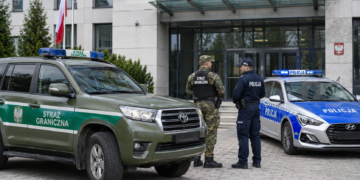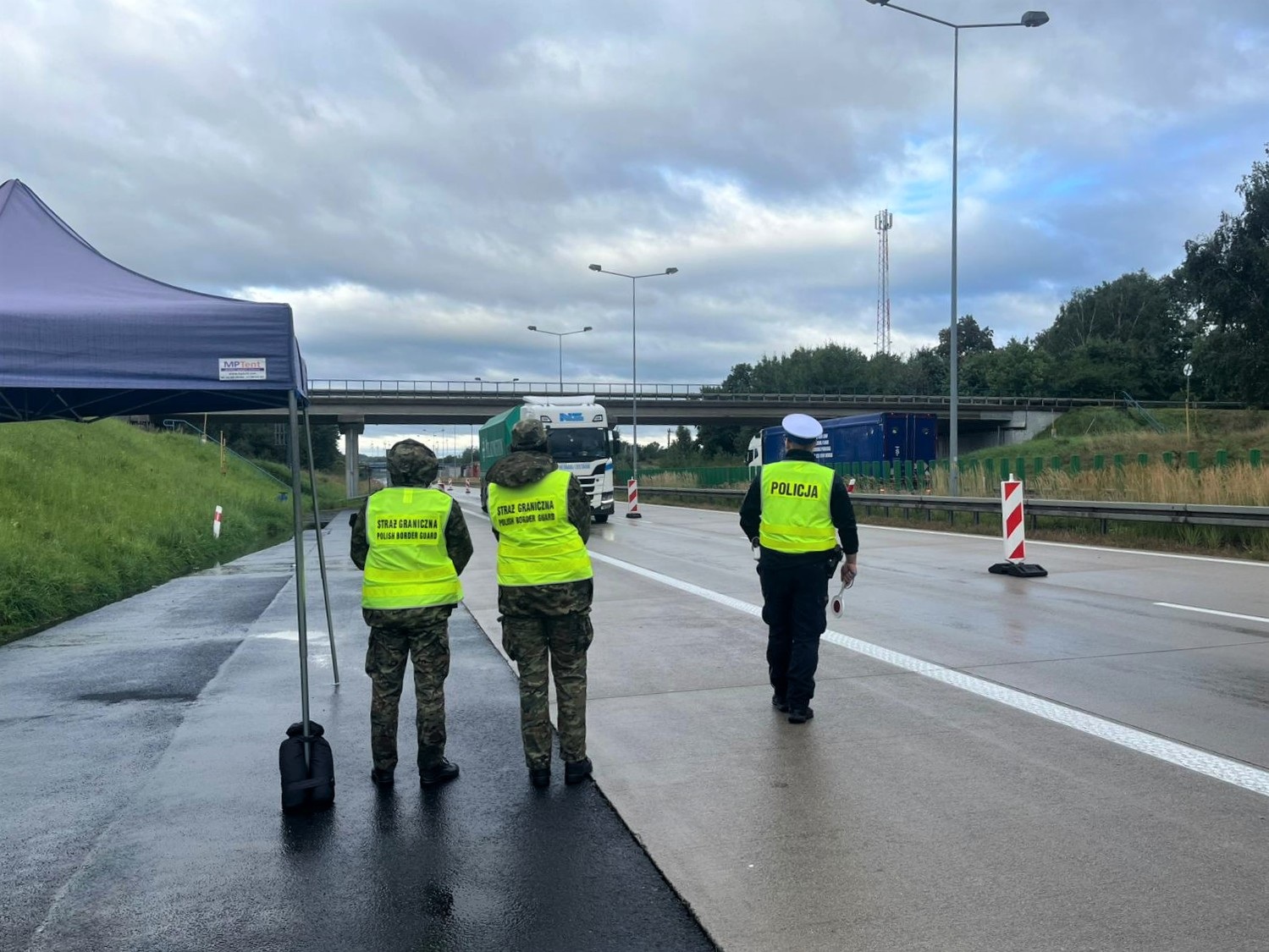
More than 1,000 foreign nationals have been refused entry to Poland by border guards operating along the country’s western frontier with Germany since temporary checks were introduced in July 2025, according to new figures released by the Polish Border Guard on Friday, 13 November.
The milestone was reported by the Nadodrzański Border Guard unit, which is responsible for the German-border crossings in Poland’s Lubuskie and Lower Silesian regions.
The Border Guard’s latest official announcement also revealed that officers refused entry to 20 foreign nationals during operations on 10 and 11 November.
- Find more news from Poland on our Homepage .
Fourteen were turned away during temporary checks at the Polish-German border, while six others were refused entry at airports in Poznań and Wrocław.
The figures highlight the continuing enforcement of Poland’s border controls, which have remained in place for more than 16 months despite both Poland and Germany belonging to Europe’s passport-free Schengen area.
Twenty refused entry in 48 hours
According to the Border Guard, officers conducting checks on the German frontier refused entry to 14 people over the two-day period.
Those affected included citizens of Ukraine, Belarus, Russia and Syria.
Another six foreign nationals, from Ukraine and Georgia, were refused entry at Poznań-Ławica Airport and Wrocław Airport.
The authorities identified two principal reasons for the refusals: a lack of documents permitting legal entry to Poland and overstaying the permitted period of residence within the Schengen area.
The statement did not provide a complete nationality breakdown for the 20 people or specify how many refusals fell into each category.
Refusal of entry is an administrative measure and does not necessarily mean that the individual has committed a criminal offence.
Under the European Union’s Schengen Borders Code, third-country nationals must meet applicable entry requirements. Decisions refusing entry must specify the relevant grounds, subject to the protections established under EU law.
More than 1,000 refused entry since July 2025
The latest figures mark another milestone in Poland’s temporary border-control operation, which began on 7 July 2025.
The Nadodrzański unit confirmed that more than 1,000 foreign nationals had now been refused entry during its checks on the German frontier.
The cumulative figure relates specifically to the sections of the border administered by that unit rather than the entire Polish-German border.
It represents a further increase from the almost 900 refusals reported by Poland-24 in September.
In an earlier announcement on 27 October, the Border Guard said the unit was approaching 1,000 refusals, with Ukrainian, Syrian, Turkish and Indian nationals among the groups most frequently affected.
The latest figures indicate that this threshold has now been exceeded.
National figures are higher.
When announcing the continuation of border controls on 1 October, the Polish Interior Ministry reported that almost 1,200 people had been refused entry along the German border as a whole since checks began.
You May Also Be Interested In


That national figure was recorded more than a month before the latest Nadodrzański announcement and covers a wider geographical area.
Three Ukrainians returned to Ukraine after offences
Separately, Border Guard officers detained three Ukrainian nationals during operations on 10 and 11 November.
The service said the men had committed criminal offences while in Poland, including burglary.
All three were issued decisions requiring them to leave the country and were subsequently escorted to the Polish-Ukrainian border, where they were handed over to Ukrainian authorities.
They also received bans on re-entering the Schengen area lasting either five or seven years.
The Border Guard did not provide details of individual court proceedings or specify whether criminal convictions had been obtained.
These cases are legally distinct from refusals of entry.
The three individuals were already in Poland when the authorities took action, whereas the 20 people refused entry were prevented from entering the country at its border crossing points or airports.
The Border Guard also reported that its Nadodrzański unit had carried out compulsory return procedures involving almost 600 foreign nationals since the beginning of 2026.
According to the service, those individuals’ presence in Poland was considered a threat to public security or order.
The unit said the number of people subjected to compulsory return procedures in 2026 had already exceeded its total for the whole of 2025.
Border checks to continue until March 2027
Poland reinstated temporary controls on its borders with Germany and Lithuania in July 2025, citing concerns about irregular migration and security.
The government has repeatedly connected the measures to migration pressure along routes passing through Belarus, Lithuania and Poland.
The controls were initially introduced as a temporary measure but have since been extended several times.
Under the latest regulation issued by Interior Minister Marcin Kierwiński, they are scheduled to remain in force until 30 March 2027.
The extension was announced on 1 October and is recorded in the European Commission’s official register of temporary internal border controls.
Poland remains a member of the Schengen area, which normally allows movement between participating countries without routine checks at internal borders.
However, EU rules permit member states to temporarily restore internal border controls when they identify a serious threat to public policy or internal security, subject to legal conditions.
For travellers entering Poland from Germany, the measures mean that identity and immigration documents may be checked despite the absence of routine border controls under normal Schengen arrangements.
The latest Border Guard announcement does not introduce any new restrictions or extend the existing deadline.
Instead, it provides fresh evidence of the enforcement activity taking place under arrangements that are already in force.
With the controls scheduled to continue until March 2027, Poland’s western border remains subject to checks that have now produced more than 1,000 entry refusals in the Nadodrzański unit’s operational area alone.