Poland’s government has warned of a growing wave of Russian disinformation falsely accusing Poland, Lithuania and NATO of involvement in an alleged attack on Russia’s Kaliningrad region. By Sunday afternoon, the reported reach of misleading online posts had exceeded 19 million, according to Deputy Digital Affairs Minister Paweł Olszewski.
The warning followed reports of possible Ukrainian drone activity around Kaliningrad, the Russian exclave situated between Poland and Lithuania on the Baltic Sea.
Olszewski said on Sunday, 22 November, that Poland’s Centre for Countering Disinformation was intensively monitoring the information circulating online.
- Find more news from Poland on our Homepage .
In a statement published on X, the deputy minister identified several narratives that falsely portrayed NATO members as participants in attacks against Russian territory.
He later reported that the number of misleading posts was increasing and that their estimated combined reach had surpassed 19 million. That figure represents the reported reach of the content, not a verified count of individual people who believed the claims.
Poland identifies four false narratives
According to Olszewski’s statements reported by RMF24, the Centre for Countering Disinformation identified four particularly prominent narratives.
One falsely alleged that German military personnel stationed in Poland had coordinated a Ukrainian attack on Kaliningrad.
Another claimed that Polish and Lithuanian forces were attacking Russia using Ukrainian missiles.
A third suggested that Ukraine was deliberately attacking Russia to drag Poland into the war.
The fourth claimed that NATO itself had attacked Kaliningrad.
Olszewski characterised these messages as Russian disinformation and urged the public to rely on verified information from Polish security institutions.
In a subsequent update on Sunday afternoon, he warned that the campaign was continuing.
According to the deputy minister, the most prominent false narrative suggested that Poland and NATO were being drawn into a direct war with Russia.
The government has not publicly provided a detailed breakdown of how the estimated online reach was calculated, or how much of the activity could be attributed to coordinated networks rather than individual accounts repeating the claims.
What actually happened in Kaliningrad?
The disinformation emerged following reports of drone activity and air-raid warnings in Russia’s Kaliningrad region on Saturday evening, 21 November.
Kaliningrad is geographically separated from the rest of Russia and borders two NATO members, Poland and Lithuania. It is strategically important because it hosts military facilities, including bases associated with Russia’s Baltic Fleet.
Reports circulating on social media suggested that explosions had occurred near Baltiysk, the Russian port city that serves as a major Baltic Fleet base.
However, the extent of any attack remained unclear on Sunday.
The Associated Press reported that Kaliningrad authorities had confirmed an air alert, while images and videos purporting to show drone activity near Baltiysk could not be independently authenticated.
Regional governor Alexei Besprozvannykh said an alert had been triggered after a suspicious object was detected approaching from the direction of Lithuania.
He subsequently said air-defence specialists had determined there was no threat.
As of Sunday morning, Russian authorities had reported no casualties or damage from the suspected incident.
The existence of an air alert therefore does not establish that military facilities were struck, or that aircraft or drones crossed Lithuanian or Polish territory.
Lithuania categorically denies involvement
Lithuania’s government separately rejected allegations that its territory or airspace had been used to facilitate an attack on Kaliningrad.
Foreign Minister Kęstutis Budrys said Lithuania had never authorised its airspace to be used for attacks against Russian targets, including in the reported incident.
According to Anadolu Agency’s account of his statement, Budrys rejected the accusations circulating on social media.
Lithuanian authorities also said they had not detected drones or comparable aerial objects crossing their territory during the relevant period.
The denials directly contradict claims that NATO-member Lithuania had enabled Ukrainian aircraft to reach Kaliningrad.
There has been no independently verified evidence establishing Polish or German military involvement in the reported incident.
Disinformation follows Russian missile incursions into Poland
The warning comes amid heightened tensions following confirmed Russian missile incursions into Polish airspace on Friday, 20 November.
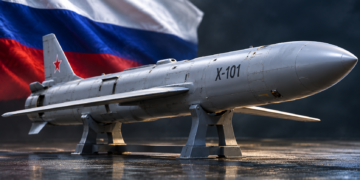
Polish prosecutors announced on Sunday that debris recovered at three locations in south-eastern Poland had been identified as belonging to Russian Kh-101 cruise missiles.
In a separate statement issued on 20 November, Poland’s Ministry of Digital Affairs warned that the missile incidents had also triggered misleading narratives online.
These included claims that Ukraine had deliberately allowed Russian weapons to enter Poland, that the Polish government was exaggerating the threat, and that the country’s air-defence systems were ineffective.
The ministry said accounts previously associated with anti-Ukrainian and anti-government messaging had participated in disseminating the material.
It also identified artificially generated content, including manipulated videos depicting Polish ministers.
The government said much of this activity initially appeared on X, with similar material increasingly circulating on TikTok and YouTube.
The Kaliningrad-related narratives represent another instance in which contested military reports have been accompanied by attempts to shape public perceptions of Poland’s security and its relationship with Ukraine.
Wider security concerns around Kaliningrad
Kaliningrad has featured prominently in Russian security rhetoric and in Polish warnings about possible provocations along the countries’ shared border.
Earlier in November, Poland-24 reported on allegations of a Russian false-flag operation near the Kaliningrad border, which Polish media said had been intended to blame Ukraine for a violent incident.
Those earlier allegations concern a separate reported operation. There is currently no established connection between that case and Saturday’s air alert or Sunday’s disinformation warnings.
The latest developments nevertheless highlight the difficulty of establishing reliable information during fast-moving security incidents involving Russia, Ukraine and NATO countries.
Poland’s Centre for Countering Disinformation operates within the Ministry of Digital Affairs and works with other state institutions, including security agencies and the Ministry of Foreign Affairs.
Its responsibilities include identifying misleading narratives, monitoring their spread and coordinating the government’s response.
For now, Polish officials are warning that claims of NATO participation in an attack on Kaliningrad are false, while the underlying reports of military activity inside the Russian exclave remain only partly verified.
The distinction matters: an air-defence alert, an unconfirmed drone strike and an allegation of NATO involvement are three separate claims, each requiring its own evidence.