Poland’s Foreign Minister Radosław Sikorski has suggested that NATO allies could establish air patrols over western Ukraine to intercept Russian missiles and drones before they threaten Polish territory, following the latest violations of Poland’s airspace.
Speaking on TVP Info’s Pytanie dnia programme on Saturday evening, 21 November, Sikorski raised the possibility of extending defensive operations beyond Poland’s eastern border.
His remarks came one day after three objects entered Polish airspace during a large Russian missile and drone attack against Ukraine.
- Find more news from Poland on our Homepage .
The foreign minister said Poland and its allies could consider conducting air-policing operations over western Ukraine and intercepting airborne threats before they reached Polish territory.
Crucially, he made clear that the suggestion was his personal position, not an agreed policy.
According to Onet’s reporting of the interview, Sikorski acknowledged that the idea would require convincing Poland’s allies and had not yet secured approval.
Shooting down threats before they cross the border
Sikorski’s proposal centres on preventing Russian missiles and drones from entering Polish airspace by intercepting them while they are still over Ukraine.
The concept would potentially allow allied aircraft to operate farther from Poland’s own territory when responding to aerial threats.
However, the exact geographical limits, operational rules and command arrangements were not specified.
The minister did not announce any formal request for a new NATO mission or indicate that military planning for such an operation had been approved.
The suggestion goes beyond the air-defence arrangements currently used to protect Poland’s own airspace.
Although the minister referred to air policing, intercepting Russian weapons over Ukrainian territory during an ongoing war would raise significantly different operational and political questions from routine NATO air-policing missions.
Any such arrangement would require decisions about how to identify incoming threats, which weapons could be engaged and who would authorise military action.
Three Russian objects entered Poland
Sikorski’s comments followed the events of Friday, 20 November, when Russian attacks against Ukraine resulted in three airborne objects entering south-eastern Poland.
The objects came down near Nowy Lipowiec in Lubelskie Voivodeship and Rudnik nad Sanem and Mołodycz in Podkarpackie Voivodeship.
Polish authorities identified a Russian Kh-101 cruise missile at Nowy Lipowiec.
The other objects were initially assessed as a possible second missile and a jet-powered drone, although investigators were still establishing their precise identities.
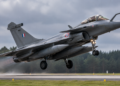
According to the Polish Defence Ministry’s official account, Polish and allied forces responded by mobilising fighter aircraft and air-defence systems.
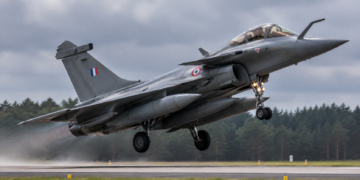
Polish F-16s and Swedish Gripen fighters operated during the alert, supported by other allied capabilities.
No injuries were reported on Polish territory.

Prime Minister Donald Tusk described the incursions as a likely deliberate Russian provocation, particularly because they coincided with multinational military exercises in Poland.
That assessment concerns Russia’s suspected intentions and remains distinct from the confirmed physical evidence recovered by investigators.
NATO has not approved operations over Ukraine
The idea of intercepting Russian weapons over Ukraine is not new, but it remains contentious among NATO members.
In October, Sikorski acknowledged that discussions were continuing over whether Poland could respond to Ukrainian requests to shoot down Russian drones and missiles while they were still in Ukrainian airspace.
He argued that weapons directly threatening Poland’s borders could raise questions of self-defence, but recognised that the country’s participation in NATO’s integrated air-defence system meant such decisions could not be taken unilaterally.
Those earlier remarks were documented by Ukrainska Pravda on 5 October.
His latest comments renew that debate following a further incursion into Polish territory.
NATO has repeatedly distinguished between defending its members and directly conducting combat operations against Russian forces in Ukraine.
In its official explanation of support for Ukraine, the alliance states that enforcing a no-fly zone could bring NATO forces into direct conflict with Russia and risk escalating the war.
A geographically limited operation intended to intercept missiles approaching Poland would not necessarily be identical to a comprehensive no-fly zone over Ukraine.
Nevertheless, using allied weapons against Russian military targets inside Ukrainian airspace would raise serious questions about the risk of direct confrontation.
Sikorski did not explain how those concerns could be resolved.
Poland seeks stronger air defences from allies
The discussion comes as Poland is requesting additional NATO assistance following Friday’s airspace violations.
On Saturday, Defence Minister Władysław Kosiniak-Kamysz announced that Warsaw expected stronger allied support for protecting its eastern border.
Specific proposals are due to be discussed at an extraordinary meeting of NATO’s North Atlantic Council in Brussels on Monday, 23 November.
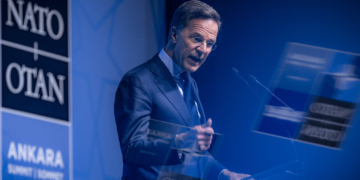
NATO Secretary General Mark Rutte visited Warsaw earlier on Saturday and reaffirmed the alliance’s commitment to defending Polish territory.
According to Reuters’ report on his visit, the alliance is examining how to strengthen its response to further incursions.
These discussions concern the protection of NATO territory and could involve reinforcing existing air-defence capabilities.
They should not be interpreted as approval of Sikorski’s separate idea of operating over western Ukraine.
The alliance’s Eastern Sentry initiative, launched in September 2025, already coordinates additional surveillance and defensive measures along NATO’s eastern flank.
There has been no official announcement that Eastern Sentry will expand into Ukrainian airspace.
A debate about protecting Poland without widening the war
The central question raised by Sikorski is whether waiting until Russian weapons enter Polish airspace leaves too little time for an effective response.
The latest incident has highlighted the operational difficulties involved in identifying, tracking and intercepting fast-moving objects approaching from Ukraine.
However, extending defensive operations across the border would also require answers to questions about military command, rules of engagement, international law and escalation.
Poland has strongly supported Ukraine’s defence against Russia’s invasion, including by supplying military equipment and supporting allied operations.
At the same time, NATO has sought to assist Ukraine without becoming a direct participant in the fighting.
Sikorski’s remarks indicate that at least one senior Polish official believes the possibility of intercepting threats farther east deserves consideration.
But his acknowledgement that the idea has not gained approval is significant.
As of 21 November, no decision has been announced to allow Polish or allied aircraft to shoot down Russian missiles or drones over western Ukraine.
The immediate focus remains Monday’s NATO consultations and the additional defensive assistance Poland hopes to secure.