Polish authorities have detained 15 people on suspicion of sabotage or subversion during a nationwide railway-security operation launched a year ago following attacks on critical transport infrastructure. Police say 13 proceedings have been initiated over potentially sabotage-related incidents, with four cases classified as confirmed acts of sabotage or subversion.
The figures were included in an official assessment published by Poland’s National Police on Saturday, 21 November, marking the first anniversary of Operation TOR.
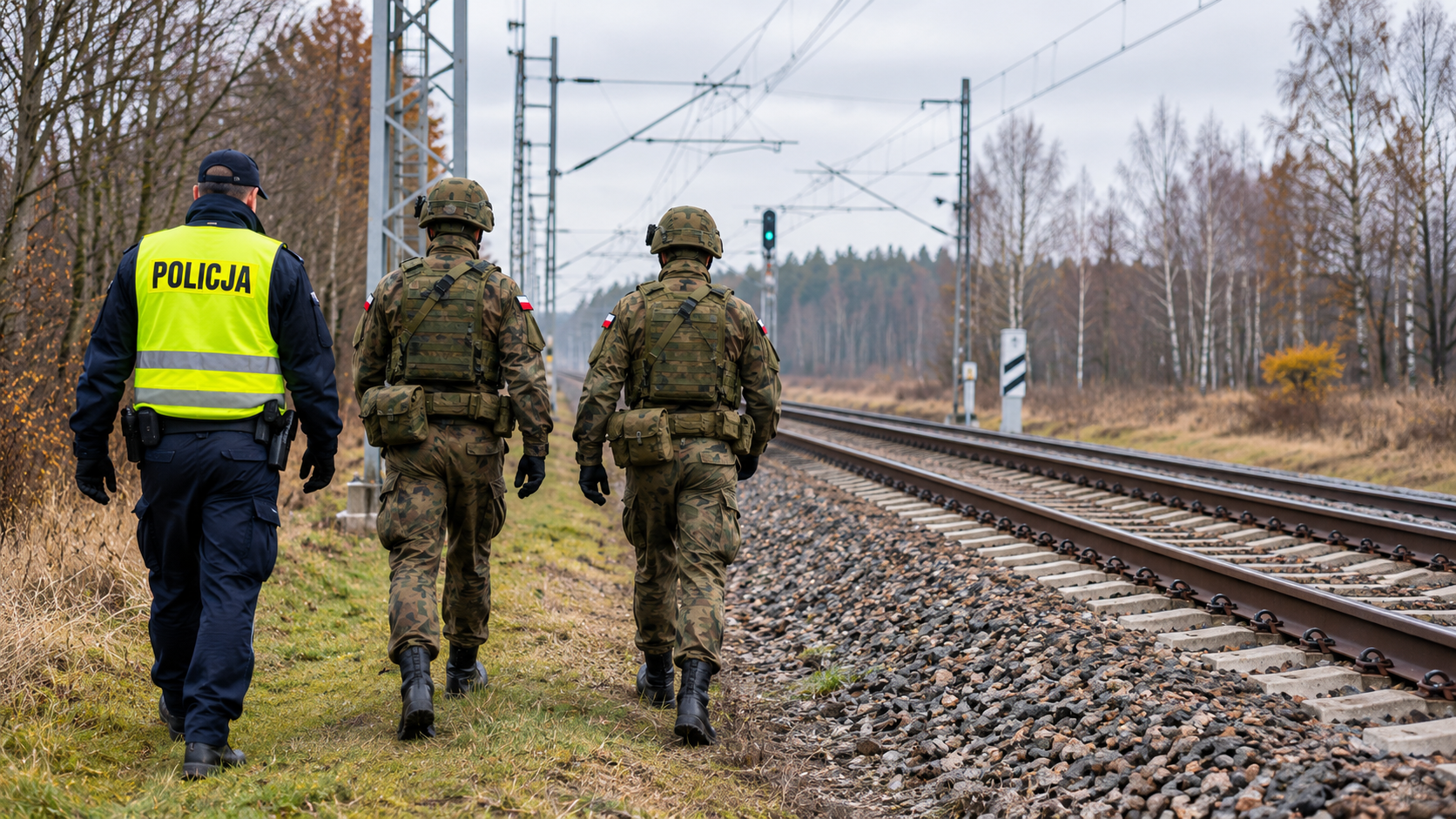
The operation brings together police officers, military personnel and the Railway Protection Guard (Straż Ochrony Kolei, SOK) to protect stations, railway lines and other strategically important infrastructure across the country.
- Find more news from Poland on our Homepage .
According to the National Police’s anniversary report, the joint security operation remains active, with patrols continuing throughout Poland.
The figures provide an overview of the scale of Poland’s response to threats against its railway network, although the police have not provided a complete breakdown of charges or judicial outcomes involving the detained individuals.
Fifteen detained and four sabotage cases confirmed
Police said 15 people had been detained since Operation TOR began in connection with suspicions of sabotage or subversion.
Authorities also initiated 13 proceedings concerning incidents initially examined as possible deliberate interference with railway infrastructure.
Of those incidents, four have been classified by the police as confirmed acts of sabotage or subversion, while the remaining cases continue to be analysed.
The classification reflects the authorities’ investigative assessment. It does not mean that courts have convicted the 15 detained individuals.
The Police report does not specify how many of those detained were subsequently charged, released, placed in pre-trial detention or convicted.
It also does not establish that each detention relates to a separate incident.
Among the cases examined during the operation were an explosion on railway tracks in the village of Mika, damage to overhead electrical equipment and the placement of metal objects on tracks near Gołąb in eastern Poland.
Police also cited a case involving a Russian national photographing railway facilities in Lower Silesia.
The report does not provide enough information to establish the final legal outcome of that particular incident.
Nearly half a million personnel participations reported
The police assessment also describes the considerable resources devoted to protecting railway infrastructure.
Over the 12-month period, the authorities reported approximately 500,000 cumulative personnel participations in the operation.
The figures comprise:
| Service | Reported involvement |
|---|---|
| Police | Nearly 270,000 |
| Railway Protection Guard | More than 130,000 |
| Polish Armed Forces | More than 90,000 |
These are cumulative operational figures, not evidence that 500,000 different people participated.
Officers and soldiers can take part in repeated patrols and assignments. The Police did not publish a detailed methodology explaining how individual participation was counted.
The operation includes regular patrols and surveillance around railway stations, sidings, junctions, bridges, viaducts and other important transport facilities.


Officers also monitor locations where damage or interference could seriously disrupt railway services.
Drones are among the equipment used to support surveillance and respond to potential threats.
Coordination takes place through regional police commands, which organise joint patrols and exchange information with military and railway-security personnel.
Operation launched after November 2025 attacks
Operation TOR began on 21 November 2025, following attacks on the railway corridor connecting Warsaw with Lublin and onward towards Ukraine.
During the night of 15–16 November, an explosive device damaged railway tracks near Mika, a village in Mazowieckie Voivodeship.
Investigators also discovered damage to overhead electrical infrastructure and metal objects placed on tracks near Gołąb in Lubelskie Voivodeship.
The incidents raised concerns that deliberate interference with railway infrastructure could endanger passenger and freight services.
The attacks were particularly serious because Poland’s eastern railway network forms part of the transport infrastructure connecting the country with Ukraine.
In response, the Polish government deployed additional security resources and ordered closer cooperation between police, military personnel and railway-security services.
The nationwide operation was formally established five days after the attacks.
Prosecutors pursue Russian intelligence-linked railway case
The November 2025 attacks remain the subject of a separate criminal investigation.
On 12 November 2026, Poland’s National Prosecutor’s Office announced that an indictment had been filed against a Ukrainian national, identified as Volodymyr B., accused of assisting two other men in preparing and carrying out sabotage against railway infrastructure.
According to the prosecutors’ official statement, the indictment was submitted to the Warsaw Regional Court on 28 October.
Prosecutors allege that the defendant helped two other Ukrainian nationals, Oleksandr K. and Yevhenii I., who they believe acted on behalf of Russian intelligence.
The alleged assistance included facilitating reconnaissance of railway infrastructure before the attacks.
The two men accused of directly carrying out the sabotage left Poland in November 2025 and remain wanted, according to prosecutors.
Volodymyr B. has been charged, but the allegations have not been established by a final criminal conviction.
The prosecution’s findings concern the specific Mika and Gołąb attacks and should not be taken as evidence that all incidents investigated under Operation TOR involved Russian intelligence.
Other offences uncovered during patrols
The anniversary assessment also identifies offences detected during railway-security operations that were not classified as directly involving sabotage or subversion.
Police reported 18 other criminal offences and two misdemeanours, with 11 people detained in connection with those matters.
Incidents included a false bomb alert at a railway station, interference with railway points and an airgun attack on a passenger-train carriage.
Officers also reported the discovery of three 7.62mm cartridges on railway tracks.
These 11 detentions form a separate category in the police assessment and should not be confused with the 15 sabotage-related detentions.
The findings illustrate how enhanced security patrols can uncover other forms of dangerous or unlawful activity affecting railway operations.
Railway protection operation continues
Polish police have confirmed that Operation TOR remains active one year after its launch.
The authorities say protecting critical railway infrastructure requires sustained cooperation between police, military personnel and specialised railway-security services.
The anniversary assessment also emphasises the importance of reports from members of the public who notice suspicious activity near railway facilities.
For Poland, the operation represents an extended security response to the threat of interference with transport infrastructure.
The official figures provide a measure of its operational scale and investigative activity, but they do not establish how many attempted attacks the patrols may have prevented.
With investigations continuing and no end date announced, railway-security patrols remain part of Poland’s broader national-security arrangements.