One of Poland’s most famous medieval castles has opened a new permanent exhibition exploring centuries of European history through coins, medals and banknotes, including a mysterious gold hoard discovered more than 70 years ago.
The Malbork Numismatic Cabinet (Malborski Gabinet Numizmatyczny) opened to visitors on Saturday, 21 November 2026, at Malbork Castle Museum in northern Poland.
The exhibition, formally inaugurated the previous day, brings together objects associated with the medieval Teutonic Order, Polish monarchs, the castle’s historic mint and its collections before and after the Second World War.
- Find more news from Poland on our Homepage .
According to the museum’s official exhibition announcement, the display aims to tell the history of Malbork and its inhabitants through objects that circulated across different countries and historical periods.
The new exhibition adds another dimension to a site best known for its monumental medieval architecture.
A gold treasure hidden inside the castle
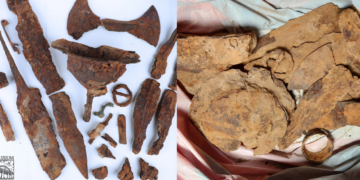
Among the most intriguing objects associated with the exhibition is a small collection of gold coins and medals discovered during post-war work at Malbork Castle.
The hoard was found in 1952–1953 in a hiding place behind a cupboard in the sacristy of St Anne’s Chapel.
It contained ten gold coins and two medals, including ducats and higher-denomination gold pieces issued during the reigns of Polish monarchs.
According to exhibition curator Joanna Czarnowska-Pfeifer, the coins represent the reigns of Sigismund II Augustus, Stefan Batory, Sigismund III Vasa, Władysław IV Vasa, John II Casimir and John III Sobieski.
All were minted in Gdańsk, an important commercial and coin-producing centre on the Baltic coast.
The two medals were created by Jan Höhn the Elder, a prominent seventeenth-century medallist associated with Gdańsk.
The curator described the discovery and composition of the hoard in an account published by the Polish Press Agency.
The circumstances in which the objects were concealed remain a source of historical interest. The published accounts do not establish who hid them or why.
Following their discovery, the gold coins were initially transferred to the National Bank of Poland and subsequently to the Pomeranian Museum in Gdańsk.
In 1970, they were transferred to Malbork Castle Museum.
The hoard is a central feature of the new exhibition, although the available descriptions do not establish whether all twelve objects are physically displayed simultaneously.
From the Teutonic Order to Polish kings
The exhibition also explores Malbork’s importance as a centre of coin production.
During the medieval period, the castle served as the headquarters of the Teutonic Order, a military and religious order that established a powerful territorial state along the southern Baltic coast.
The Order issued its own currency, including coins produced in Malbork.
Among the historical examples discussed by the museum are shillings issued under Grand Master Konrad von Jungingen between 1404 and 1407, distinguished by the letter M.


Coins minted during the rule of Ludwig von Erlichshausen, featuring a lily motif, form another part of the city’s numismatic history.
The political status of Malbork changed in the fifteenth century. In 1457, the castle passed into the hands of the Polish crown and later served as a royal residence.
During the sixteenth and seventeenth centuries, a royal mint operating at the castle produced coins under Stefan Batory, Sigismund III Vasa and John II Casimir.
These changes in coinage reflected the shift from Teutonic rule to Polish royal authority.
For the exhibition’s organisers, such objects offer evidence of political power, commercial activity and changing economic relationships.
The valuable collection lost during the war
Another important part of the exhibition examines the fate of Malbork’s pre-war numismatic collection.
By the late 1920s, the castle had accumulated approximately 11,000 coins, medals and related objects.
It was regarded as a major centre for the study of historical currency.
That collection was dispersed during the Second World War.
According to Czarnowska-Pfeifer, the objects were moved to Gdańsk during the conflict and subsequently taken to Russia as war trophies.
The curator said the Polish Ministry of Culture and National Heritage had pursued efforts to recover the collection over many years, but she did not consider the return of the entire collection realistic under present political circumstances.
The exhibition therefore presents not only surviving treasures but also the history of objects that disappeared from the castle’s holdings.
After the creation of the modern Malbork Castle Museum in 1961, collecting activities resumed, gradually rebuilding its numismatic resources.
Today, the museum’s official collection catalogue records approximately 7,500 numismatic objects held in Malbork, with another 442 objects in its collections at Kwidzyn Castle.
These totals describe the museum’s wider holdings rather than the number of objects included in the newly opened display.
The collections encompass Teutonic and Polish coinage, historical medals, banknotes and other objects associated with money.
They also contain works by renowned Gdańsk medallists, including Samuel Ammon, Sebastian Dadler and Jan Höhn the Elder and Younger.
More than the history of money
The new exhibition is intended to demonstrate that coins and medals can reveal much more than historical prices or methods of payment.
Joanna Czarnowska-Pfeifer, who curated the exhibition, explained that numismatic objects can provide evidence of political events, social change and the cultures of earlier societies.
A monarch’s portrait, a religious symbol or an inscription could convey a message about the authority behind a currency.
Changes in materials, designs and denominations can also help historians understand trade, economic conditions and relationships between different territories.
The collection therefore connects the castle’s history with wider developments across medieval and early modern Europe.
Visitors can explore the role of local mints, the craftsmanship of historical medallists and the changing ways money represented power and prestige.
A new attraction at a UNESCO World Heritage Site
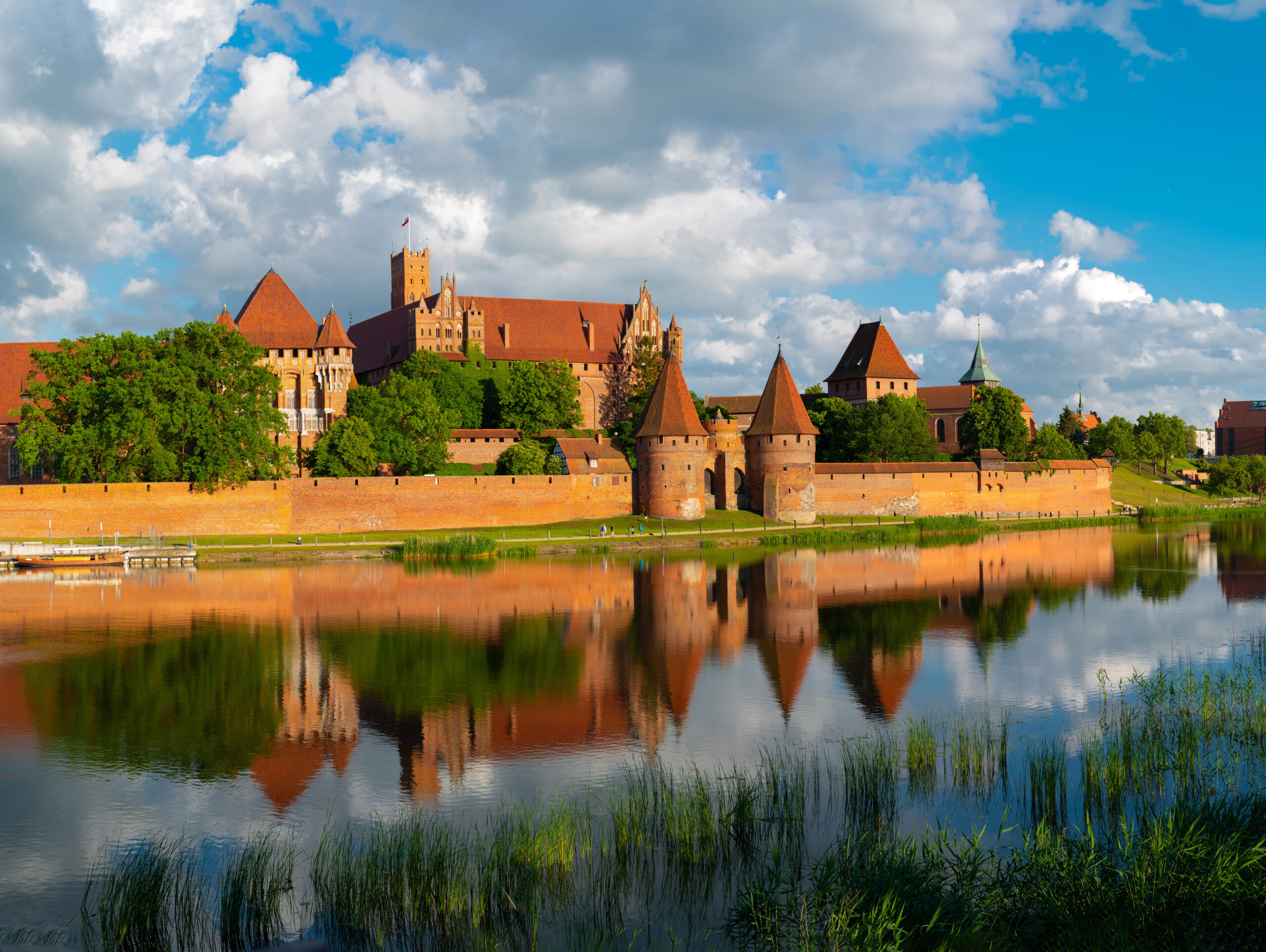
Malbork Castle is one of Poland’s most internationally recognised historic sites.
The enormous brick fortress, constructed and expanded by the Teutonic Order, was inscribed on the UNESCO World Heritage List in 1997.
UNESCO recognises the complex for its exceptional medieval architecture and its importance in the history of architectural conservation and restoration.
Although the castle suffered extensive destruction during the final stages of the Second World War, substantial reconstruction and conservation work has restored much of the historic complex.
The opening of the Malbork Numismatic Cabinet adds a permanent exhibition focused on smaller, often overlooked objects that help explain the castle’s history.
While Malbork’s walls and towers demonstrate the military and political ambitions of its former rulers, coins and medals show how those rulers represented their authority and conducted economic life.
The exhibition opened to the public on 21 November 2026 and will form part of the museum’s permanent programme.
Visitors can consult the Malbork Castle Museum’s official visitor information for admission arrangements and current opening hours.