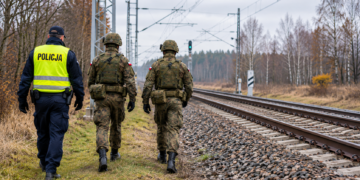
Poland expects to receive additional military support from NATO allies to strengthen security along its eastern border following the latest Russian missile and drone incursions, Defence Minister Władysław Kosiniak-Kamysz announced on Saturday evening.
The minister said specific proposals would be presented at an extraordinary meeting of the North Atlantic Council in Brussels on Monday, 23 November, as Warsaw seeks a stronger response to the violations of Polish airspace.
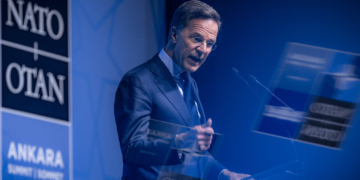
The announcement followed NATO Secretary General Mark Rutte’s visit to Warsaw earlier on Saturday, during which he reaffirmed the alliance’s commitment to defending Polish territory.
- Find more news from Poland on our Homepage .
According to the Polish Press Agency account carried by Polish Radio, Kosiniak-Kamysz said Poland would receive substantial allied assistance in the near future.
The minister also confirmed that he had discussed the proposed measures with General Alexus Grynkewich, NATO’s Supreme Allied Commander Europe.
However, he did not announce which countries would provide the additional support, what military equipment or personnel might be involved, or when any deployments would take place.
NATO to discuss concrete measures on Monday
The next stage of Poland’s response will take place at NATO headquarters in Brussels on 23 November.
An extraordinary meeting of the North Atlantic Council has been scheduled to discuss the Russian airspace violations and possible measures to strengthen Poland’s security.
The Council is NATO’s principal political decision-making body. It brings together representatives of the alliance’s member states and provides the forum through which major collective decisions are made.
Poland is expected to be represented by Deputy Defence Minister Paweł Zalewski.
According to the 21 November announcement reported by the Polish Press Agency, Warsaw intends to put forward specific proposals and identify additional options for allied action.
Those proposals have not yet been made public.
It therefore remains unclear whether the anticipated assistance will involve more fighter aircraft, air-defence systems, surveillance capabilities, military personnel or other resources.
Poland has already requested further support for NATO’s existing Eastern Sentry operation, which aims to strengthen deterrence and defence along the alliance’s eastern flank.
Any additional measures would need to be distinguished from the military capabilities already deployed in the region.
Russian missiles and suspected drone entered Poland
The request for reinforcements followed Russian attacks against Ukraine during the early hours of Friday, 20 November.
Three airborne objects entered Polish airspace and came down in south-eastern Poland.
Polish authorities identified the locations as Mołodycz in Jarosław County, Rudnik nad Sanem in Nisko County and Nowy Lipowiec in Biłgoraj County.
Investigators confirmed that a Russian Kh-101 cruise missile was found at Nowy Lipowiec.
The other objects were provisionally assessed as another missile and a possible jet-powered drone, with investigations continuing.

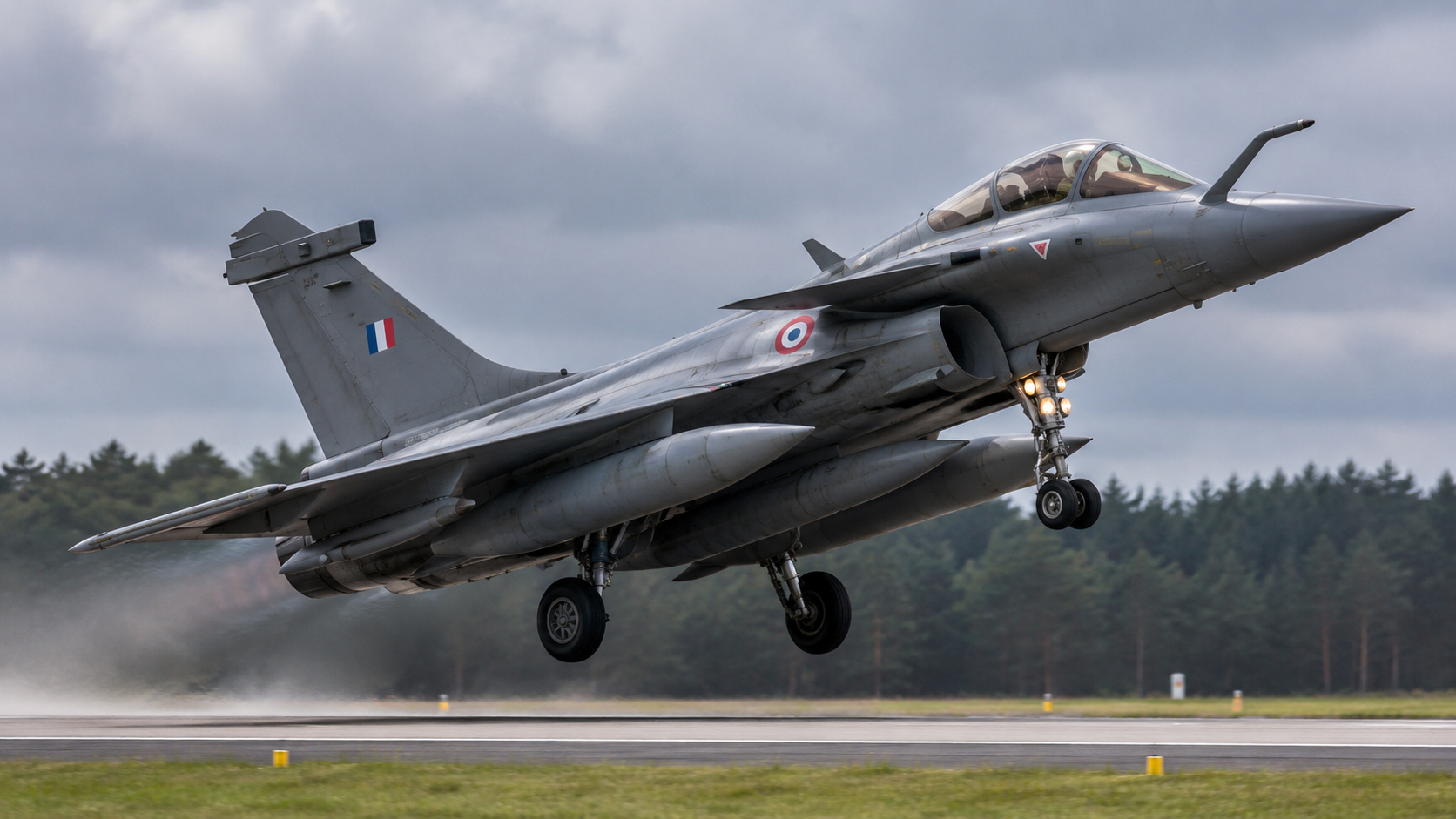
According to the Polish Defence Ministry’s official account of the incident, Polish F-16 fighters and Swedish Gripen aircraft were operating during the alert.
A Dutch military refuelling aircraft was also available, while Polish airborne surveillance assets monitored the region.
Ground-based air-defence systems, including Patriot batteries, were activated.
No injuries or damage to critical infrastructure were reported by Polish authorities.
Kosiniak-Kamysz described the incident as another Russian provocation.
The incursion coincided with multinational military exercises at Nowa Dęba, where troops from countries supporting Ukraine were training together.
Polish officials suggested that the timing was significant, although Moscow’s precise intentions have not been independently established.
Rutte promises NATO solidarity
During his visit to Warsaw on Saturday, Mark Rutte said the entire alliance stood alongside Poland following the incident.
He reiterated NATO’s commitment to defending Polish territory and praised the response of Polish and allied forces.
Rutte also indicated that General Grynkewich would examine potential weaknesses in the alliance’s defence arrangements and determine whether adjustments were necessary.
Speaking in Warsaw, he stressed that NATO needed to establish precisely what had happened before deciding which improvements might be required.
His remarks were reported by Reuters in its coverage of the Warsaw visit.
The assurances provided political support for Warsaw, but did not themselves specify new military commitments.
Kosiniak-Kamysz’s subsequent announcement therefore represents a further development: Poland now expects the discussions to produce practical assistance.
Could NATO reinforce Eastern Sentry?
An important question is whether the additional support will build on NATO’s existing Eastern Sentry operation.
The alliance launched the initiative on 12 September 2025 after a large-scale incursion by Russian drones into Polish airspace.
According to NATO’s official explanation of Eastern Sentry, the operation was designed to improve military readiness and coordination across the eastern flank.
It combines traditional military capabilities with technologies intended to address emerging threats, particularly drones.
Since its introduction, NATO has integrated additional allied aircraft, surveillance platforms and air-defence capabilities into its eastern-flank posture.
The alliance describes the initiative as a flexible military activity that can be adjusted as the security environment changes.
In his 20 November statement, Kosiniak-Kamysz explicitly said he would request additional forces and resources to reinforce Eastern Sentry.
Saturday’s announcement suggests those discussions have progressed, although the precise measures under consideration remain undisclosed.
The minister’s reference to Poland’s eastern border should also not be confused with an announced expansion of physical border fortifications. The immediate security concern prompting the latest discussions is the threat from missiles and drones.
What happens next?
The extraordinary North Atlantic Council meeting on Monday will be the first major opportunity for NATO members to consider Poland’s proposals collectively.
The discussions may clarify which allied capabilities could be made available, how quickly they could be deployed and how they would integrate with Poland’s existing defences.
For now, the additional assistance remains an announced expectation rather than a published deployment agreement.
The distinction matters because Poland already hosts allied military assets and has substantial national air-defence capabilities, while any new contributions would need to be coordinated through NATO’s military and political structures.
For Poland, the immediate objective is to reduce the risk that future Russian attacks on Ukraine will again result in missiles or drones entering its territory.
For NATO, the discussions represent another test of the alliance’s ability to adapt its eastern-flank defences to an increasingly dangerous security environment.
The specific form of the promised support is expected to become clearer following Monday’s talks in Brussels.