Polish security forces prevented a suspected Russian operation near the country’s northern border that could have caused mass casualties and falsely implicated Ukraine, according to new reporting supported by statements from senior Polish defence officials.
The alleged plan involved a staged attack near Poland’s border with Russia’s Kaliningrad exclave, possibly including a border crossing and an incident on Russian territory.
Its suspected purpose was to make Ukraine appear responsible for violence, potentially damaging Polish public support for Kyiv and disrupting military and humanitarian assistance.
- Find more news from Poland on our Homepage .
The details emerged on Wednesday, 18 November, in an investigation by Polish newspaper Rzeczpospolita, which cited senior sources familiar with a preventive security operation conducted in late October and early November.
Poland’s Deputy Defence Minister Paweł Zalewski subsequently confirmed that authorities had received warnings from multiple sources and mobilised police and military personnel to prevent the potential provocation.
Defence Minister Władysław Kosiniak-Kamysz also confirmed that Polish authorities had been aware of the threat and had responded.
However, the precise Russian plan remains classified or unconfirmed publicly. No attack matching the reported scenario took place.
Russia allegedly wanted to blame Ukraine for a deadly attack
According to the original investigation published by Rzeczpospolita, Russian intelligence services were preparing a sabotage operation near the Polish-Russian border around the turn of October and November.
The newspaper’s sources described a possible scenario involving people crossing the frontier and a staged attack that could also have targeted a site on Russian territory.
One source said Polish intelligence had identified specific potential targets and believed the operation could involve a large number of casualties.
Another suggested that people crossing the border might have been killed or deliberately linked to Ukraine through evidence planted at the scene.
The alleged objective was to create the impression that Ukrainians had carried out a deadly attack.
Such an incident could have been used to turn Polish opinion against Ukraine at a time when Warsaw remains one of Kyiv’s most important military, logistical and political supporters.
The newspaper’s sources compared the scenario to the Gleiwitz incident of August 1939, when Nazi Germany staged an attack on a German radio station and falsely blamed Poland shortly before invading.
That historical comparison reflects the alleged deception involved. It does not establish that the Russian plan was identical.
Polish intelligence warnings triggered security operation
The investigation indicates that the first warnings came from allied intelligence services, while Polish intelligence analysts had independently identified indicators of a possible provocation.
Concerns reportedly intensified after Russian officers associated with the coordination of sabotage activities were detected on the Russian side of the border.
The operation is believed to have involved Russian military intelligence structures, although Polish authorities have not publicly disclosed evidence identifying the individuals who might have carried it out.
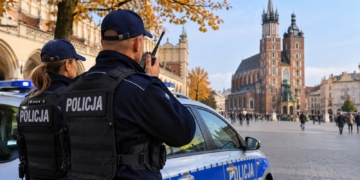
Polish services responded by strengthening security in the north-east of the country.
Police units in border districts received reinforcements from other regions.
You May Also Be Interested In


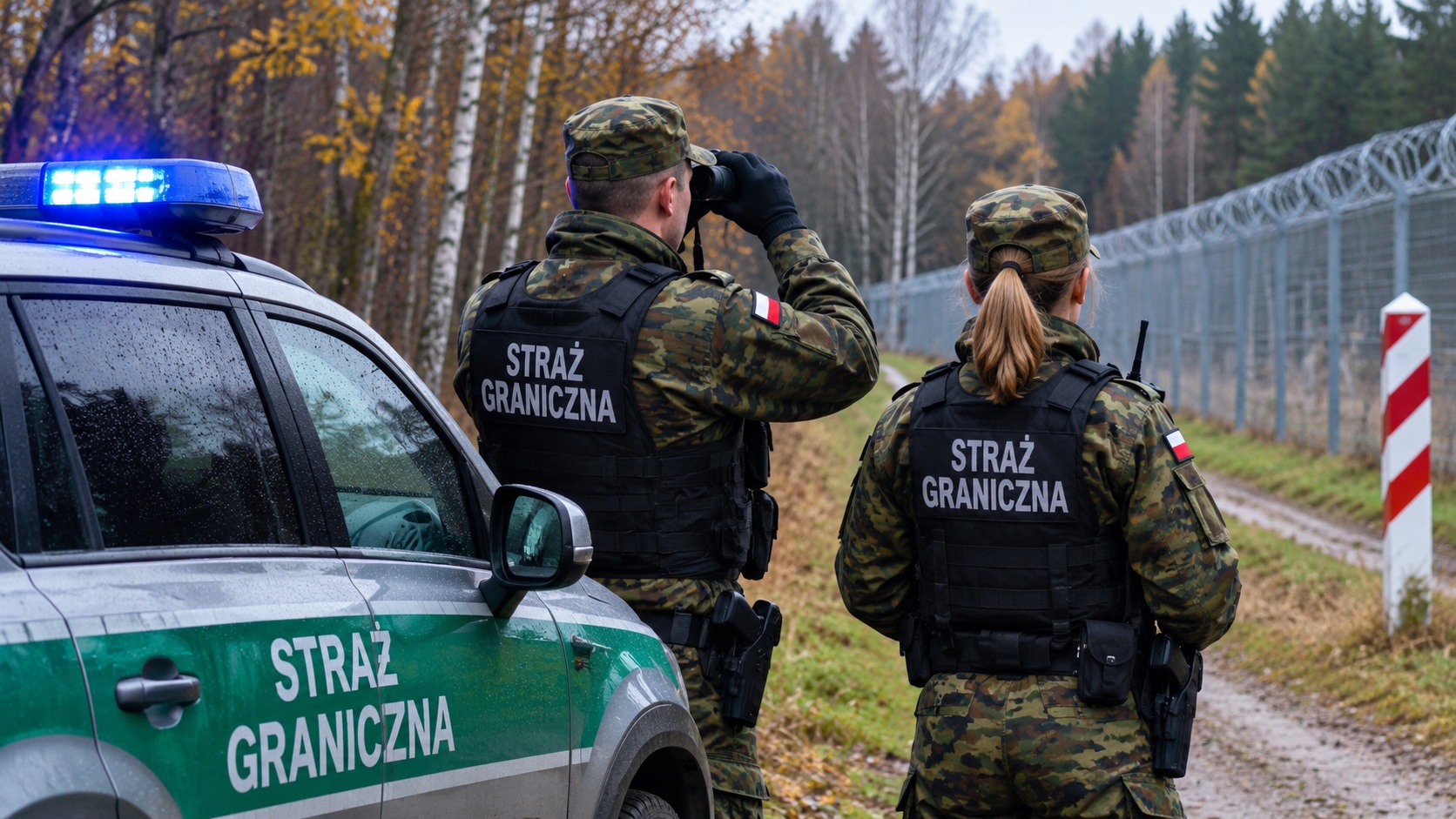
Border Guard posts were strengthened, and additional officers from Poland’s Internal Security Agency, known as ABW, were deployed.
Military exercises were also organised in the Warmian-Masurian region.
According to reporting subsequently summarised by Euronews Poland, the military presence included personnel from the GROM, NIL and AGAT special forces units, supported by reconnaissance capabilities.
The reported deployment was preventive. There is no confirmed account of those units engaging Russian personnel in combat.
Defence Ministry confirms warnings from several sources
Deputy Defence Minister Paweł Zalewski addressed the reports during an interview with Wirtualna Polska on Wednesday morning.
In his interview with the broadcaster, Zalewski confirmed that Polish authorities had received information about a potential provocation from several sources.
He also said that the mobilisation of police and the increased readiness of military units had prevented the suspected operation from materialising.
The minister warned that Russia could continue attempting provocations directed against Poland and other NATO countries.
He argued that Moscow was seeking to weaken European unity and reduce assistance to Ukraine.
His comments provide official confirmation of the intelligence warnings and preventive response, although they do not independently establish every detail of the alleged mass-casualty scenario.
Later on Wednesday, Defence Minister Władysław Kosiniak-Kamysz also addressed the reports during a visit to Jarosław in south-eastern Poland.
According to the Polish Press Agency’s account of his remarks, the minister confirmed that authorities had known about the suspected provocation and taken appropriate action.
He said Polish security services, police and armed forces were coordinating their responses to threats involving sabotage, attacks on infrastructure and other forms of destabilisation.
Tusk warned of suspicious movements on 3 November
The latest revelations provide new context for an earlier border alert disclosed by Prime Minister Donald Tusk.
On 3 November, Tusk announced that Polish security forces had responded to unusual activity near the border with Kaliningrad.
According to the Prime Minister’s Office’s official account, Border Guard officers observed suspicious movements shortly after midnight.
Reports indicated that people carrying torches had been seen near the frontier on the Russian side.
Tusk said the authorities quickly mobilised police, Border Guard and counterterrorism resources to prevent a possible provocation.
The government also confirmed that a special operational group was active in Warmian-Masurian and Podlaskie, involving police officers, Border Guard personnel, counterterrorism units and GROM soldiers.
At the time, the prime minister did not describe a detailed mass-casualty plot or an effort to frame Ukraine.
Poland-24 reported the initial security operation on 2 November and subsequently covered Tusk’s announcement the following day.
Wednesday’s investigation suggests those developments were part of a broader response to intelligence about a potentially much more serious operation.
Intelligence chief says threat was real but details remain secret
Tomasz Siemoniak, Poland’s minister responsible for coordinating the special services, was also questioned about the suspected Russian plan.
Asked by Rzeczpospolita whether Russia had intended to attack a location where many people could have been present, Siemoniak declined to confirm the specific scenario.
He said Russian authorities would be unlikely to admit to planning such an operation and that Polish intelligence could not publicly disclose all information it possessed.
He nevertheless confirmed that Polish services had taken preventive measures because the threat was assessed as genuine.
Siemoniak described the response as proportionate to the available intelligence.
His comments are important because they distinguish the confirmed existence of a security response from the still-undisclosed details of the suspected plot.
No public operational documents have established the exact intended targets, the identity of prospective perpetrators or the number of casualties that might have resulted.
There has also been no publicly confirmed announcement of arrests directly connected with this alleged operation.
Why would Russia want Poland to blame Ukraine?
Poland remains central to Western assistance for Ukraine.
Its territory provides key transport routes for military equipment, humanitarian supplies and other assistance reaching Kyiv.
Poland also hosts large numbers of Ukrainian refugees and remains an important political supporter of Ukraine within NATO and the European Union.
A deadly incident falsely attributed to Ukrainian actors could potentially damage that relationship.
According to the sources cited by Rzeczpospolita, undermining assistance for Ukraine was one of the central objectives of the suspected operation.
A false-flag attack is an operation intended to conceal its real sponsor or perpetrator and make another party appear responsible.
Such tactics can combine physical violence with fabricated evidence and misleading information designed to influence public opinion.
Polish officials have repeatedly warned that Russia may attempt to exploit tensions between Poland and Ukraine.
However, no evidence has been publicly released establishing that the specific reported plan had reached the stage of an imminent executable attack.
Poland prepares for further sabotage threats
The reported operation comes amid continuing concerns in Poland about Russian sabotage, cyberattacks and threats to critical infrastructure.
On 18 November, Kosiniak-Kamysz announced plans to seek an extension of Operation Horyzont, under which military personnel support the protection of critical infrastructure, including railway routes.
The proposal requires further decisions by Poland’s government and president.
The government has also maintained heightened security measures in response to threats associated with Russia’s wider campaign against Ukraine and its European supporters.
The latest investigation indicates that Poland’s authorities considered the threat near Kaliningrad serious enough to mobilise specialist police, intelligence and military resources.
Although the full intelligence picture has not been disclosed, senior ministers have confirmed that the preventive response was deliberate and based on warnings from more than one source.
What is established is that Polish forces mobilised to counter a suspected provocation and that the feared incident did not occur.
The claim that Russia intended to cause mass casualties and blame Ukraine remains based primarily on the security sources cited in Rzeczpospolita.
For Poland, the episode underscores the growing importance of intelligence cooperation and rapid preventive action along NATO’s eastern borders.