Poland’s deputy interior minister has declared that no police force anywhere in the world responded faster than the officers who stopped the gunman responsible for the Kraków mass shooting, praising their intervention as an extraordinary example of courage and effectiveness.
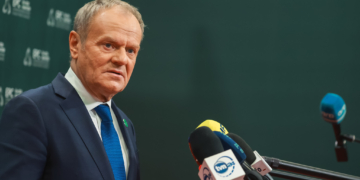
Speaking in the Sejm on Wednesday, 18 November, Czesław Mroczek defended the police response to the attack on 7 November, which left six people dead and 15 injured, including two officers.
The minister told lawmakers that no one anywhere in the world had responded and stopped an attacker more quickly.
- Find more news from Poland on our Homepage .
His statement followed questions from opposition MPs about the number of police patrols protecting Kraków’s historic centre when the shooting began.
Mroczek presented a detailed account of the intervention, which official police records show began almost immediately after the first emergency report.
Officers were pursuing the attacker by 3.01pm and engaged him in a gunfight just after 3.03pm.
The minister’s worldwide comparison has not been independently established against police response times from other attacks. However, the speed of the Kraków intervention is supported by the police’s published chronology.
Just 23 seconds to begin responding
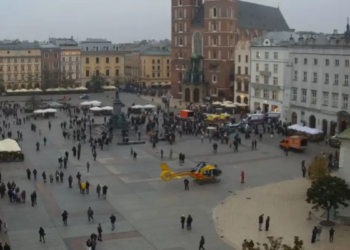
The attack began shortly before 3pm on Saturday, 7 November, when a 24-year-old man drove onto Kraków’s Main Market Square and opened fire on people in the historic city centre.
According to the Polish National Police’s official reconstruction, the gunman continued firing while driving away from the square.
The first emergency report was registered at 3.00pm and 15 seconds.
Małopolska police subsequently stated that the first patrol began responding just 23 seconds after the initial report.
That figure refers to the start of the police response, not the moment the attacker was physically confronted.
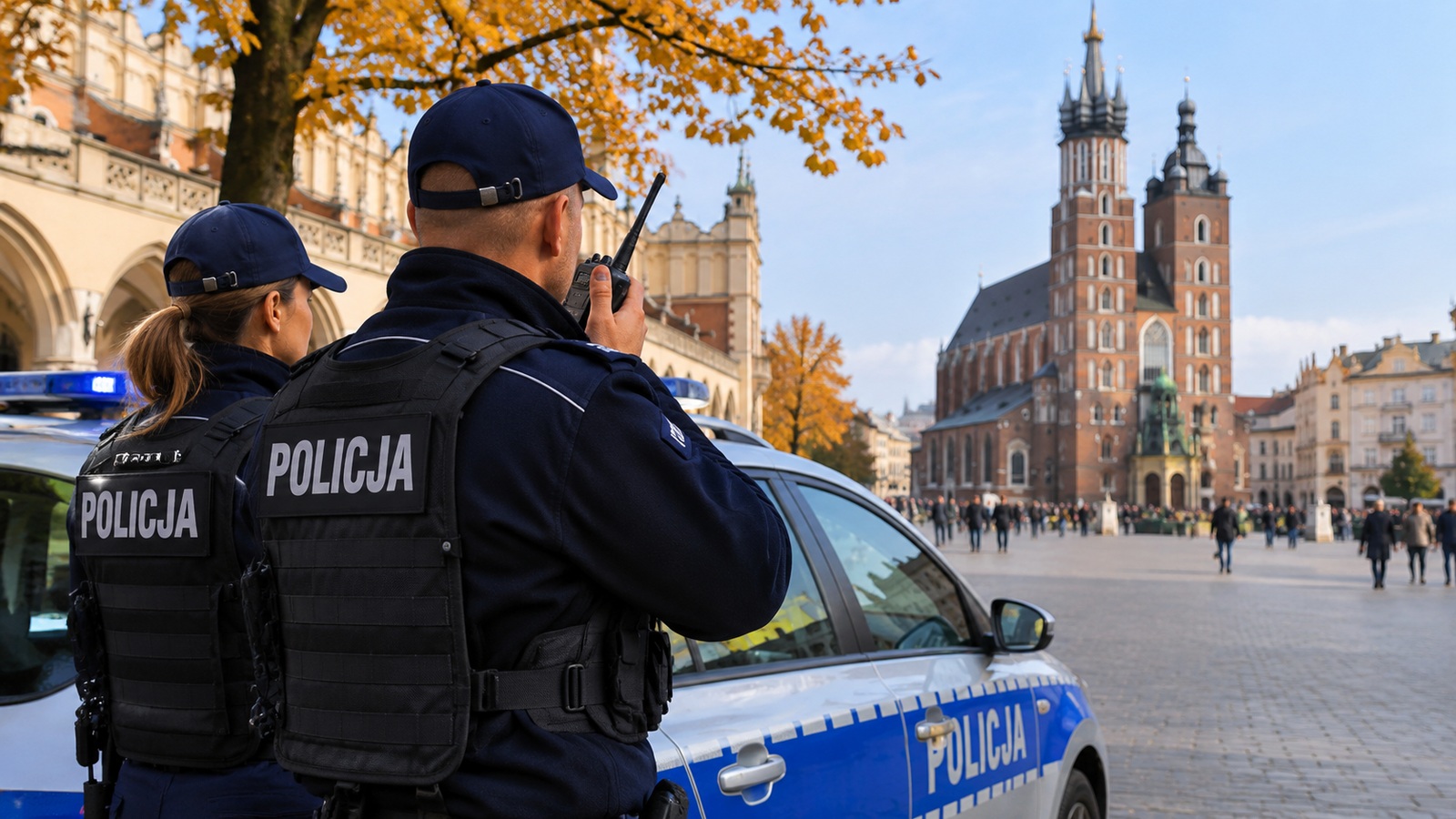
By 3.01pm, officers had begun pursuing the gunman’s vehicle as it travelled through the city centre.
A municipal guard patrol joined the pursuit at 3.01pm and 11 seconds.
At 3.01pm and 28 seconds, the attacker fired towards a tram near the junction of Grodzka and Franciszkańska streets.
The pursuit continued until the gunman’s car collided with another vehicle at the junction of Dietla and Stradomska streets.
At precisely 3.03pm and three seconds, according to the official chronology, officers exchanged fire with the attacker.
The gunman was wounded and subdued. Both officers confronting him were also seriously injured.
The timeline places the decisive armed confrontation approximately three minutes after the first emergency report.
‘No one in the world responded faster’
Mroczek highlighted these events while answering questions in parliament on 18 November.
As reported by the Polish Press Agency and Polish Radio, the deputy interior minister urged MPs to recognise the officers’ bravery and the speed of their actions.
He argued that the police intervention prevented the attacker from continuing his assault and potentially killing more people.
Mroczek’s central message was emphatic: no one anywhere in the world had acted more quickly to respond to such an attack and stop its perpetrator.
The statement went further than the government’s earlier descriptions of the response as exceptionally fast.
It was a ministerial assessment rather than the result of a published international comparison.
Different countries record emergency response times using different definitions, including when a call is received, when officers are dispatched, when they arrive and when a threat is neutralised.
Nevertheless, the documented Kraków timeline establishes that officers confronted an armed attacker within approximately three minutes of the first report.
More than 1,100 officers and security personnel mobilised
Mroczek also disclosed details of the wider operation launched after the gunfire.
Between 3.01pm and 3.16pm, authorities dispatched 19 police patrols, including the first patrol that pursued the attacker.
The other 18 patrols involved 41 police officers.
A further 11 patrols were deployed between 3.58pm and 6.30pm as authorities secured the area and investigated whether the gunman had acted alone.
According to the figures presented in parliament, 1,116 police and security personnel had been involved by 6.45pm.
They included officers from Kraków, public-order units from several Polish cities, counterterrorism personnel, the Central Bureau of Investigation and the Internal Security Agency (ABW).
The operation also involved ambulance teams, an air ambulance, firefighters and municipal guards.
The figures described the mobilisation of services over several hours, rather than the number of officers present on the market square when the attack began.
Government rejects claims that Kraków lacked police officers
The parliamentary debate followed criticism of the authorities’ preparedness before the shooting.
Lawmakers from the opposition Law and Justice (PiS) party questioned the number of officers protecting the Main Market Square and surrounding streets that afternoon.
They also asked whether sending some police personnel to Warsaw had affected Kraków’s security arrangements.
Mroczek confirmed that 141 public-order officers from the Kraków police garrison had been assigned to duties in the capital.
However, he said the wider garrison numbered approximately 8,500 personnel and maintained that those assignments had not reduced the resources available to Kraków’s local and regional commanders.
The specialist security outlet InfoSecurity24 reported that the minister asked opposition MPs not to intensify political disputes surrounding the tragedy.
Earlier claims circulating online had suggested that police were absent from the scene for approximately half an hour.
Polish fact-checking organisation Demagog examined those claims and found them inconsistent with the documented intervention.
The debate over police deployment and preparedness remains distinct from the established speed of the officers who confronted the gunman.
Two wounded officers receive international recognition
The intervention was carried out by Senior Constables Jakub Kulik and Artur Morański, who confronted the attacker despite being armed with handguns against a suspect carrying a more powerful firearm.
Both were seriously wounded during the exchange.
Their actions have since attracted recognition outside Poland.
During the World Police Summit in Dubai, the two officers were honoured by the United Arab Emirates for their bravery in confronting the attacker.
According to the Polish National Police’s official announcement on 18 November, Police Commander-in-Chief Marek Boroń accepted the honours on their behalf.
The awards were presented by UAE Deputy Prime Minister and Interior Minister Sheikh Saif bin Zayed Al Nahyan.
The ceremony recognised the officers’ courage and willingness to risk their lives to protect others.
Poland-24 previously reported on the injured officers and the medical teams caring for them following the attack.
Six lives lost in Kraków
The speed of the intervention did not prevent devastating casualties.
Six people were killed in the shooting, while another 15 were injured, including the two police officers.
Investigators subsequently found three additional victims at the attacker’s home in Ostrowiec Świętokrzyski, in a separate location from the Kraków shooting.
The attacker, who was wounded during the confrontation with police, died in hospital on 9 November.
Poland’s National Prosecutor’s Office has been investigating the shootings as acts of a terrorist nature.
The case prompted national mourning, widespread public expressions of solidarity and renewed discussion of police preparedness and firearms regulations.
Mroczek’s parliamentary statement now places particular emphasis on one part of that tragedy: the exceptionally short period between the initial emergency report and the intervention that ended the immediate threat.
Whether it was the fastest such response anywhere in the world cannot be independently confirmed.
What the official chronology demonstrates is that Kraków police began acting within seconds and stopped the gunman within approximately three minutes, despite two officers suffering serious injuries in the confrontation.