Thousands of people have joined a Polish-led campaign to provide electricity and heating to Ukrainians facing another winter of Russian attacks, raising nearly PLN 4 million for emergency generators and other essential equipment.
The Warmth from Poland for Kyiv initiative, known in Polish as Ciepło z Polski dla Kijowa, has collected more than PLN 3.8 million since the latest fundraising round began in late October.
By Wednesday, 18 November, the campaign’s public fundraising platform recorded PLN 3,880,441 in contributions from 19,156 donors, towards a target of PLN 10 million.
- Find more news from Poland on our Homepage .
The money is intended to purchase generators and equipment capable of keeping hospitals, shelters and other essential facilities operating during power cuts.
The campaign has gathered momentum in recent days following support from major Polish business organisations and individual donors.
It is the second edition of an initiative that raised more than PLN 12 million during the previous winter, when tens of thousands of people contributed to emergency energy supplies for Ukraine.
Thousands of Poles join campaign ahead of winter
The new appeal was launched in late October by a coalition of Polish and Polish-Ukrainian civil society organisations.
They include the Stand with Ukraine Foundation, Sestry.eu, the Democracy Foundation, the Open Dialogue Foundation and The Diplomatic Platform.
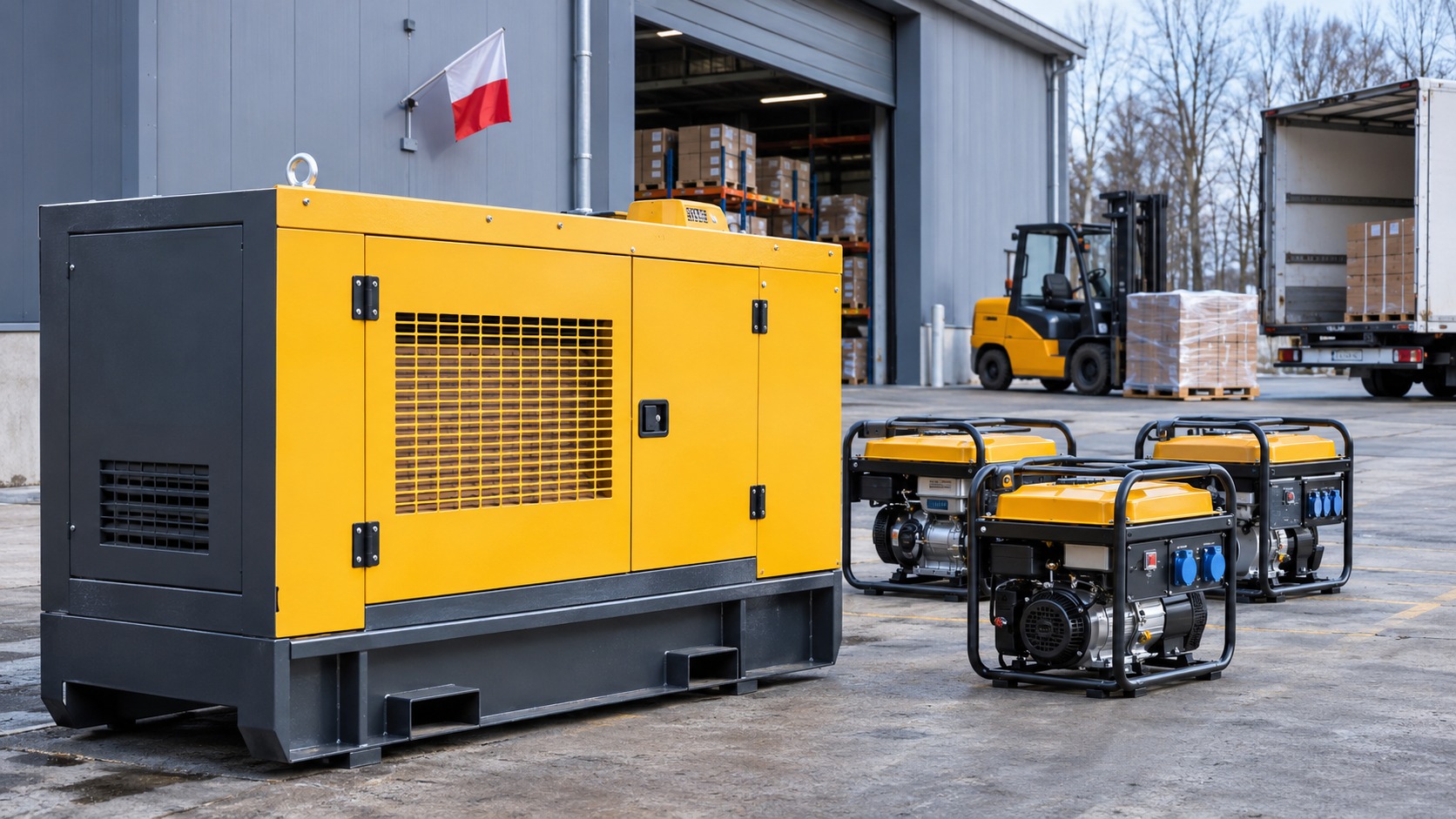
According to the campaign’s official fundraising page, the aim is to purchase large and small generators capable of supplying electricity to facilities where power cuts can endanger lives or disrupt basic services.
The organisers say generators are particularly important for hospitals, shelters and water-pumping stations.
Electricity shortages can also disrupt central heating, water supplies and lifts in apartment buildings.
These problems are especially serious for older people, people with disabilities and families with young children living in high-rise residential buildings.
Bartosz Kramek, a representative of the Open Dialogue Foundation and one of the organisers, warned that Ukraine’s electricity infrastructure was under growing pressure.
Speaking to the Polish Press Agency, he said Russian attacks on power stations, substations and transmission lines were raising the risk of another humanitarian emergency.
The campaign’s target remains PLN 10 million, with donations continuing as winter approaches.
Polish businesses help accelerate fundraising
The initiative has attracted support from several prominent business organisations.
They include Employers of Poland (Pracodawcy RP), the Polish Business Council and Corporate Connections.
The Polish Red Cross and United Nations Global Compact Network Poland are also among the organisations supporting the wider effort.
The campaign has attracted international participation, including support from Belarusian democratic groups associated with opposition leader Sviatlana Tsikhanouskaya.
As PAP reported in its 18 November account, the organisers credited the involvement of Polish entrepreneurs and business organisations with helping increase the pace of donations.


The fundraising figure has consequently risen quickly.
Early reporting on 18 November put contributions at approximately PLN 1.7 million, while later reports confirmed the total had passed PLN 3 million.
By the time Poland-24 reviewed the fundraising platform on Wednesday, it had climbed above PLN 3.8 million.
The total is expected to change as further contributions are received.
Previous campaign funded hundreds of generators
The latest fundraiser builds on an earlier Polish initiative launched in January 2026.
At that time, Russian strikes had left large parts of Kyiv and other Ukrainian cities without reliable electricity and heating during exceptionally cold weather.
The campaign began with a comparatively modest ambition: raising PLN 400,000 to purchase 100 generators.
The idea was initially promoted by Polish entrepreneur Zbigniew Jankowski, before other organisations and campaigners joined the effort.
The response far exceeded expectations.
According to an October report published by the Open Dialogue Foundation, the first edition raised approximately PLN 12.2 million, with 77,188 individual contributors.
| First campaign results | Reported figure |
|---|---|
| Power generators, purchased or donated | 864 |
| Portable power stations | 420 |
| Total funds raised | PLN 12.2 million |
The organisers said the equipment supported hospitals, educational institutions, local authorities, social services and critical infrastructure across Ukraine.
Their report detailed equipment allocated to 102 hospitals and other medical facilities, as well as 114 schools, kindergartens and universities.
Some equipment from the earlier campaign was still being transported or installed when the October report was published.
The current fundraising total is separate from the money raised during that initial campaign.
Large generators can cost up to PLN 1 million each
The organisers are also concentrating on larger mobile power units capable of supplying electricity to important public facilities.
Unlike small household generators, these industrial units can support more substantial operations, including hospital facilities and essential municipal infrastructure.
In an account of the campaign’s relaunch, Sestry.eu reported that powerful mobile generators can cost between PLN 700,000 and PLN 1 million each.
Such equipment may also take several months to manufacture.
On 20 October, one large generator purchased through the earlier fundraising effort left Mielec, in south-eastern Poland, for a Ukrainian region close to the front line.
The latest campaign aims to finance further purchases and deliveries, although the organisers have not yet published a final list of equipment to be bought with the newly raised money.
Russian attacks threaten another difficult winter
Ukraine is entering the colder months with its energy infrastructure under renewed pressure.
Russia has repeatedly attacked Ukrainian power stations, substations and transmission lines since launching its full-scale invasion in February 2022.
Damage to electricity infrastructure can affect far more than lighting.
Heating systems, hospitals, communication networks, water pumps and other essential services may also depend on reliable power supplies.
In a Reuters investigation published on 13 November, Ukrainian energy workers described efforts to repair power stations damaged by Russian missiles and drones.
Reuters reported that parts of central and eastern Ukraine, including Kyiv, were experiencing power cuts lasting up to 18 hours a day.
The attacks have created particular difficulties for cities where many residents live in apartment buildings dependent on centralised heating and other shared infrastructure.
Emergency generators cannot replace an entire electricity network, but they can keep critical facilities operating while larger repairs are carried out.
Poland also pledges further government assistance
The citizen-led fundraising campaign is separate from financial assistance provided by the Polish government.
On 6 November, Foreign Minister Radosław Sikorski announced an additional PLN 8 million for generators for Ukraine through an international energy-support mechanism.
According to the Polish Foreign Ministry’s official statement, the money was intended to support Ukraine’s preparations for winter and strengthen its energy resilience.
Earlier in 2026, Poland’s Government Strategic Reserves Agency also allocated 379 generators and 18 heaters from its stocks for Ukraine.
Warsaw separately contributed 90 generators.
These government and local-authority initiatives complement, but are distinct from, the money raised through the Warmth from Poland for Kyiv campaign.
Polish solidarity continues into another winter
The return of the fundraising campaign demonstrates the continuing involvement of Polish civil society in supporting Ukraine.
The organisers say the immediate priority is acquiring equipment that can be delivered before the most difficult winter conditions arrive.
Previous contributions have already financed hundreds of generators and other emergency power supplies, while further industrial equipment ordered through the first campaign is being deployed.
The renewed appeal now seeks to build on those results.
With more than 19,000 donors contributing nearly PLN 4 million, the campaign is approaching two-fifths of its PLN 10 million target.
For Ukrainians facing another winter of disrupted electricity, the equipment purchased with those donations could provide a vital source of power for hospitals, shelters and other essential services.