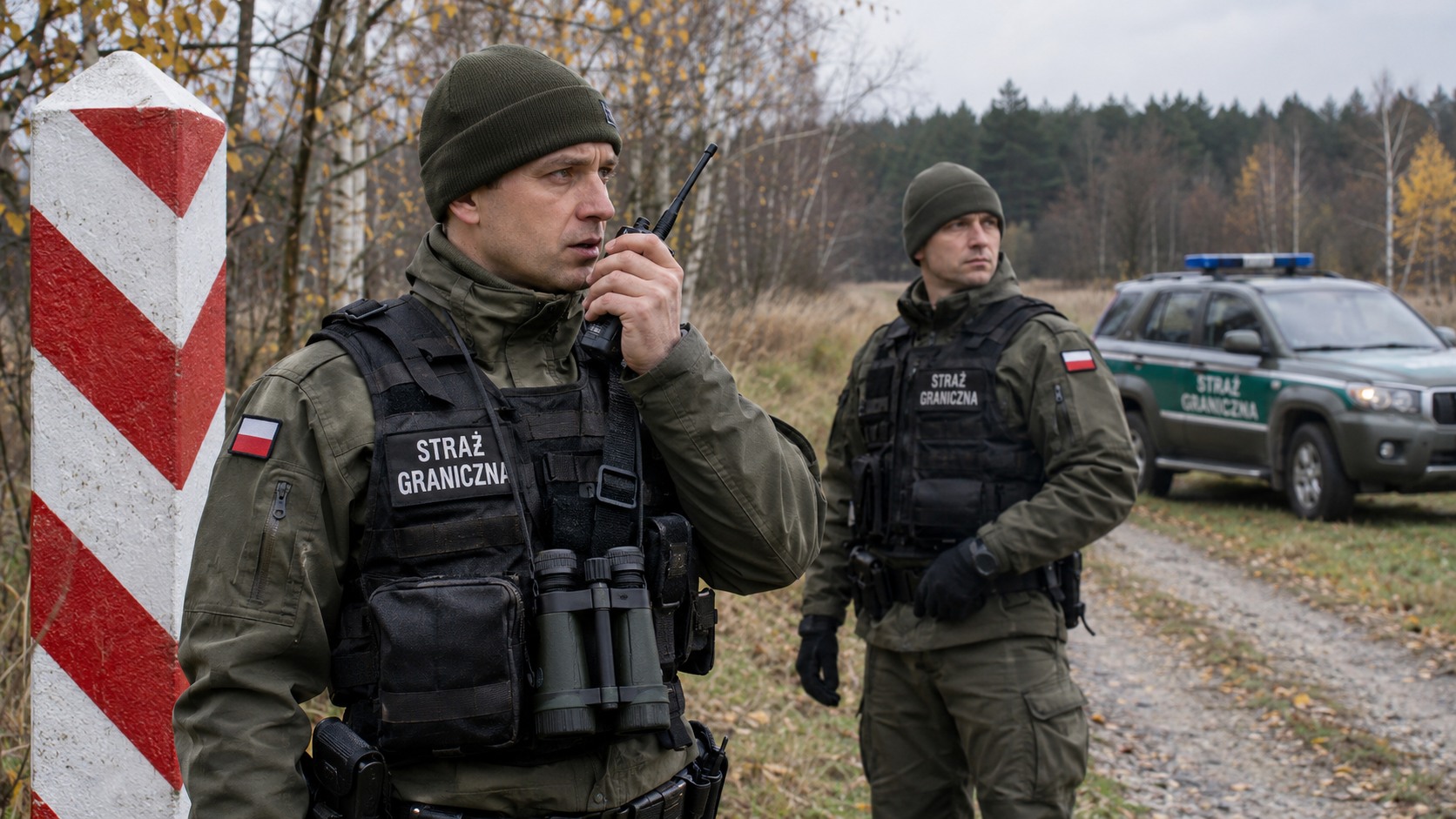
Poland has launched a special security operation near its border with Russia’s Kaliningrad exclave following intelligence warnings of possible sabotage in the coming days. Additional police officers, including counterterrorism units, have been deployed to the country’s north-east, with the military, Border Guard and intelligence services involved in the preventive operation.
National Police Chief Marek Boroń confirmed the operation on Monday, 2 November, revealing that a special command centre had been established at National Police Headquarters in Warsaw to coordinate the response.
The operation covers the Warmian-Masurian and Podlaskie provinces, with the regional police headquarters in Olsztyn and Białystok also participating.
- Find more news from Poland on our Homepage .
Speaking to Polish broadcaster RMF FM, Boroń said the authorities were preparing for possible incidents along the frontier with Russia’s Kaliningrad exclave, a strategically important part of NATO’s eastern border.
He linked the heightened security measures to the broader threat of sabotage, subversion and activities by intelligence services operating from the east.
The police chief emphasised that the measures were intended to protect residents, public institutions and other facilities that could be threatened.
There has been no confirmed report of an armed incursion or an act of sabotage connected with the latest warnings.
Intelligence warnings raise concerns about possible border incidents
According to RMF FM, Polish authorities received warnings last week from the Military Intelligence Service and intelligence agencies of allied countries about possible sabotage operations near the border with Kaliningrad.
The reported intelligence included the possibility of armed groups attempting to cross the frontier.
However, those details have not been independently verified through a publicly released intelligence assessment, and Polish authorities have not announced that such an incursion has occurred.
Boroń confirmed that the operation was based partly on information received from external security services, but did not disclose the intelligence itself.
The distinction is significant: the operation is a preventive response to potential threats, rather than confirmation that an attack has begun.
Police have not publicly identified particular border crossings, towns or infrastructure sites as intended targets.
The number of personnel involved and the expected duration of the special operation have also not been disclosed.
Additional police and counterterrorism units deployed
Polish police have brought personnel from several regions into the north-east to reinforce existing security arrangements.
Boroń confirmed that counterterrorism officers were among those participating, alongside police units coordinating their activities with the armed forces, Border Guard and intelligence services.
The central command structure is located at National Police Headquarters, supported by the regional headquarters in Olsztyn and Białystok.
Warmian-Masurian province contains Poland’s direct land border with the Russian exclave of Kaliningrad. Podlaskie lies further east, bordering Lithuania and Belarus, and includes territory near the strategically important corridor between Kaliningrad and Belarus.
The operation therefore involves a broader part of north-eastern Poland than the Russian frontier alone.
Tomasz Markowski, spokesman for the Warmian-Masurian regional police headquarters, separately confirmed to Radio Olsztyn that additional police resources had been deployed where necessary.

He said officers were carrying out their public-security responsibilities in response to current threats, including the possibility of sabotage and subversive activities.
Markowski declined to provide specific information about the tasks assigned to the reinforcements.
Police have similarly indicated that operational details cannot be publicly disclosed.
Why the Kaliningrad border matters to NATO
Kaliningrad is a Russian exclave situated between Poland and Lithuania, geographically separated from mainland Russia.
It is an important military position for Moscow, hosting Russian forces and infrastructure close to several NATO member states.
For Poland and its allies, security around Kaliningrad is closely connected with the defence of the Baltic region and the Suwałki corridor, the narrow area of territory linking Poland to Lithuania between Kaliningrad and Belarus.
Potential disruption along this frontier therefore carries implications beyond Poland’s immediate border security.
Warsaw has repeatedly warned that Russia and its allies may use sabotage, cyberattacks and other unconventional operations to destabilise European countries without engaging in conventional warfare.
In October, Polish Foreign Minister Radosław Sikorski warned NATO allies about potentially deadly Russian hybrid attacks, calling for stronger responses to covert threats.
Poland has also investigated suspected attempts to attack infrastructure and facilities connected with assistance to Ukraine.
One recent case involved an alleged attempt to recruit someone to attack a Polish drone factory, although investigators had not established the recruiter’s identity or conclusively verified his claimed intelligence connections.
These cases form part of the wider security environment in which the latest police operation is taking place. They do not establish that a specific sabotage operation near Kaliningrad has been ordered or is imminent.
Police deny mobilisation is connected to constitutional crisis
The disclosure also clarifies a separate controversy over a nationwide police-readiness instruction issued on 29 October.
The order directed officers to maintain full readiness between 2 and 8 November, prompting speculation that additional personnel were being prepared for deployment in connection with Poland’s escalating Constitutional Tribunal dispute.
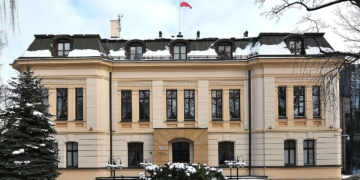
That confrontation had involved police officers securing the Tribunal’s headquarters in Warsaw amid competing claims over the institution’s leadership.
National Police Headquarters rejected suggestions that the readiness order was connected with the judicial crisis.
In a statement issued on 30 October, police said the instructions related to current threats involving sabotage and subversion.
Boroń reinforced that distinction in a letter to police officers published on 1 November.
The letter defended police actions around the Constitutional Tribunal while separately addressing the need to prepare for attempts by foreign intelligence services to destabilise Poland.
Poland-24 previously reported on the police chief’s response to concerns about the Tribunal operation, including questions raised by a police trade union.
The newly disclosed border operation provides additional context for the security readiness measures, although the authorities have not made the full operational orders public.
Authorities remain on alert
For now, Poland’s security operation remains preventive.
The authorities have confirmed increased police deployments and inter-agency coordination but have not released a detailed public threat assessment.
Nor have they announced evidence of an attempted armed crossing or a specific sabotage incident connected to the reported intelligence warnings.
The immediate priority, according to Boroń, is to protect communities and facilities in the border region while ensuring that police and other security services can respond to emerging threats.
The operation highlights Poland’s continued concern about unconventional threats along NATO’s eastern frontier, even as the precise nature and likelihood of the latest reported danger remain undisclosed.