Polish security forces responded to suspicious activity along the country’s border with Russia overnight after Border Guard officers reported seeing unidentified people carrying torches near the frontier. Prime Minister Donald Tusk said on Tuesday, 3 November, that authorities had rapidly mobilised personnel and may have prevented a provocation. However, he acknowledged that the individuals’ intentions could not be confirmed. The incident follows intelligence warnings that armed groups or saboteurs could attempt to enter Poland during the first half of November.
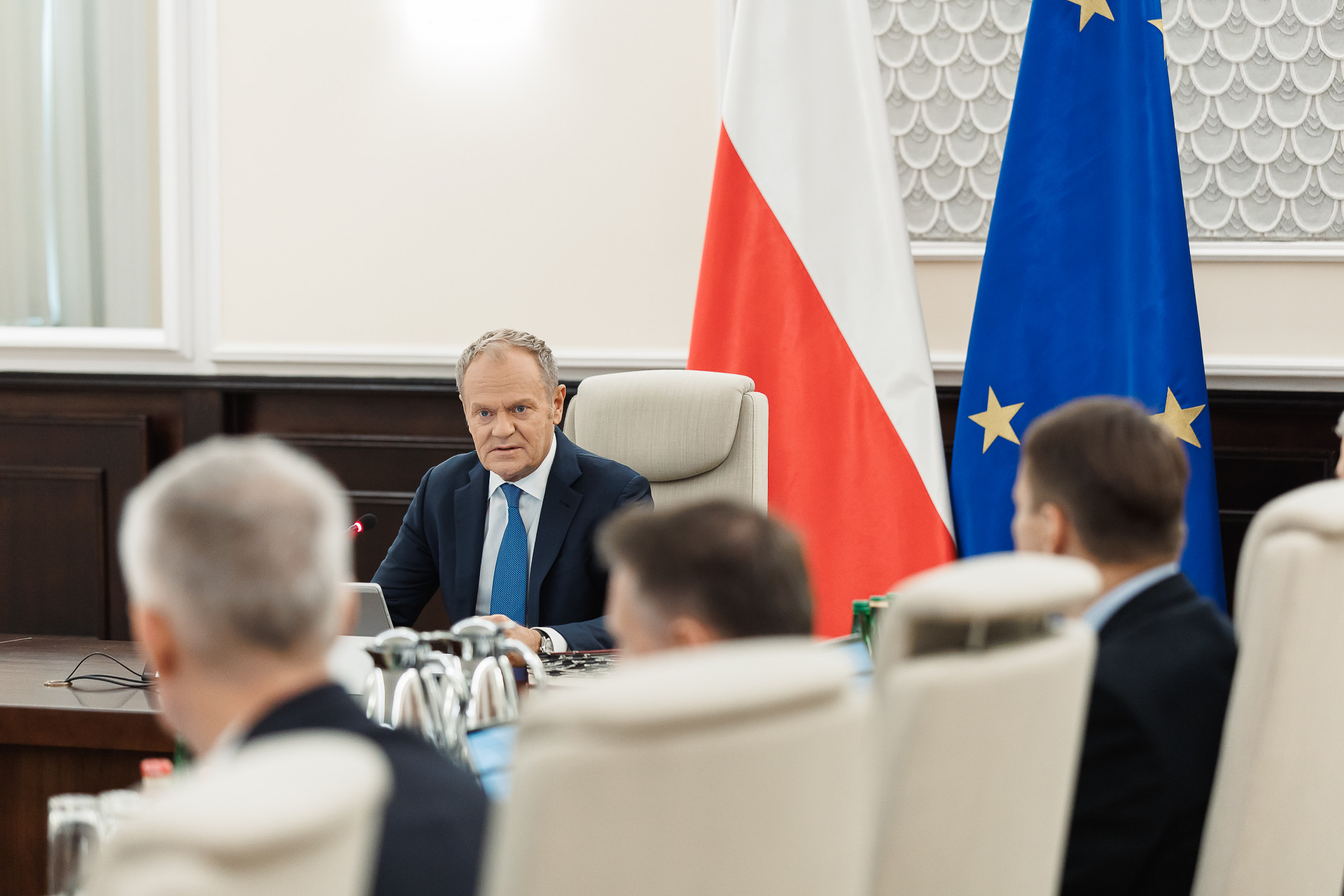
Tusk disclosed the incident while addressing ministers at the beginning of Tuesday’s cabinet meeting in Warsaw.
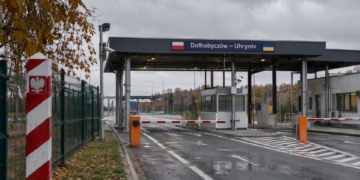
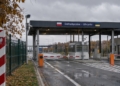
He said he had received a report from the Border Guard shortly after midnight about unusual activity near Poland’s northern border with Russia’s Kaliningrad exclave.
- Find more news from Poland on our Homepage .
The prime minister described the people observed as individuals carrying torches and said the Border Guard considered the situation serious enough to require an immediate response.
According to Tusk, appropriate security personnel and resources were quickly directed to the area.
He said the response may have prevented a provocation, while stressing that the authorities could not determine whether those involved had intended to provoke an incident.
The account was reported by the Polish Press Agency following the prime minister’s remarks, with similar details independently reported by Associated Press.
People with torches spotted near Russian border
The prime minister did not identify the people involved or specify precisely where along the frontier they had been observed.
He also did not disclose their number, nationality or whether they were carrying weapons.
The description therefore does not establish that an armed group attempted to cross into Poland.
Nor has the government publicly presented evidence linking the unidentified individuals directly to Russian intelligence or military services.
Nevertheless, Tusk said the response demonstrated why Polish security forces had been placed on heightened alert.
The Border Guard had assessed the situation as requiring full mobilisation and control of the area, according to the prime minister.
Speaking about the risk of further incidents, he warned that Poland needed to remain prepared for provocations both at its borders and elsewhere within the country.
His comments came amid growing security concerns involving Russia’s Kaliningrad exclave, which borders Poland and Lithuania and hosts significant Russian military infrastructure.
Intelligence warned of possible armed incursions
Tusk also revealed further details about intelligence warnings that had prompted Poland’s recent security operation.
He said Polish and allied intelligence services had been providing information for some time about potential sabotage or provocations during the opening weeks of November.
More precise intelligence subsequently indicated that incidents could occur during the first half of the month.
The scenarios reportedly included the possibility of armed individuals entering Polish territory.
According to Tusk, the warnings contributed to the government’s decision to reinforce police deployments, strengthen Border Guard units and position counterterrorism personnel in the region.
You May Also Be Interested In

The prime minister also referred to discussions with General Alexus Grynkewich, NATO’s Supreme Allied Commander Europe and commander of US European Command.
Tusk said Grynkewich had warned during a visit to Poland that further escalation could occur during the autumn.
The full intelligence underlying these warnings has not been made public.
Consequently, the government’s statements establish that security preparations are under way in response to reported threats, rather than that an armed incursion has been independently confirmed.
Special operation already under way in north-eastern Poland
Tuesday’s developments follow the announcement of a special security operation covering north-eastern Poland.
On Monday, 2 November, National Police Chief Marek Boroń confirmed that additional officers, including counterterrorism personnel, had been deployed following warnings about possible sabotage near the Russian frontier.
The operation is coordinated by National Police Headquarters in Warsaw, with regional police commands in Olsztyn and Białystok participating.
Police are working alongside the Border Guard, armed forces and intelligence services.
Poland-24 reported on the special operation near the Russian border on 2 November, explaining the intelligence warnings, participating services and preventive nature of the deployments.
Boroń said the authorities were seeking to protect border communities, public facilities and other locations that could be vulnerable to hostile activity.
The operation covers both Warmian-Masurian province, which shares Poland’s land border with Kaliningrad, and Podlaskie province, which borders Belarus and Lithuania.
That geographical scope means the security measures extend beyond the direct Polish-Russian frontier.
The police chief has not publicly disclosed the number of participating officers or identified specific potential targets.
Reports of GROM involvement require caution
Some Polish media reports have suggested that soldiers from GROM, Poland’s elite special forces unit, have been deployed to the border region.
However, the precise nature of their involvement in the current security operation has not been independently established.
Lieutenant Colonel Mariusz Łapeta, a spokesman for Poland’s Special Forces Component Command, told Polish newspaper Fakt that special forces regularly conduct training activities.
He cautioned against interpreting the presence of such personnel as evidence of an exceptional military situation.
This distinction matters because the government has confirmed a police-coordinated security operation, but has not publicly provided a detailed breakdown of every military unit involved.
The confirmed elements include reinforced police deployments, counterterrorism personnel and cooperation with the Border Guard and other security agencies.
Why Poland’s border with Kaliningrad matters
Kaliningrad is a Russian exclave on the Baltic Sea, separated from mainland Russia by neighbouring countries.
It lies between Poland and Lithuania, both members of NATO and the European Union.
Its location gives the region considerable strategic significance.
Poland has reinforced security along the border in recent years, including through fencing and electronic surveillance infrastructure.
The Polish government began installing a 200-kilometre electronic surveillance barrier in 2023, intended to help Border Guard officers detect suspicious movements and other illegal activity.
The wider region also includes the Suwałki corridor, the strategically important stretch of territory connecting Poland and Lithuania between Kaliningrad and Belarus.
For NATO, the security of this area is closely connected with maintaining access to the Baltic states.
But the strategic importance of the region should not be confused with evidence that Russia has launched an attack or that an armed infiltration has occurred.
Poland remains on heightened alert
Tusk warned that the risk of further incidents had not disappeared following the overnight response.
He said security forces needed to remain prepared because potential provocations or sabotage might occur not only along the frontier but also elsewhere inside Poland.
The prime minister did not announce a new state of emergency or confirm that an armed confrontation had taken place.
Authorities have also not publicly identified the individuals observed overnight or established that they crossed the border.
The immediate significance of Tuesday’s announcement is therefore twofold.
First, the government has confirmed a specific security response to suspicious activity following the deployment of additional forces.
Second, Tusk has disclosed that the preventive operation was prompted by intelligence warnings extending to possible incursions by armed groups.
The overnight incident does not establish that such a scenario has materialised.
It does, however, provide the first publicly described example of the kind of suspicious activity Polish authorities say they are preparing to confront.