Polish Prime Minister Donald Tusk has called on European leaders to show solidarity with Poland by strengthening their support for Ukraine, warning that Russian aggression is no longer confined to Ukrainian territory. His appeal came just three days after Russian cruise missiles entered Polish airspace, bringing the consequences of Moscow’s war directly onto NATO and European Union territory.
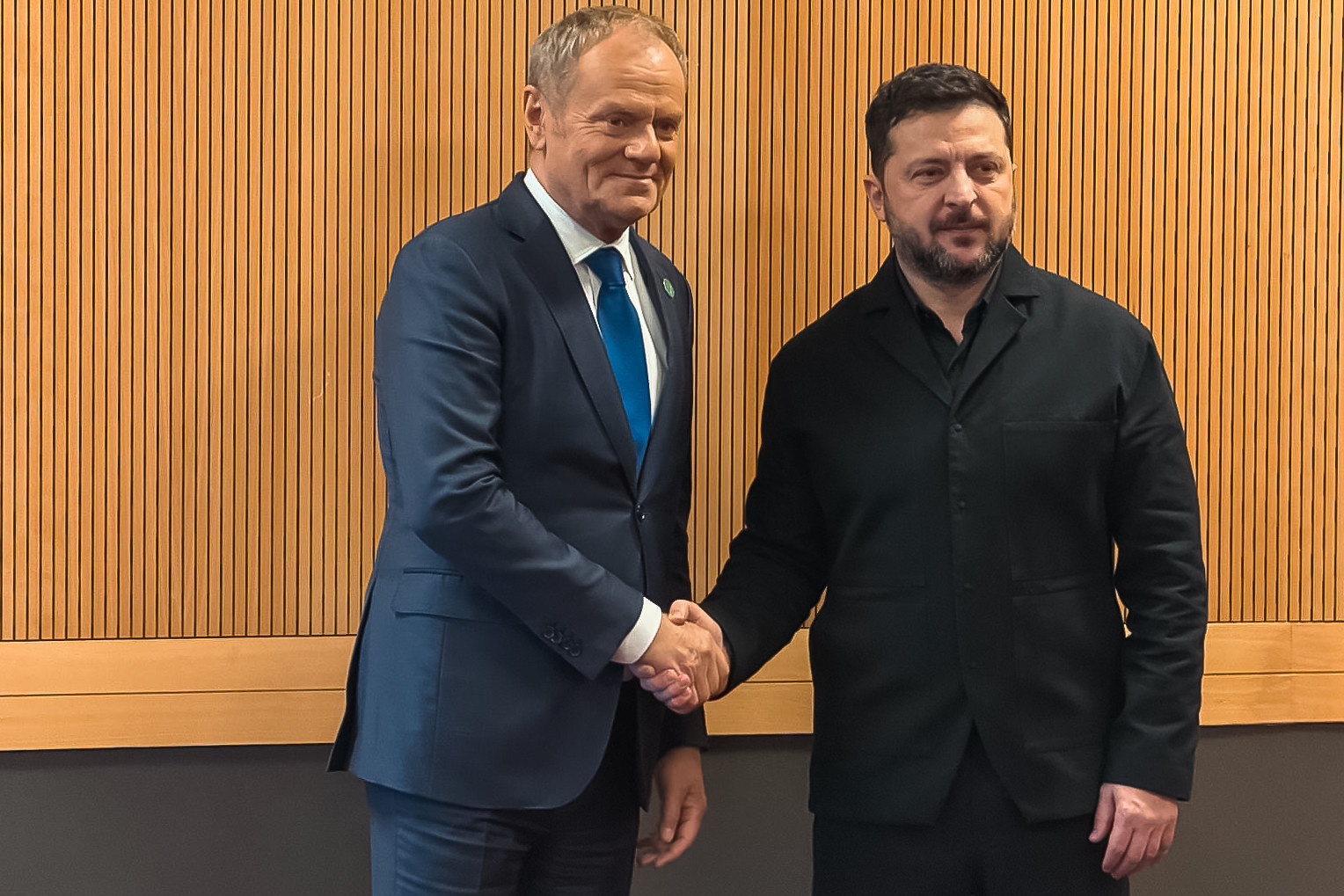
Speaking at a summit of Central European leaders in Bratislava on Monday, 23 November, Tusk argued that helping Ukraine defend itself was also a matter of protecting Poland and the wider European Union.
The Polish leader addressed the prime ministers of Hungary, Slovakia and the Czech Republic, alongside Austria’s chancellor, during discussions about European security, financial assistance for Ukraine and the EU’s next long-term budget.
- Find more news from Poland on our Homepage .
According to the Polish Prime Minister’s Office, Tusk said in remarks translated from Polish:
“Supporting Ukraine today means directly supporting Poland and Europe.”
His appeal reflected growing security concerns in Poland following a series of Russian airspace incursions during attacks on neighbouring Ukraine.
Tusk appeals for solidarity with Poland
The Polish prime minister argued that European governments should recognise the direct implications of Russia’s military actions for countries beyond Ukraine.
He urged the leaders attending the Bratislava summit to support Ukraine during what he described as a critical period of Russian aggression.
Tusk specifically appealed to Hungary, Slovakia, the Czech Republic and Austria to consider Poland’s security needs, regardless of their individual positions on the war.
His argument was that assistance to Kyiv should not be viewed exclusively as support for a country outside the European Union.
Instead, he presented Ukraine’s ability to resist Russian attacks as an important component of European security.
The Slovak news agency TASR reported that Tusk questioned what further incidents would be required before European governments recognised the need to stop Russian aggression.
The prime minister also warned against leaving Poland isolated in the face of further Russian provocations.
He described the security situation as a shared European responsibility rather than a challenge for Poland and Ukraine alone.
Three Russian missiles entered Poland days earlier
Tusk’s remarks followed a serious airspace incident on Friday, 20 November.
During a major Russian attack on Ukraine, three Russian missiles entered Polish airspace and fell at separate locations.
Polish prosecutors subsequently identified the recovered wreckage as belonging to Russian Kh-101 cruise missiles, correcting an earlier assessment that one of the objects might have been a drone.
The debris was found near Nowy Lipowiec in Lubelskie province and near Rudnik nad Sanem and Mołodycz in Podkarpackie province.
During the Bratislava summit, Tusk drew particular attention to the missiles that had landed in south-eastern Poland, including locations relatively close to the Slovak border.
He argued that Ukraine’s ability to intercept Russian missiles before they reached neighbouring European countries was directly relevant to Poland’s security.
The prime minister expressed a desire for Ukraine to have sufficient defensive capabilities to stop missiles threatening EU territory.


However, his comments did not amount to an announcement of a new Polish military operation or an agreement to conduct interceptions over Ukraine.
They formed part of his wider appeal for coordinated European assistance.
Poland calls for joint European action to support Ukraine
Tusk said he would seek a common European response to Ukraine’s continuing defence needs.
His appeal came as European governments face difficult negotiations over future financial assistance to Kyiv.
Although EU countries broadly recognise Ukraine’s security challenges, they differ over how additional support should be financed and whether particular funding arrangements should become compulsory.
During the Bratislava discussions, Hungarian Prime Minister Péter Magyar reiterated that his government opposed making financial contributions to Ukraine mandatory through the EU’s next seven-year budget.
According to Reuters’ reporting on the summit, Magyar argued that Ukraine funding should not automatically be tied to the bloc’s long-term financial framework.
Hungary’s position does not amount to a rejection of all assistance to Ukraine. Magyar has acknowledged the need for solidarity while objecting to specific financing arrangements.
Slovakia and the Czech Republic have also raised concerns about aspects of the proposed EU budget and support mechanisms.
The disagreements illustrate the political challenge facing Tusk: persuading neighbouring governments to coordinate assistance to Ukraine while recognising their different positions on financing and European policy.
The Bratislava meeting did not produce a confirmed new joint funding commitment for Ukraine.
Tusk also rejects proposed cuts to EU spending
Alongside his appeal over Ukraine, Tusk challenged the latest proposal for the European Union’s 2028–2034 budget.
European Council President António Costa circulated a revised proposal on 21 November that would reduce planned spending compared with the European Commission’s original draft.
According to the Polish government, the revision would amount to a reduction of approximately 10%.
Tusk argued that Central European countries needed greater investment in security, economic development and infrastructure rather than reduced financial support.
He said Poland would oppose a budget settlement that resulted in higher energy prices, substantial social costs or weakened defence capabilities along NATO’s eastern flank.
His position was broadly aligned with concerns expressed by other Visegrád leaders over cohesion funding, agriculture and the financial priorities of the next EU budget.
However, shared objections to the budget did not eliminate their differences over financial assistance for Ukraine.
The leaders also discussed the EU’s emissions trading systems, with the Visegrád countries seeking to delay the introduction of ETS2 for buildings and road transport until at least 2030.
These remain negotiating positions rather than adopted changes to EU law or spending commitments.
Why the Visegrád summit matters
The Visegrád Group, commonly known as the V4, brings together Poland, Hungary, Slovakia and the Czech Republic.
The four countries cooperate on regional economic, political and security matters, although disagreements over relations with Russia and support for Ukraine have complicated their cooperation since Moscow’s full-scale invasion in 2022.
Monday’s meeting took place in Bratislava, where Slovak Prime Minister Robert Fico hosted Tusk, Hungary’s Péter Magyar and Czech Prime Minister Andrej Babiš.
Austrian Chancellor Christian Stocker also attended.
The discussions provided an opportunity for the leaders to seek common positions ahead of further EU budget negotiations.
The meeting’s outcomes were also reported by Euronews, which noted that the participants shared concerns about the proposed budget but continued to differ over how assistance to Ukraine should be organised.
For Poland, the summit offered a platform to bring security concerns on NATO’s eastern flank directly into discussions about European spending and political priorities.
What happens next?
Tusk has indicated that Poland will continue pressing its European partners for stronger support for Ukraine and greater recognition of the security needs of countries bordering the conflict.
The next stages of negotiations will concern both Ukraine assistance and the EU’s proposed long-term budget.
Any new financing arrangements will require agreement through the relevant EU procedures.
Meanwhile, Poland continues to assess the security implications of Russian missile and drone activity near its borders.
The latest Russian drone incursion into Polish airspace, reported later on Monday evening, has added to concerns about the risks of further incidents.
Tusk’s message in Bratislava was that Europe’s response to Russian aggression should be judged not only by its support for Ukraine but also by its willingness to protect the security of EU member states exposed to the conflict.
For Poland, he argued, those two objectives are increasingly inseparable.