

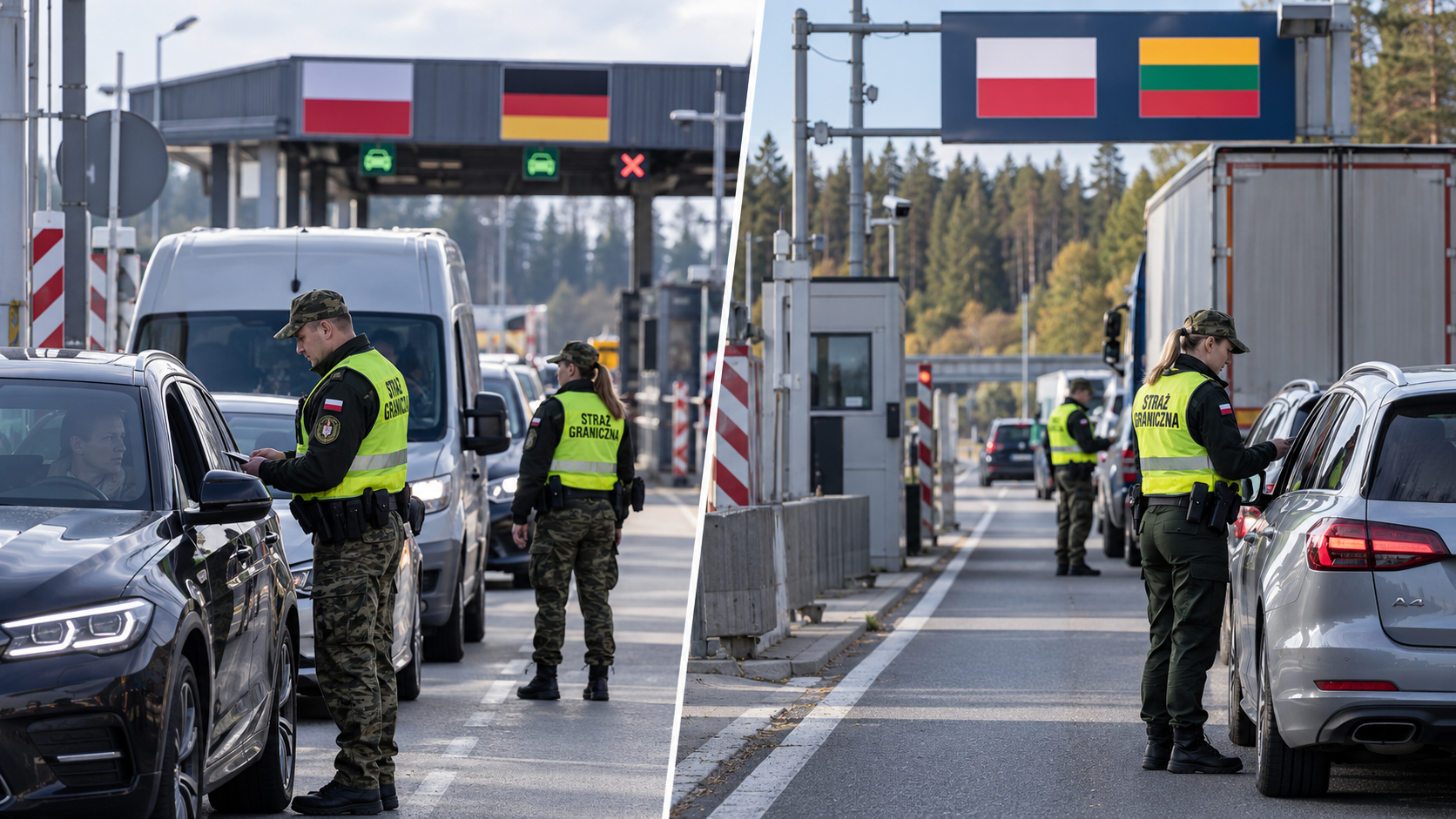
Poland will keep temporary border controls with Germany and Lithuania in place until 30 March 2027, extending checks on two of its internal Schengen borders for another six months as the government says continued migration pressure requires the restrictions to remain. The new period begins on 2 October, immediately after the current controls expire.
The extension is already legally settled. An Interior Ministry regulation signed on 23 September and published in Poland’s Journal of Laws on 25 September states that the temporary controls will run from 2 October 2026 until 30 March 2027. The published regulation also updates the framework governing the controls.
The ministry publicly confirmed the latest extension on 1 October and released updated figures showing the scale of the checks since they were first introduced.
- Find more news from Poland on our Homepage .
According to figures reported from the Interior Ministry by InfoSecurity24, Polish services have checked more than 4.5 million people and almost 2.3 million vehicles on the two borders since controls were restored in July 2025. Nearly 1,300 people have been refused entry from Lithuania and almost 1,200 from Germany.
The government says the controls remain necessary to limit irregular migration and strengthen border security.
The Interior Ministry has linked the Lithuanian frontier in particular to migration routes running westwards through Belarus and the Baltic states. On the German side, the government has also cited the risk of secondary movements involving people already present elsewhere in the Schengen area without regular status.
What the checks mean for travellers
Germany and Lithuania are both members of the EU’s Schengen area, where travellers would ordinarily cross internal borders without routine immigration checks.
The Polish measures do not mean every person or vehicle is systematically stopped.
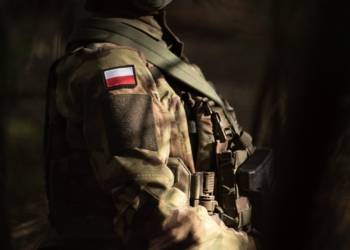
Border Guard officers carry out selective checks based on operational assessments, with support from police and soldiers. The legal framework designates specific places where the border can be crossed while the temporary controls remain in force.
Current reporting based on Interior Ministry material says the latest framework provides for 50 control locations on the German border and 13 on the Lithuanian border, covering road and rail crossings as well as some routes used by pedestrians and cyclists. The government has also adjusted the territorial boundaries of a number of crossing points under the new regulation.
Travellers should therefore continue to carry a valid passport or national identity card when crossing from Germany or Lithuania into Poland and should allow for the possibility of being stopped.
For road users, commuters and freight operators, the practical effect remains one of possible delays rather than a closed border.
Temporary controls now extending well beyond a year
Poland first restored checks on the two borders on 7 July 2025.
The initial measure was introduced for one month and was subsequently extended several times: first through October 2025, then until April 2026 and again until 1 October 2026. The latest decision takes the policy through the end of March 2027.
That means the controls, while still legally described as temporary, will by then have remained in operation for almost 21 months.
Poland is not alone in using internal Schengen checks. Several European governments have reintroduced controls on some of their internal borders in recent years in response to migration and security concerns.
Germany itself has maintained checks on its border with Poland since October 2023.
The broader trend has raised questions about how far prolonged national controls can coexist with one of the Schengen area’s central principles: the ability to cross internal borders without routine checks.
Military support will also continue
The border-control extension is being accompanied by continued military support for the Border Guard.
President Karol Nawrocki has authorised Polish armed-forces units to continue assisting at the German and Lithuanian borders for the same 2 October 2026 to 30 March 2027 period.


The National Security Bureau says troops can be used to support the integrity of the state border and maintain security and public order around border crossings and in the border zone.
Operational Command has said this continues the military operations known as Safe West and Safe Podlasie, which support the Border Guard on the western and northeastern frontiers.
The Interior Ministry has left open the possibility of ending the controls earlier if the security and migration situation improves.
For now, however, travellers between Poland and two of its Schengen neighbours should expect selective border checks to remain part of cross-border movement through the winter and into spring 2027.