

Polish Armed Forces units will remain deployed in support of the Border Guard on Poland’s frontiers with Germany and Lithuania until 30 March 2027, extending the military role on two internal Schengen borders for another six months. The new authorisation takes effect on 2 October.
President Karol Nawrocki signed the decision on 25 September, with the National Security Bureau announcing it three days later. It authorises military units and sub-units to assist the Border Guard from 2 October 2026 until 30 March 2027.
The presidential order published in Monitor Polski states that the troops are to help maintain the integrity of the state border and support security and public order within the territorial scope of border crossings and the wider border zone along Poland’s frontiers with Germany and Lithuania.
- Find more news from Poland on our Homepage .
The decision takes effect on the same day as a separate Interior Ministry regulation extending temporary border controls with Germany and Lithuania until 30 March. The two measures are legally distinct: one authorises military support for the Border Guard, while the other provides the legal basis for continuing temporary checks on travellers entering Poland.
That distinction matters because the deployment does not itself create or extend border controls.
What Polish troops are doing at the borders
The military role is based on Article 11b of Poland’s Border Guard Act.
That provision allows Armed Forces units to be used when required by state security, the protection of the border, public-security threats or disturbances in the border zone, particularly when Border Guard resources are insufficient or the level of threat justifies military assistance.
The current consolidated Border Guard Act also gives soldiers deployed under Article 11b selected powers normally exercised by Border Guard officers, insofar as they are necessary to carry out their assigned tasks. Those powers must be used under the rules applicable to the Border Guard.
The troops are therefore not present only for logistics or transport. They can take part directly in defined border-security tasks within the legal framework of the operation.
Poland’s military has previously described those tasks as including patrols, observation, securing designated areas and supporting efforts against irregular migration.
The western operation, known as Safe West, began when Poland restored checks on the German frontier in July 2025. The Polish Armed Forces said at the time that Territorial Defence Forces formed the core of the deployment, supported by Military Gendarmerie personnel and other military structures.
Military support was also expanded on the Lithuanian frontier as part of the wider Safe Podlasie operation.
No current troop number disclosed
The new presidential decision does not specify how many soldiers will be deployed, which units will participate or whether the footprint will change from the previous six-month period.
Earlier government figures cannot automatically be treated as the current strength of the operation.
For example, the Interior Ministry said in July 2025 that around 800 soldiers were then involved on the German border, with approximately 300 on the Lithuanian section and additional forces available if required. Those figures described the deployment at that point and should not be read as confirmation of the numbers that will serve from October 2026.
The presidential order instead establishes the legal authority for the deployment, leaving operational force levels to the relevant military and government structures.
Military support now tied to another six months of checks
The decision becomes especially significant because Poland has simultaneously extended the border controls themselves.
An Interior Ministry regulation dated 23 September and entering into force on 2 October keeps temporary checks on the German and Lithuanian borders in place until 30 March 2027.
Poland originally restored controls on the two frontiers in July 2025, citing irregular migration and security concerns.
Germany and Lithuania are both EU and Schengen members, meaning their borders with Poland would ordinarily be crossed without routine immigration controls.

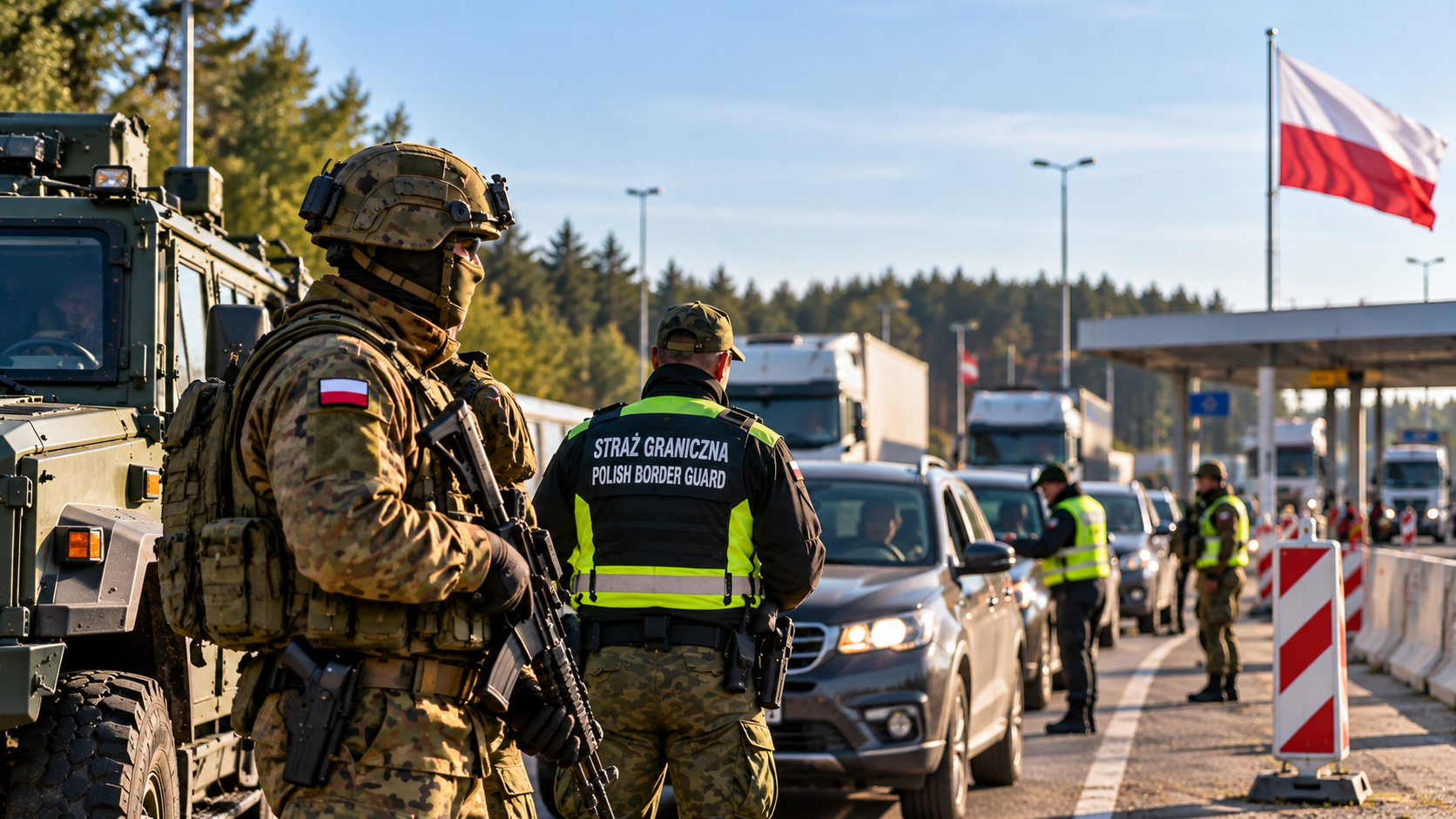
The checks are selective rather than systematic. Polish authorities have repeatedly said officers target particular vehicles and travellers based on operational assessments rather than stopping everyone who crosses.
The continued presence of soldiers therefore forms part of the security structure supporting those selective controls rather than representing a closure or militarisation of every crossing.
For travellers, the practical effect remains the possibility of checks and delays when entering Poland from Germany or Lithuania.
A longer-term security arrangement
What began in 2025 as a temporary response has now developed into a continuing deployment stretching well into 2027.
The previous presidential authorisation covered 5 April to 1 October 2026. The new decision replaces it without a gap, beginning on 2 October and running for almost another six months.
That means troops will remain formally available to support border-security operations for as long as the newly extended Schengen controls remain in force.
For Poland, the German and Lithuanian frontiers present different operational concerns.
The German border is one of the country’s busiest routes for passenger and freight traffic into western Europe. The Lithuanian border, by contrast, is much shorter but strategically sensitive because it forms part of Poland’s northeastern connection towards the Baltic states and lies close to the Suwałki area between Belarus and Russia’s Kaliningrad region.
The government has primarily justified the controls themselves on migration and internal-security grounds rather than conventional military threats.
The new presidential decision therefore should not be read as indicating preparations for armed conflict on either frontier. It continues an existing military-assistance arrangement designed to give the Border Guard additional personnel and capabilities while temporary internal-border controls remain in place.
From 2 October, both policies will again run on the same timetable: border checks authorised by the Interior Ministry and military assistance authorised separately by the president, each continuing until 30 March 2027.