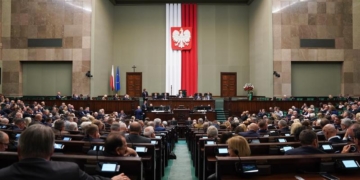


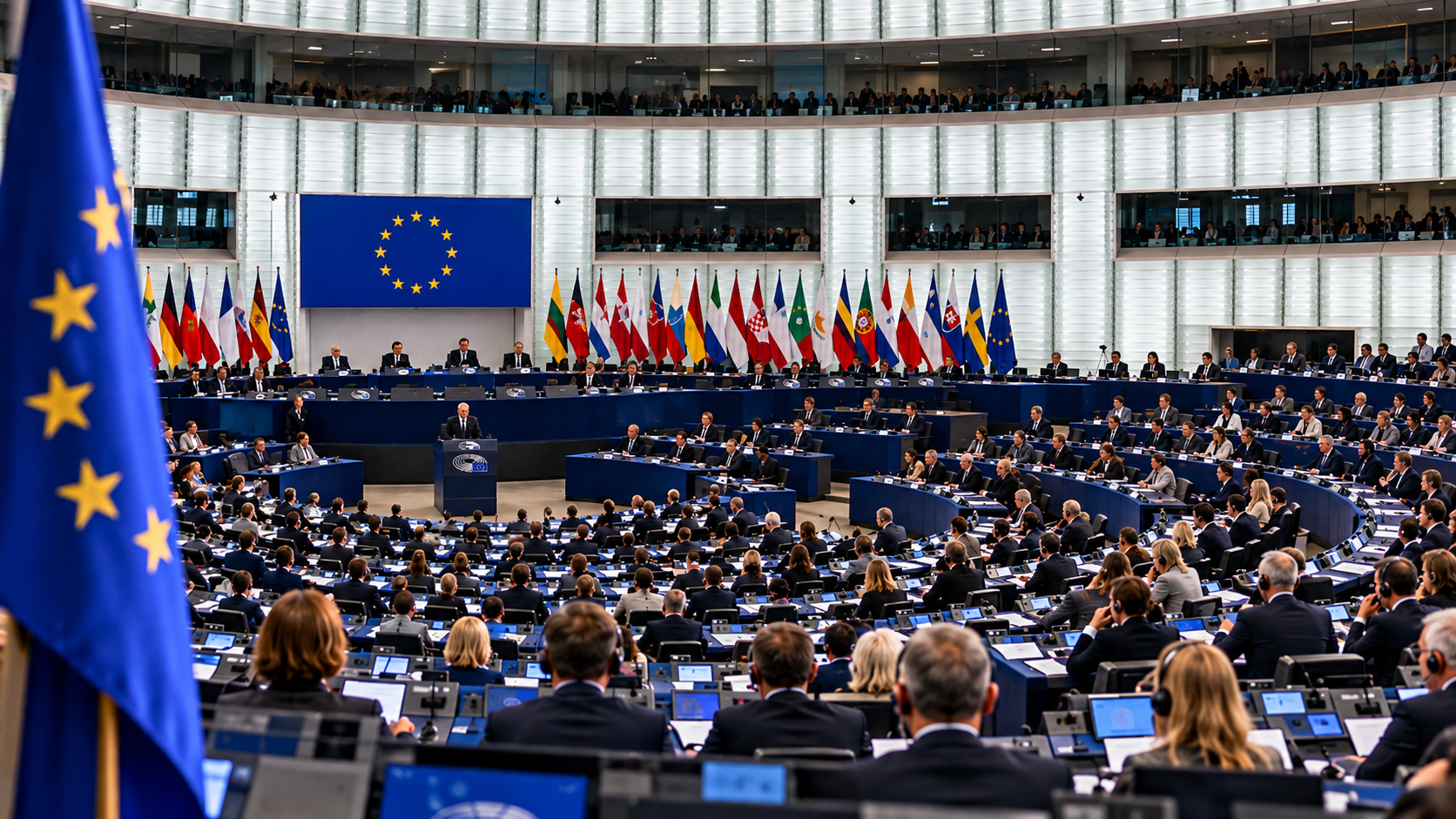
The strategically vital Suwałki Gap is being discussed at an extraordinary closed-door meeting of the European Parliament’s Security and Defence Committee in Brussels on Thursday, after Polish MEP Michał Szczerba requested a dedicated debate amid warnings of possible further Russian escalation on NATO’s eastern flank.
Szczerba, a Civic Coalition MEP and member of the committee, confirmed the meeting to Polish Radio and said he had requested the discussion because of what he described as information coming from both Prime Minister Donald Tusk and intelligence services in EU countries. The Polish Radio report said the intelligence assessments themselves have not been published.
Szczerba said those sources indicated that Russia intended to increase tensions on NATO’s eastern flank. His statement should be treated as an attributed assessment rather than confirmation of a specific Russian operation against the Suwałki Gap.
- Find more news from Poland on our Homepage .
That distinction is important: there is currently no public evidence that Russia has decided to attack or seize the corridor.
Tusk has separately warned in recent weeks that intelligence assessments point to the possibility of Russian drone or missile provocations against NATO countries, including Poland, which Moscow could attempt to portray as accidental. His warnings concerned the wider eastern flank rather than a publicly identified plan targeting the Suwałki corridor specifically.
Why the Suwałki Gap matters
The Suwałki Gap is the land corridor running along the Polish-Lithuanian border between Russia’s Kaliningrad region to the northwest and Belarus to the southeast.
Szczerba described the relevant stretch as roughly 65 kilometres and said its significance lies in military mobility: if the corridor were cut, the Baltic states could lose their main land connection with the rest of NATO.
NATO describes the Suwałki Gap as a strategic area linking Lithuania, Latvia and Estonia with the rest of allied territory. The alliance maintains a multinational battlegroup at Bemowo Piskie in northeastern Poland that trains for the defence and reinforcement of the region.
The vulnerability is geographical. Lithuania, Latvia and Estonia are connected by land to the rest of NATO through Poland and Lithuania, while Russian and Belarusian territory sits on either side of the corridor.
In a conflict, maintaining that route would be important for moving allied troops, equipment and supplies into the Baltic states.
The European Parliament has previously highlighted the same concern. In a 2025 resolution on military mobility, it described the Suwałki Gap as a particular vulnerability for the Baltic states and stressed the need for faster troop movements and reinforcement on the eastern flank.
Polish general invited to brief MEPs
Lieutenant General Piotr Błazeusz, Poland’s military representative to the NATO and EU Military Committees, was invited to participate in Thursday’s discussion, according to Szczerba.
NATO’s official biography confirms Błazeusz’s current role representing Poland in NATO’s senior military decision-making structure as well as the EU Military Committee.
Szczerba said the aim was to give members from across Europe a clearer understanding of the corridor’s military significance and the security challenges facing Poland and the Baltic region.
Because the meeting is taking place behind closed doors, detailed intelligence assessments or operational military discussions may not become public.
Discussion comes amid rising Baltic tensions
The committee discussion is taking place against an increasingly tense security backdrop around Poland, Lithuania and Kaliningrad.
On Wednesday, Russia warned NATO that it could consider using nuclear weapons if alliance countries attempted to isolate Kaliningrad from the rest of Russia. NATO rejected the suggestion that it was preparing such action and described its posture as defensive.
NATO Secretary General Mark Rutte nevertheless said that the alliance’s assessment remained that there was no imminent Russian threat to NATO territory, while stressing that NATO remained prepared to defend every member state.
Kaliningrad lies immediately north of Poland and west of Lithuania, making developments involving the Russian exclave directly relevant to the security of the Suwałki corridor.
Russia has substantial military capabilities in Kaliningrad, including naval, missile and air-defence forces. At the same time, the region is geographically separated from mainland Russia, making access to it a recurring subject in Russian and NATO security planning.


Wider debate over European defence spending
Szczerba also linked Thursday’s discussion to negotiations over the EU’s future long-term budget.
He said Poland wanted the European Parliament to recognise the importance of maintaining funding for defence, resilience and military-mobility programmes as Europe responds to threats from Russia and Belarus.
That issue has become increasingly important because the Suwałki Gap is not only a defensive position but also a transport problem.
In a crisis, roads, railways and bridges connecting Poland with Lithuania would have to support rapid movement of NATO reinforcements northwards.
Szczerba has himself been one of the European Parliament’s rapporteurs on EU legislation aimed at making it easier to transport military personnel and equipment across the Union. European Parliament records show he co-authored the Parliament’s 2026 report on the military-mobility framework.
Thursday’s meeting therefore combines two related questions: whether the Suwałki corridor is sufficiently protected militarily and whether European infrastructure and funding would allow NATO forces to reinforce the Baltic states quickly enough during a major crisis.
For now, the meeting does not indicate that an attack on the corridor is imminent. It does show, however, that the Suwałki Gap has moved higher up the European Parliament’s security agenda as Poland and other eastern-flank countries press allies to prepare for the possibility of further Russian pressure.