Poland is expected to secure another year of exemption from the European Union’s migration solidarity obligations, meaning it would not have to accept relocated asylum seekers or make financial contributions under the scheme in 2027, according to new reporting citing EU sources. The decision has not yet been formally approved, but the European Commission is reportedly preparing to present its latest assessment on 4 November.
The development was reported on Thursday, 22 October, by the Polish Press Agency (PAP), which cited sources within the European Union.
According to the report, Poland is expected to maintain its current exemption from the solidarity mechanism established under the EU’s Pact on Migration and Asylum.
- Find more news from Poland on our Homepage .
The Commission’s forthcoming assessment will determine which member states are experiencing significant migratory pressures and may qualify for reductions in their solidarity obligations.
EU governments will then make the final decision on the arrangements for 2027.
The distinction is important: Poland is seeking to retain an exemption from the pact’s solidarity contributions, not from the entire body of EU migration and asylum legislation.
Why Poland expects to remain exempt
Poland’s position rests on two major migration challenges: the arrival of people fleeing Russia’s war against Ukraine and continuing pressure along its border with Belarus.
Since February 2022, Poland has provided protection to large numbers of Ukrainians displaced by the Russian invasion.
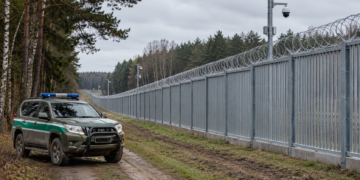
The country has also devoted substantial resources to securing its eastern border, where Polish and EU authorities have accused Belarus and Russia of facilitating irregular migration as a means of exerting political pressure.
The European Commission recognised these circumstances in its first annual migration assessment, published in November 2025.
It identified Poland, alongside Austria, Bulgaria, Croatia, Czechia and Estonia, as facing a significant migratory situation because of accumulated pressures over previous years.
That classification made the six countries eligible to request reductions in their contributions to the EU’s solidarity mechanism.
Poland subsequently obtained a full exemption for 2026.
In December 2025, the Council of the European Union confirmed the arrangements for the first annual solidarity pool, including adjustments for countries experiencing significant migration challenges.
The decision was formally adopted on 22 December 2025.
Poland’s exemption was subsequently confirmed in an official response to the Polish parliament by the Ministry of the Interior and Administration.
The government maintains that the circumstances justifying the exemption have not fundamentally changed.
Polish government expects favourable assessment
Deputy Interior Minister Maciej Duszczyk expressed confidence earlier this month that Poland would retain its special status.
Speaking to Money.pl on 13 October, he argued that if the European Commission continued using the same assessment methodology, its evaluation of Poland should remain unchanged.
Duszczyk said Polish authorities were providing Brussels with updated information about the country’s migration situation.


His comments reflected the government’s expectation that Poland would continue qualifying for relief under the solidarity mechanism.
Further reporting emerged on 21 October, when Polish Radio’s Brussels correspondent Beata Płomecka reported that the criteria for granting exemptions were expected to remain unchanged.
She said the Commission was preparing to discuss its annual migration assessment, although the meeting timetable remained subject to change.
The latest PAP reporting, published on 22 October, goes further by citing EU sources who expect Poland’s exemption to be maintained for another year.
However, the Commission has not yet published its formal classification of member states for 2027, and the Council has not adopted the corresponding solidarity arrangements.
What exactly is Poland exempt from?
The EU migration pact introduced a permanent system intended to share responsibility among member states when particular countries experience significant arrivals of asylum seekers.
The arrangement is known as the solidarity mechanism.
Under the European Commission’s framework, member states can contribute through relocating eligible applicants, providing financial assistance or offering alternative operational support.
The system is mandatory, but governments have flexibility in deciding which forms of solidarity they provide.
A country is therefore not automatically required to accept relocated asylum seekers simply because it participates in the mechanism.
For 2026, the EU established a solidarity pool with a reference level of 21,000 relocations or equivalent measures, or financial contributions totalling €420 million.
These figures describe alternative ways of measuring the solidarity effort, rather than an obligation to relocate exactly 21,000 people.
Because Poland obtained a full reduction in its contribution, it does not have to make a pledge to that pool for 2026.
If the exemption is maintained for 2027, Poland would continue to avoid those particular relocation, financial and alternative solidarity obligations for another year.
It would not mean that all EU asylum, screening, border-management or migration rules cease to apply in Poland.
The migration pact is already in force
The EU’s Pact on Migration and Asylum was adopted in May 2024 following years of negotiations among European governments and institutions.
Its principal legislative provisions began applying on 12 June 2026.
The package contains ten interconnected legal measures covering asylum procedures, border screening, responsibility for processing applications, migration management and solidarity between member states.
Poland opposed the legislation during its adoption and has continued to object to parts of its implementation.
However, the forthcoming decision is not a new vote on whether the pact itself should exist.
Instead, it forms part of the annual process established under the legislation.
As the European Commission explains, it assesses migratory pressures across the bloc each year and proposes the solidarity contributions required for the following year.
EU governments then agree on the annual solidarity arrangements through the Council.
The process allows member states experiencing particularly difficult circumstances to seek reductions in their obligations.
Those arrangements must be reconsidered annually rather than providing permanent, unconditional exemptions.
Why the Commission’s report matters
The Commission’s next report will assess the migration situation across the EU and classify countries according to the pressures they face.
The formal timetable normally requires the Commission to adopt its annual assessment by 15 October.
However, publication has been delayed.
The Commission told Money.pl earlier this month that it was aiming to publish the report towards the end of October.
According to PAP’s latest reporting, the assessment is now expected on 4 November 2026.
The exact timing remains subject to confirmation.
The report will provide the basis for decisions about which countries should contribute to the solidarity pool and which may qualify for reductions.
For Poland, a renewed finding that it faces a significant migratory situation would strengthen the legal basis for maintaining its current exemption.
But the Commission’s assessment does not by itself complete the process.
The Council must still adopt the implementing decision setting out the solidarity arrangements for 2027.
What happens next?
Poland currently holds a confirmed exemption from solidarity contributions for 2026.
The latest reporting suggests Brussels is prepared to recognise that the circumstances behind that decision continue into 2027.
If confirmed by the Commission and approved by member states, Poland would avoid another year of obligations to contribute to the solidarity pool.
For the Polish government, that would preserve an arrangement it has repeatedly identified as an important element of its migration policy.
For the European Union, it would demonstrate how the pact’s annual system can take account of countries facing different forms of migratory pressure.
The immediate development to watch is the Commission’s expected assessment on 4 November.
Until the report is published and the Council reaches its decision, Poland’s exemption for 2027 remains an expected outcome rather than a formally completed agreement.