

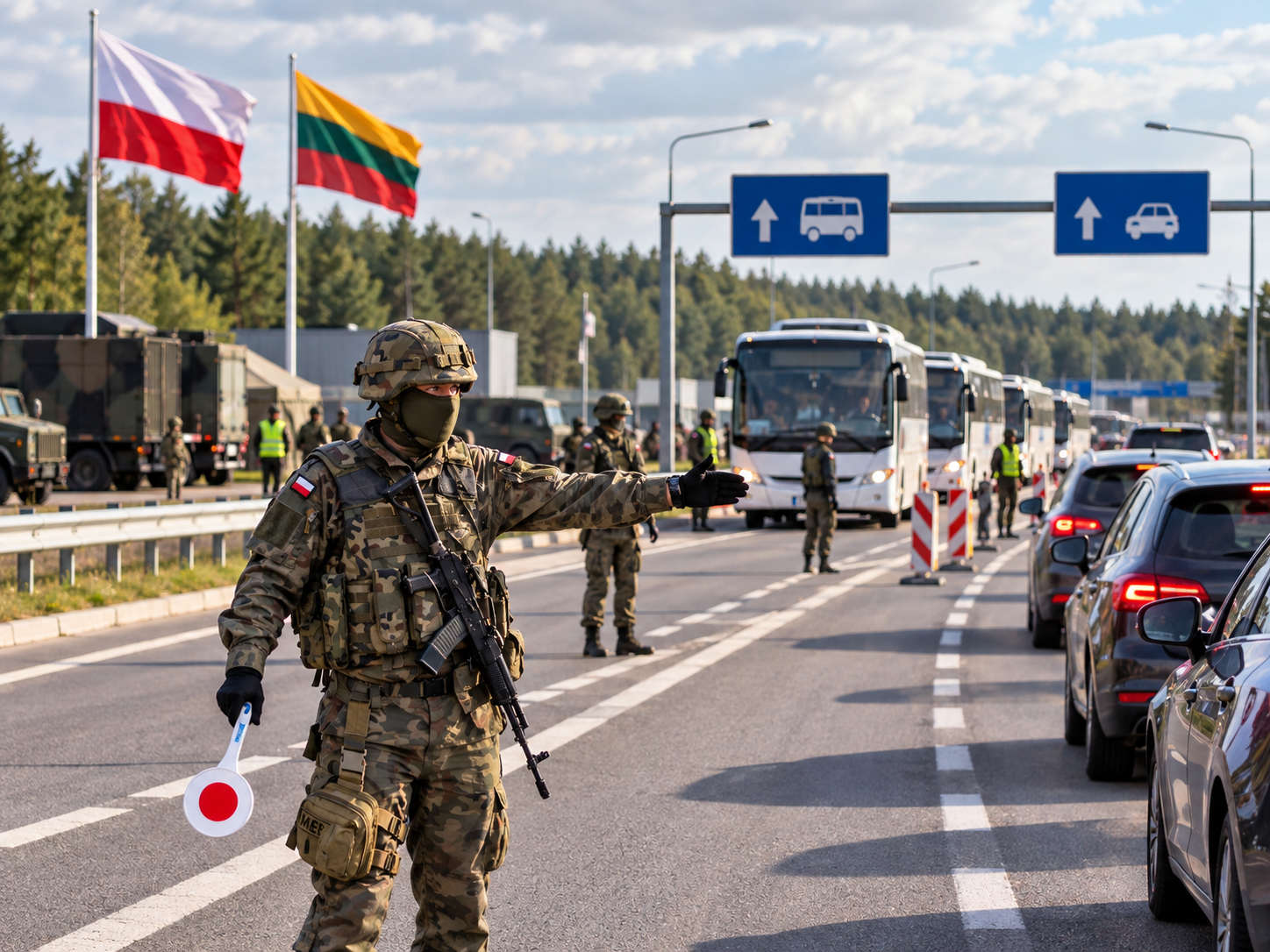
Poland and Lithuania are preparing a joint cross-border evacuation plan that could be used to move civilians from Lithuania and potentially neighbouring Latvia and Estonia through Poland in the event of a major military or security crisis.
Officials are currently examining border procedures, transport routes, infrastructure capacity and the logistics required to handle large numbers of people crossing from Lithuania into Poland.
Vilmantas Vitkauskas, director of Lithuania’s National Crisis Management Centre, said an international evacuation plan is being developed alongside Lithuania’s existing domestic arrangements.
- Find more news from Poland on our Homepage .
“We have an internal plan, and an international one is currently being drawn up,” he told reporters, explaining that the Polish and Lithuanian sides would first identify procedural shortcomings before preparing the joint plan.
The work does not mean an evacuation is under way or considered imminent.
Lithuania’s government has stressed that the current activity is part of Vyčio Skliautas 2026, the country’s largest annual mobilisation exercise. It began on 25 September and runs until 3 October, testing how government bodies, municipalities and other organisations would operate during a severe crisis. Residents have been told that the exercises are for training purposes and that normal life should continue.
Around 20 representatives from Polish institutions are participating in the Lithuanian exercises, according to Vitkauskas.
Their task includes assessing what would happen if large numbers of evacuees reached the Polish-Lithuanian border at the same time, potentially while wartime border restrictions and mobilisation measures were also in force.
The Polish government had already confirmed preparations for the exercise earlier this month, following a study visit to Poland by Lithuanian and Latvian officials.
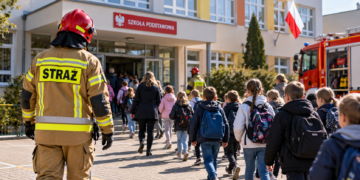
Those talks covered cross-border mass evacuation, the reception and registration of evacuees, temporary accommodation and coordination of movement routes. Representatives of Poland’s Interior Ministry, Government Security Centre, General Staff, State Fire Service and other organisations took part.
The Polish government described the cooperation as part of the wider “3B+Poland” framework bringing Poland together with Lithuania, Latvia and Estonia on civil-protection preparedness.
For Poland, the Lithuanian exercise is also significant because it is the country’s first international civil-protection exercise since Poland’s new Civil Protection and Civil Defence Act entered into force, according to the government.
A central issue is the Suwałki Gap, the relatively narrow stretch of Polish-Lithuanian border lying between Russia’s Kaliningrad region and Belarus.
It is the only land connection between the Baltic states and the rest of NATO and the European Union, giving it both military and civilian importance during any major regional crisis.
Vitkauskas said officials have to consider not only the number of people who might need to cross but also traffic flows, road links, infrastructure capacity and whether bridges and other infrastructure would be capable of supporting the movement required.
The planning goes beyond Lithuania alone.
According to the Lithuanian crisis-management chief, officials are examining a scenario in which some residents of Lithuania, Latvia and Estonia would need to cross the Polish border. That does not mean the three Baltic states have decided to evacuate their populations; it is a contingency being incorporated into wider regional preparedness.
Lithuania has already prepared its own national evacuation framework.
The country’s state-level detailed population evacuation plan was approved in July, establishing how national authorities, municipalities and other bodies should coordinate evacuations during military or civilian emergencies.
The current mobilisation exercise is now putting some of those procedures into practice.


On 26 September, Lithuanian emergency authorities began practical testing of the full evacuation process, including warning residents, registering evacuees, organising departures, moving people through transit municipalities and receiving them at designated destinations.
Polish officials have meanwhile made clear that the country would assist Lithuania in a real emergency.
Defence Minister Władysław Kosiniak-Kamysz said on 22 September that Poland and its institutions would help civilians if Lithuania faced an attack, while Interior Minister Marcin Kierwiński said Poland would be prepared for such a situation.
The cooperation is part of a wider increase in civil-defence planning on both sides of the border.
Earlier this month, Lithuanian and Latvian officials visited Poland specifically to discuss mass evacuation and public resilience, while Polish authorities have been conducting their own civil-defence drills and public training exercises in eastern regions.
Lithuania has also intensified work with Poland, Latvia and Estonia on ensuring that national civil-protection systems can operate together rather than stopping at individual borders.
Lithuanian Deputy Interior Minister Ana Burkovskienė said earlier this year that growing military and hybrid threats required countries in the region to move beyond political agreements towards joint exercises, coordinated procedures and practical information sharing.
The immediate objective of the current Polish-Lithuanian work is therefore not to decide whether Baltic civilians should leave in a future conflict, but to make sure that the physical routes, border rules and government procedures needed for an evacuation have been considered before a crisis occurs.
Once Poland and Lithuania agree the framework, officials are expected to use the findings from the present exercises to draw up the detailed international plan.