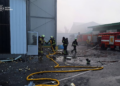


Polish Deputy Defence Minister Cezary Tomczyk has said that 50 people he described as saboteurs caught by the country’s security services are currently in prison, offering a new indication of the scale of cases linked by the government to sabotage and other hybrid threats. The statement does not, however, establish that all 50 have been convicted or that every case is connected to Russia.
Tomczyk disclosed the figure during an appearance on TVP Info’s Pytanie Dnia programme on Friday evening.
“We have acts of sabotage; in prisons we have 50 saboteurs caught by the special services,” he said while arguing that the security threat facing Poland was real.
- Find more news from Poland on our Homepage .
His wording is significant but requires caution. Tomczyk did not provide a list of the cases, say how many of the 50 have received final convictions, or distinguish between people serving prison sentences and suspects being held in pre-trial detention.
Nor did he state in that passage that all 50 were Russian citizens or Russian intelligence officers.
Polish authorities have repeatedly said that Russian intelligence services have recruited people of several nationalities to conduct espionage, reconnaissance, arson and other sabotage-related activities in Poland. Some of those cases have resulted in convictions; others remain at the investigation, prosecution or pre-trial detention stage.
Previous government figures show scale of investigations
The new figure follows a series of earlier official disclosures about alleged Russian-directed operations.
In November 2025, Prime Minister Donald Tusk told parliament that Polish authorities had by then detained 55 people in connection with sabotage cases, of whom 23 had been placed under arrest. Twenty-eight others had been expelled from Poland. The government said Russian services had been identified behind the sabotage and intelligence cases it was discussing.
Those figures cannot simply be equated with Tomczyk’s new statement. Tusk was describing cumulative detentions and expulsions at that point in 2025, while Tomczyk referred specifically to 50 people currently “in prisons”. No public breakdown accompanying Friday’s statement showed how the two totals overlap.
The Internal Security Agency, or ABW, has meanwhile continued announcing individual arrests and prosecutions.
In May this year, the agency detained three Polish citizens accused of acting for a foreign intelligence service. Prosecutors alleged that they had gathered information on NATO troop deployments and prepared for sabotage and diversionary tasks. A court ordered all three held in pre-trial detention.
In another case, ABW said in July that an 18-year-old Ukrainian citizen had been charged over dozens of acts allegedly conducted at the direction of Russian services, including preparations for sabotage involving a drone.
A Belarusian citizen was separately indicted in July over an alleged plan to set fire to a warehouse in Lublin province on behalf of a foreign intelligence service. He had been held in custody since August 2025, according to ABW.
ABW has also described a Russian-directed network active in Poland since 2023. Sixteen members of one earlier group were convicted after investigators said they had conducted reconnaissance and sabotage-related tasks for Russian intelligence. The agency later said the wider organisation involved at least 30 people.
Tomczyk points to threats near Poland’s border
Tomczyk gave the figure while responding to a wider political dispute over how the government describes threats to national security.
President Karol Nawrocki had earlier accused Prime Minister Donald Tusk of a “distribution of fear” and argued that the government was using security issues to distract attention from Poland’s public finances. Tomczyk rejected that assessment and said Poland was receiving threat information from its own services and foreign intelligence partners, including the United States, Onet reported.
As examples, he pointed to sabotage incidents and repeated security measures at border crossings during Russian attacks on Ukraine.
Tomczyk referred specifically to the Dorohusk area, where Polish authorities recently reported that a Russian jet-powered drone struck on the Ukrainian side of the border, around two kilometres from the Dorohusk-Yahodyn crossing. Polish airspace was not breached in that incident, RMF24 reported.
The disclosure comes as Warsaw is simultaneously working on broader changes to its national-security framework, including draft legislation intended to improve military and civilian readiness before the constitutional threshold for martial law is reached.
Sabotage has become a wider European security concern
Poland’s position as a NATO eastern-flank state and one of the principal routes for military and humanitarian assistance to Ukraine has made it a prominent target in investigations into Russian hybrid operations.

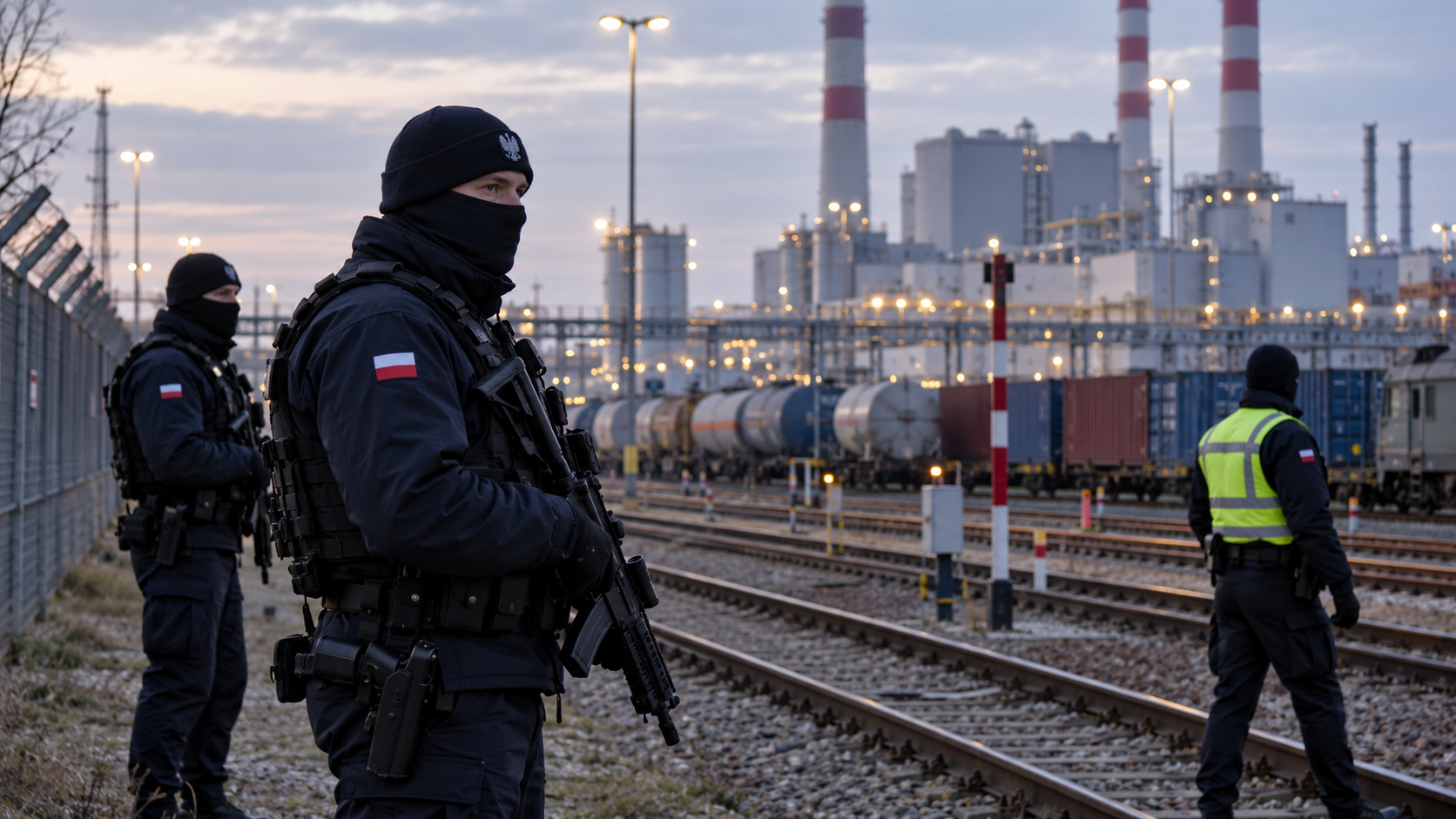
ABW has said Russian services increasingly recruit intermediaries — frequently through online messaging platforms and often for payment — rather than relying solely on traditional intelligence officers. Targets have included transport infrastructure, warehouses and other civilian facilities.
In September, the agency said its investigation into a Russian-directed network had traced Polish incidents back to a wider international operation involving reconnaissance, arson and other planned attacks in Europe and the United States.
Tomczyk’s figure of 50 therefore provides a notable new snapshot from a senior government official, but it should not be treated as a confirmed total of 50 convicted Russian saboteurs.
Until the Defence Ministry, ABW or prosecutors publish a case-by-case or aggregate legal breakdown, the safest description is the one directly supported by Tomczyk’s statement: 50 people whom he described as saboteurs caught by Polish security services are currently in prison.