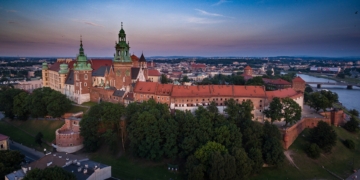


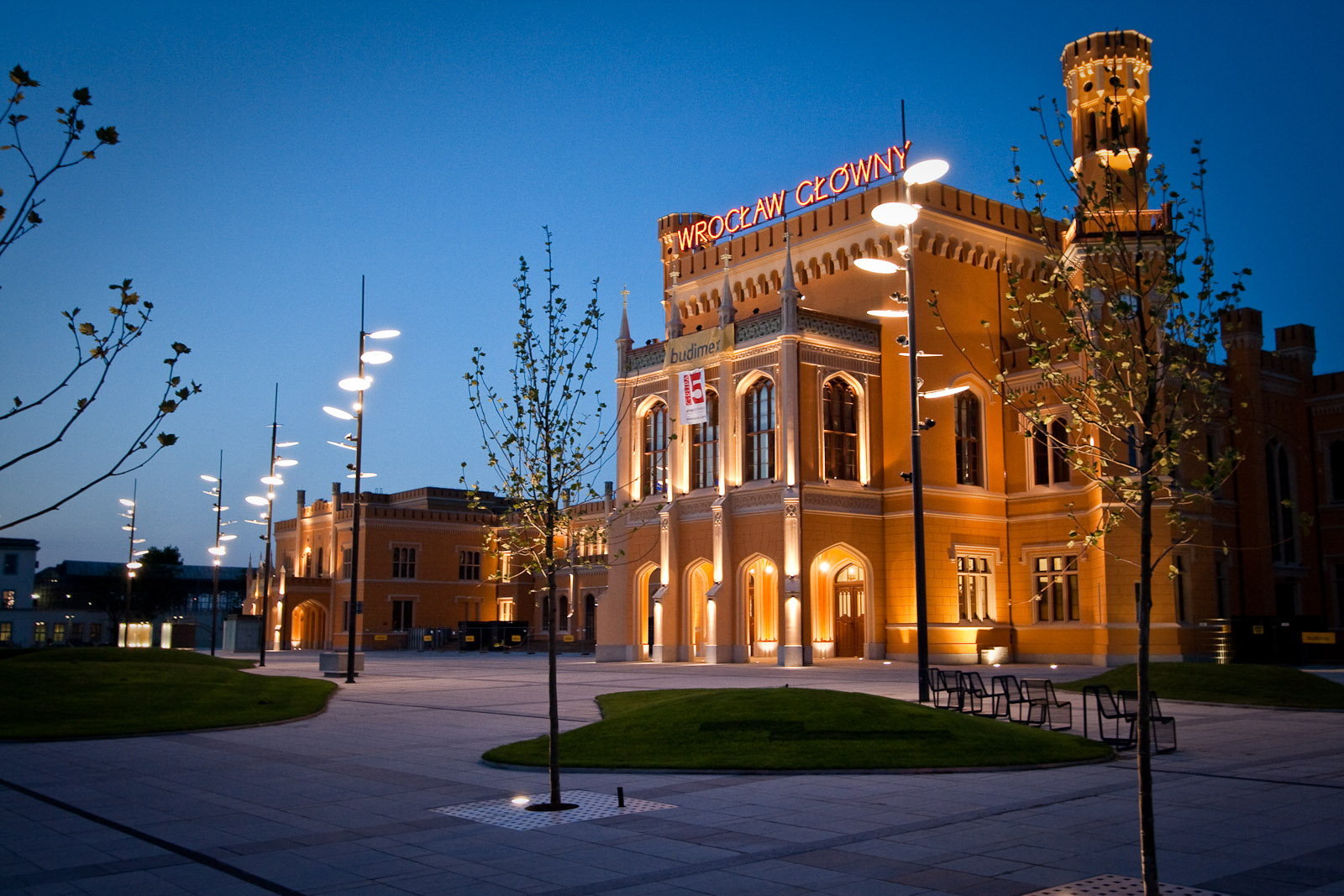
Two of Poland’s main railway stations have been ranked among the 10 best in Europe, with Wrocław Główny taking fourth place and Kraków Główny finishing ninth in a new comparison of major passenger hubs.
The European Railway Station Index 2026, produced by the Consumer Choice Center, assessed 60 of Europe’s busiest stations using measures including delays, waiting times, accessibility, ticket options, local and national connections, free Wi-Fi and the range of services available to passengers.
Wrocław Główny scored 96.5 points, placing it behind only Zürich Hauptbahnhof, Paris Gare du Nord and Amsterdam Centraal.
- Find more news from Poland on our Homepage .
Kraków Główny scored 89.5 points, putting it ninth overall and level on points with London St Pancras International in the published table.
A third Polish station, Poznań Główny, also performed strongly, finishing 13th.
Wrocław named Europe’s best small station
Wrocław’s result was particularly strong because the index also classified it as the best small railway station in Europe.
The Consumer Choice Center described Wrocław Główny as the strongest station in its size category and said it continued to set “a high standard for Eastern Europe”.
The station combines a historic 19th-century terminal building with modern passenger facilities following a major reconstruction completed ahead of Euro 2012.
Today it serves as the main rail hub for Lower Silesia, with long-distance and regional services linking Wrocław with Warsaw, Kraków, Poznań and other Polish cities, as well as international destinations.
Its fourth-place finish puts it ahead of major stations including Bern Hauptbahnhof, Paris Montparnasse, Paris Saint-Lazare and London Bridge.
Kraków praised for connections and passenger facilities
Kraków Główny entered the index in ninth place.
The report highlighted the station’s strong domestic and international connections, integration with local public transport and its broad range of passenger services.
Kraków’s main station is directly connected to the Galeria Krakowska shopping centre, giving travellers immediate access to shops, restaurants and other facilities.
It is also integrated with tram and bus networks and provides visual and audio passenger information as well as a first-class waiting lounge.
The station is one of Poland’s most important tourist gateways, serving passengers travelling to and from Warsaw, Katowice, Wrocław, Gdańsk and destinations across Central Europe.
Zürich keeps first place
Europe’s highest-rated station was once again Zürich Hauptbahnhof, which finished first with 101 points.
Paris Gare du Nord came second with 100.5 points, while Amsterdam Centraal took third with 98.5.
The full top 10 was:
1. Zürich Hauptbahnhof — Switzerland
2. Paris Gare du Nord — France
3. Amsterdam Centraal — Netherlands
You May Also Be Interested In


4. Wrocław Główny — Poland
5. Bern Hauptbahnhof — Switzerland
6. Paris Gare Montparnasse — France
7. Paris Gare Saint-Lazare — France
8. London Bridge — United Kingdom
9. Kraków Główny — Poland
10. London St Pancras International — United Kingdom
Switzerland performed particularly well on reliability, with a national railway punctuality rate of 94.1%.
At Zürich Hauptbahnhof, the index recorded an average waiting time of just 1.2 minutes and only 4% of trains as delayed.
Poland stands out as Germany falls down ranking
Poland was one of the stronger-performing countries in this year’s index.
The report specifically highlighted Kraków and Poznań for extensive rail connections, integrated retail facilities and passenger amenities, which helped offset disruption linked to ongoing railway modernisation.
Germany, by contrast, had no station in the overall top 10.
Berlin Hauptbahnhof fell sharply compared with last year, while German stations occupied 15 of the bottom 30 positions.
Dortmund recorded the highest proportion of delayed trains in the index at 73.8%, while Hamburg had the longest average waiting time, at 24.8 minutes.
What the ranking actually measures
The index is designed around passenger experience rather than architectural beauty alone.
Researchers examined factors including:
• train delays and average waiting times;
• ticket availability and ticket-office opening hours;
• accessibility for passengers with reduced mobility;
• national and local rail connections;
• shops, restaurants and other station services;
• free Wi-Fi;
• links with other transport and ride-sharing services.
The Consumer Choice Center says the 2026 edition is the seventh version of the annual index.
However, the organisation also cautions that comparisons between countries are not perfect.
It says its data come from different national authorities, online statistics, station maps and real-time information systems, meaning figures can be measured differently or may not always cover exactly the same periods.
The organisation therefore describes the results as a quantitative comparison based on the best available information rather than a definitive measure of every passenger’s experience.
For Poland, however, the broader result is notable: two of its largest passenger hubs now sit alongside Zürich, Paris, Amsterdam and London in the index’s European top 10.