

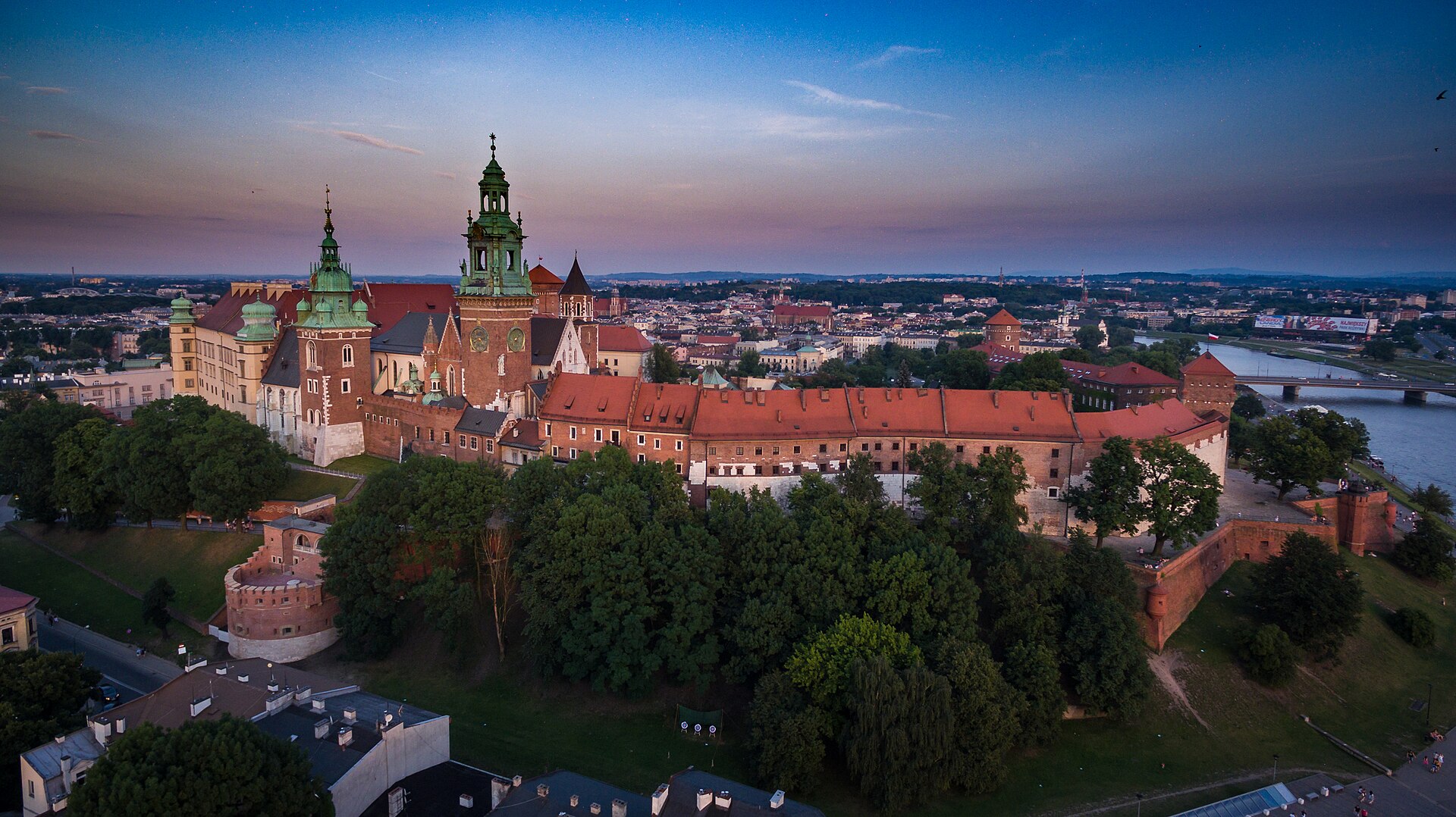
Kraków’s Wawel Royal Castle has been ranked fifth among the most popular castles and palaces in Europe, placing one of Poland’s most important historic sites ahead of landmarks including the Alhambra, Tower of London and Neuschwanstein Castle in a new 2026 ranking.
The ranking was produced by travel experiences company TUI Musement and is based on the total number of Google reviews accumulated by major castles and palaces across Europe as of July 2026. It therefore measures the volume of online engagement with the attractions rather than visitor numbers or average review scores.
Wawel came behind only Prague Castle, Buckingham Palace, Vienna’s Schönbrunn Palace and the Palace of Versailles.
- Find more news from Poland on our Homepage .
The top ten was:
- Prague Castle, Czechia
- Buckingham Palace, United Kingdom
- Schönbrunn Palace, Austria
- Palace of Versailles, France
- Wawel Royal Castle, Poland
- Alhambra, Spain
- Royal Palace of Madrid, Spain
- Tower of London, United Kingdom
- Neuschwanstein Castle, Germany
- Bran Castle, Romania.
Wawel had accumulated more than 165,000 Google reviews, according to reporting accompanying the ranking.
Its fifth-place position represents a fall of two places compared with TUI Musement’s first version of the study in 2023, but it remains firmly among the continent’s most prominent historic attractions.
The castle’s placement is particularly notable given the international profile of the sites below it.
Granada’s Alhambra ranked sixth, Madrid’s Royal Palace seventh and the Tower of London eighth, while Germany’s Neuschwanstein — one of the best-known castles in the world — was ninth. Romania’s Bran Castle, closely associated in popular culture with the Dracula legend, completed the top ten.
Prague Castle retained first place with more than 199,000 Google reviews, up 31% from 2023. Schönbrunn Palace climbed two places to third after its review total increased by 41% to more than 182,000.
TUI Musement said it examined the number of Google reviews for castles and palaces across Europe in July 2026 and compared the figures with data gathered when the ranking was first conducted in July 2023.
That methodology means the list should not be read as a direct ranking of annual attendance or as an assessment of which castle is “best”. Instead, it provides an indication of how extensively individual landmarks have been reviewed by visitors online.
For Wawel, the ranking adds another measure of the international visibility of a site that occupies a central place in Polish history.
The Wawel Royal Castle’s official history traces the hill’s role as a political centre back more than a thousand years. Poland’s early Piast rulers maintained residences there, and Kraków subsequently developed into the principal royal centre of the Polish state.
In 1320, Władysław I Łokietek — Ladislaus the Short — became the first Polish ruler whose coronation at Wawel Cathedral is recorded in historical sources.
From then on, with a small number of exceptions, Wawel Cathedral became the coronation church of Poland’s kings and queens.
The castle itself was transformed over successive centuries, particularly under Casimir III the Great and later the Jagiellonian dynasty.
During Poland’s Renaissance “Golden Age”, the royal residence developed into one of the country’s most important political and cultural centres. Its surviving Renaissance palace and arcaded courtyard remain among Wawel’s most recognisable architectural features.
The royal court eventually moved permanently to Warsaw in the early 17th century, but Wawel retained its symbolic importance.
Following the partitions of Poland at the end of the 18th century, Austrian forces converted parts of the complex for military use. A long campaign to recover and restore the site eventually resulted in Austrian troops leaving Wawel between 1905 and 1911.


After Poland regained independence in 1918, the castle served both as an official state residence and as a museum.
Today its collections include royal apartments, paintings, historic weapons, decorative art and the Crown Treasury, which contains Szczerbiec, the medieval coronation sword used during most Polish royal coronations from the 14th to the 18th century.
Wawel Hill also forms part of Kraków’s UNESCO-listed historic centre. UNESCO describes the hill, including the castle and cathedral, as a former royal residence and necropolis reflecting the dynastic and political connections of medieval and early-modern Europe.
Poland has a second castle in TUI Musement’s European top 30.
Malbork Castle, the vast medieval fortress in northern Poland built by the Teutonic Order, also rose two places compared with the 2023 ranking.
The broader ranking reflects strong interest in heritage tourism across Europe. TUI Musement cited research showing that 94% of surveyed travellers were interested or very interested in history, culture and heritage experiences during a future city break.
For Poland, Wawel’s fifth-place position places the former home of its monarchs alongside some of Europe’s most recognisable royal residences — and ahead of several landmarks that are among the continent’s best-known tourist symbols.