

A fresh Russian air attack on Ukraine early on 30 September prompted a visible Polish security response that briefly spilled into civilian life, with military aviation activated in Polish airspace, public alerts sent across parts of Lubelskie and Podkarpackie, and flight operations temporarily suspended at the airports in Lublin and Rzeszów. Both airports later resumed normal operations after the immediate threat passed.
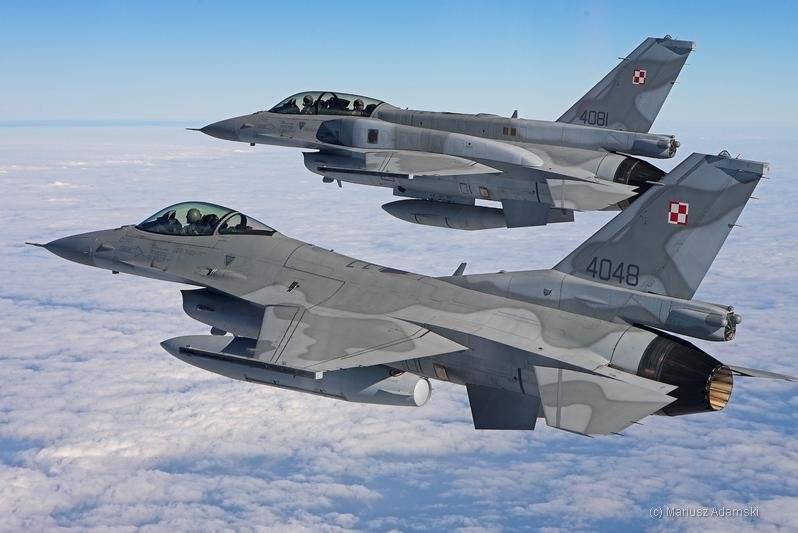
Poland’s Operational Command said the measures were taken in response to Russian strikes on Ukrainian territory using airborne attack means. It said military aviation was operating in Polish airspace and that ground-based air-defence and radar-reconnaissance systems had been placed on readiness in line with established procedures.
The military described the steps as preventive and aimed at securing Polish airspace, particularly in areas close to the threatened zone across the border.
- Find more news from Poland on our Homepage .
The immediate civilian consequence came when Poland’s air navigation agency, PANSA, temporarily halted flight operations at Lublin and Rzeszów airports to give military aviation freedom to operate. PANSA later said both airports had resumed flight operations.
That made Wednesday’s episode more consequential than many previous precautionary air-defence activations, which often pass without a clear impact on daily civilian activity inside Poland.
The Government Security Centre, RCB, also issued text-message alerts to residents across substantial parts of Lubelskie and Podkarpackie, warning that a Russian air attack was under way in Ukraine, that the situation was being monitored and that Polish aviation was operating in national airspace.
Later, the RCB sent a follow-up message saying the attack on Ukraine had ended and that there was no threat on Polish territory.
No Polish airspace violation had been confirmed in the information reviewed by publication time. The available military statements pointed instead to a preventive response to a nearby attack rather than to any reported strike or confirmed incursion into Poland itself.
Even so, the temporary airport disruption underlined how Russian attacks inside Ukraine can have direct operational consequences inside NATO territory without crossing that threshold.
That is particularly significant in the case of Rzeszów-Jasionka. The airport has become one of the most strategically important transport points in the region because of its role in logistics, transit and international support linked to Ukraine. Any operational restriction there is therefore watched more closely than an ordinary regional-airport interruption.
Lublin airport is smaller, but its temporary suspension still reinforced the wider point that repeated Russian attacks on Ukraine are increasingly shaping day-to-day security procedures in eastern Poland.
Poland has repeatedly activated its air-defence posture during major Russian missile and drone attacks on Ukraine, especially when strikes appear to threaten areas close to the Polish border. In recent months, those responses have included the deployment of aircraft, the readiness of ground-based air-defence systems and public alerts for residents in the east of the country.
Wednesday’s episode fits that pattern but stands out because of the direct interruption to civilian air traffic at two airports at once.
It also comes against the backdrop of heightened sensitivity in eastern Poland after a series of previous incidents in which Russian attacks near the border prompted alert measures and public concern, even where no direct impact on Polish territory was ultimately confirmed.
For the Polish authorities, the key message was one of controlled precaution: the military moved to protect national airspace, the warning system was activated for the public, civilian airports were temporarily restricted for safety reasons, and the measures were lifted once the immediate danger subsided.
For residents and travellers, however, the incident offered another reminder that a war formally taking place across the border continues to produce real operational effects inside Poland.