Police officers visited the Warsaw headquarters of Polish broadcaster TV Republika on Thursday, 12 November, to deliver formal demands for recordings and internal documents connected with a criminal investigation into events outside Poland’s Constitutional Tribunal. The broadcaster refused to hand over the requested materials during the visit, accusing the authorities of interfering with press freedom, while prosecutors maintained that the demands concerned potential evidence rather than protected journalistic sources.
The operation was carried out on the instructions of the District Prosecutor’s Office in Szczecin, which is investigating suspected offences involving police officers and Prime Minister Donald Tusk during a demonstration outside the Constitutional Tribunal on 16 October.
Investigators are seeking recordings of the station’s coverage, records identifying users of its broadcasting and on-screen graphics systems, and documents relating to its operations and staffing.
- Find more news from Poland on our Homepage .
The police visit was broadcast live by TV Republika, with senior executives challenging the officers delivering the documents.
Prosecutors subsequently clarified that the officers had not been instructed to search the newsroom or seize electronic equipment.
The confrontation comes amid continuing political disagreement over the Constitutional Tribunal and wider disputes concerning the relationship between Poland’s government, opposition and media.
Police deliver two formal demands to broadcaster
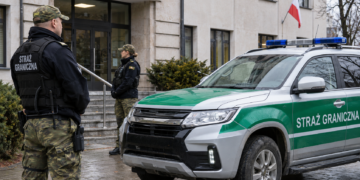
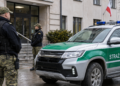
Officers from the Szczecin provincial police command and the Central Bureau for Combating Cybercrime attended TV Republika’s headquarters at Bankowy Square in Warsaw on Thursday morning.
Their assignment was to deliver two formal orders issued by prosecutors on 11 November.
According to Szczecin prosecutor’s office spokeswoman Julia Szozda, speaking to Wirtualna Polska, the orders required the broadcaster to produce specified recordings, computer-system records and organisational documents.
The first request concerned footage recorded during the 16 October demonstration outside the Constitutional Tribunal.
Investigators also sought records from the broadcasting system and the software used to prepare captions and information banners displayed during television programmes.
These records could help establish which material was broadcast, when it appeared and which accounts were used to prepare or transmit it.
The second order concerned the broadcaster’s internal operations.
It included requests for copies of its broadcasting licence, organisational structure, job descriptions, staff schedules and attendance records.
The prosecutor’s office said the information was needed to establish the circumstances surrounding the programmes and identify people involved in preparing the relevant broadcasts.
TV Republika subsequently published its own account of the orders and the documentation requested.
The station argued that the requests extended beyond obtaining footage of a particular demonstration and could expose information about its internal editorial operations.
TV Republika challenges prosecutors’ demands
The officers’ arrival was shown during TV Republika’s live programming.
Senior figures at the conservative broadcaster confronted the police and questioned the justification for seeking the material.
Tomasz Sakiewicz, the station’s editor-in-chief and a prominent conservative media figure, said some of the requested information could be protected by journalistic confidentiality.
You May Also Be Interested In

Programme director Michał Rachoń also objected, raising concerns about editorial information stored on the station’s electronic systems.
The broadcaster presented the action as part of what it considers wider political pressure on independent and opposition-aligned media.
During the confrontation, Rachoń alleged that Poland was experiencing an attempted political takeover involving the police.
That allegation has not been established as fact.
Sakiewicz and other station representatives indicated that they would not voluntarily surrender material they considered protected.
As media industry publication Wirtualne Media reported, the confrontation continued after the officers left the station, with Rachoń and another executive, Jarosław Olechowski, following one officer towards a nearby metro station while filming and questioning him.
Despite the confrontation, prosecutors confirmed that the formal orders had been delivered.
There was no verified indication that the requested recordings or documents were handed over during the visit.
Prosecutors deny ordering a search or equipment seizure
The Szczecin prosecutor’s office rejected suggestions that the operation involved an attempt to confiscate broadcasting equipment or obtain protected journalistic sources.
Spokeswoman Julia Szozda said the orders concerned specified recordings, system records and organisational documentation.
She emphasised that prosecutors had not demanded possession of the station’s computers or other electronic equipment.
The office also maintained that the requested documents were not covered by journalistic confidentiality.
According to the prosecutor’s explanation reproduced by Dziennik Gazeta Prawna, the requests were for the initial voluntary production of evidence.
They did not authorise a search of the newsroom.
Szozda said the authorities were awaiting the station’s response before determining what further procedural steps might be necessary.
Police were acting on the prosecutor’s instructions, with the Szczecin police responsible for documentation and cybercrime officers dealing with the electronic-records element.
The conflicting interpretations leave an important distinction unresolved: whether the specific materials being requested fall within legitimate evidence-gathering powers or include information protected by journalistic confidentiality.
No court determination resolving that dispute had been established by Thursday evening.
What happened outside the Constitutional Tribunal?
The investigation concerns events on 16 October during demonstrations outside the Constitutional Tribunal in Warsaw.
The demonstrations took place against the background of a deepening dispute over the leadership, composition and functioning of Poland’s constitutional court.
Police officers were deployed to maintain security around the building.
During the demonstrations, an officer was injured during an intervention involving a man whom police had sought to identify.
According to the Interior Ministry’s official account published on 16 October, the man attempted to evade officers and subsequently injured a policewoman, who required hospital treatment.
Police said a knife was later found in the man’s possession.
TV Republika and several opposition politicians questioned the conduct of the officers involved and raised allegations about the use of police powers.
The police disputed suggestions that their intervention was unlawful.
These events became the subject of political accusations involving both the government and opposition.
Interior Minister Marcin Kierwiński subsequently announced that he would refer concerns about statements directed at police officers to prosecutors.
Prime Minister Tusk also criticised political rhetoric surrounding the confrontation, arguing that it had contributed to hostility towards the officers.
These political assessments remain distinct from the criminal investigation, which must establish whether particular actions met the legal definition of an offence.
Investigation opened on 22 October
The District Prosecutor’s Office in Szczecin formally opened an investigation on 22 October 2026, following a notification submitted by Kierwiński.
In its official announcement of the investigation, the office identified three areas of suspected criminal conduct.
The first concerns allegations that people were encouraged through TV Republika’s programming to disclose private information about a female police officer, followed by the alleged dissemination of that information without her consent in circumstances potentially endangering her safety or that of her family.
The second concerns television captions and statements that prosecutors suspect publicly insulted police officers carrying out their duties and the prime minister.
The third concerns allegations that police officers were threatened with criminal proceedings to pressure them into abandoning lawful duties during the demonstration.
Investigators have identified several provisions of Poland’s Criminal Code as potentially relevant, including Articles 223a, 223b, 224 and 226.
The investigation is intended to determine the circumstances in which the disputed material was published and whether the actions under examination constituted criminal offences.
The opening of an investigation does not establish that TV Republika, its journalists or other individuals committed those offences.
No final determination of criminal responsibility has been announced.
What does Polish law say about journalistic confidentiality?
The dispute raises two connected legal questions: what evidence investigators may demand and what protection applies to information held by journalists.
Under Article 217 of Poland’s Code of Criminal Procedure, prosecutors can require the production of objects or materials that may constitute evidence in criminal proceedings.
The procedure provides for an initial request for voluntary production.
If the person or organisation concerned refuses, the law allows for further measures under the applicable procedural safeguards.
A request described as voluntary is therefore not necessarily optional in the ordinary sense.
However, Polish law also recognises protections for journalistic confidentiality.
Article 180 of the Code of Criminal Procedure establishes special requirements for questioning journalists about information covered by professional secrecy, including circumstances requiring judicial authorisation.
The protection of confidential journalistic sources is particularly important.
These provisions do not mean that all material held by a broadcaster is automatically confidential.
Equally, the fact that a prosecutor requests information does not by itself resolve every possible objection concerning confidentiality, necessity or proportionality.
In this case, prosecutors argue that the records concern identifiable broadcasts, technical systems and staffing arrangements, rather than protected sources.
TV Republika disputes the breadth of the requests and has questioned their implications for newsroom independence.
The legal merits of those competing positions have not been conclusively established.
Second conservative broadcaster also refuses request
The controversy widened during Thursday afternoon when another conservative broadcaster, wPolsce24, confirmed that police had also sought footage of the October demonstration.
The station said its legal department had reviewed the demand and decided not to provide the requested recordings at that stage.
Editor-in-chief Jacek Karnowski raised concerns about media independence and the basis for the request.
According to RMF FM’s report published on Thursday evening, the broadcaster described the police action as troubling and pledged to defend editorial independence.
The second request indicates that investigators are seeking evidence from more than one broadcaster that covered the Constitutional Tribunal demonstration.
However, the precise scope of the documentation sought from wPolsce24 should not be assumed to be identical to that demanded from TV Republika.
The available reporting specifically confirms a request for recordings.
Both broadcasters’ objections should also be distinguished from any subsequent court ruling on the lawfulness of the demands.
Another flashpoint in Poland’s constitutional dispute
The police visit comes at a time of serious institutional disagreement over Poland’s Constitutional Tribunal.
The court is responsible for determining whether legislation and other legal measures comply with the Polish Constitution.
Its leadership and functioning have become the subject of an escalating dispute involving the government, presidency and opposition.
The governing coalition has challenged aspects of the tribunal’s organisation and legitimacy, while opposition politicians and representatives of the presidency have accused the government of undermining constitutional institutions.
Poland-24 has previously explained the origins of the Constitutional Tribunal crisis and the competing legal positions.
The broadcaster dispute is a separate criminal-investigation matter, but its political significance is heightened by that institutional confrontation.
TV Republika is widely associated with conservative audiences and has frequently criticised Prime Minister Tusk’s government.
The broadcaster and opposition politicians have portrayed the police action as pressure on critical media.
Prosecutors, by contrast, maintain that their actions are directed towards obtaining evidence relevant to suspected offences.
Neither political characterisation can substitute for an independent assessment of the evidence or the legality of the investigative measures.
What happens next?
By Thursday evening, the formal demands had been delivered to TV Republika, but the station had not been confirmed as having provided the requested material.
Prosecutors said they would review the police documentation and determine whether further steps were necessary.
The investigation into the events of 16 October remains ongoing.
It is not established that prosecutors have obtained a search warrant, seized broadcasting equipment or secured a judicial ruling resolving the broadcaster’s confidentiality objections.
Nor has a final decision been announced concerning the criminal responsibility of the people whose conduct is under investigation.
The case now brings together several competing interests: the authorities’ responsibility to investigate possible offences against police officers, the legal protections available to journalists, and the public interest in ensuring that criminal investigations are not used improperly against news organisations.
Whether the dispute develops into further compulsory evidence-gathering or judicial proceedings will depend on the response to the prosecutors’ orders and the next decisions taken in the investigation.