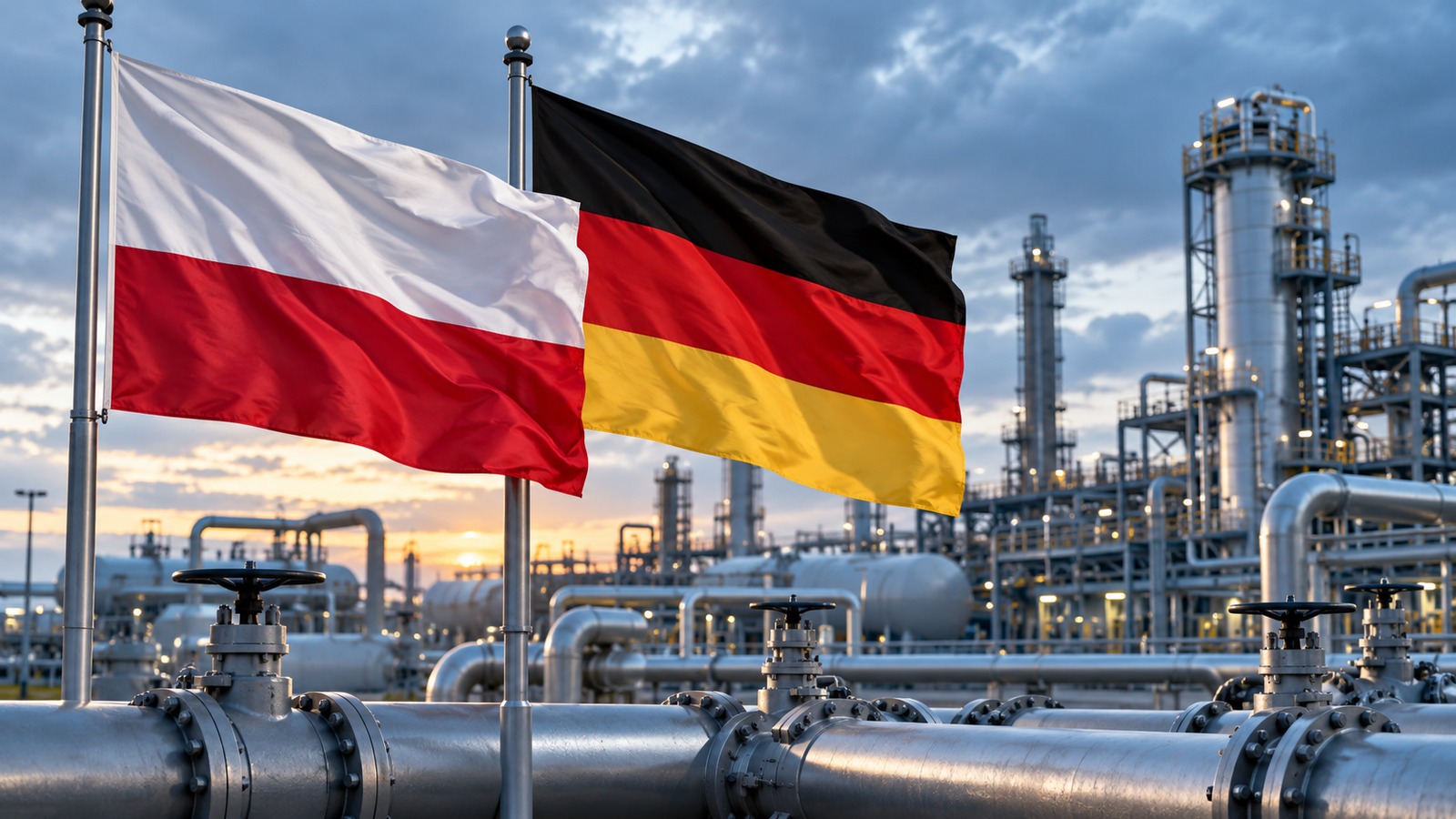
Poland has ruled out any return to normal energy trade with Russia, with Finance and Economy Minister Andrzej Domański warning that Europe must not repeat its previous dependence on Russian gas. Speaking at a Polish-German economic forum in Warsaw on Monday, 26 October, Domański said Poland would never accept a restoration of those arrangements. Germany’s Economy and Energy Minister Katherina Reiche publicly backed the position, declaring that Berlin should not purchase Russian gas while Moscow continues its war against Ukraine.
The exchange took place at the fourth Polish-German Economic Forum, where ministers and business representatives gathered to discuss European competitiveness, investment and economic security.
Domański directed his warning towards Germany, Poland’s largest trading partner and a country that depended heavily on Russian energy supplies before Russia’s full-scale invasion of Ukraine in 2022.
- Find more news from Poland on our Homepage .
According to PAP reporting published by Rzeczpospolita, the Polish minister said Europe had to learn from its previous energy policies.
“There can never, under any circumstances, be a return to business as usual with Russia,” Domański said, adding that Poland would never accept such an approach.
His warning concerned Russian raw materials generally, but he specifically highlighted natural gas.
The declaration was a statement of Poland’s political position, rather than the announcement of a new Polish or European Union import ban.
German minister also rejects Russian gas
Reiche’s response was particularly significant because it demonstrated agreement between the two ministers on the central question of Russian energy imports.
As Deutsche Welle reported from the Warsaw forum, Reiche said Germany was not sending signals that it wanted to restore normal energy relations with Moscow.
She warned that the geopolitical situation remained dangerous while Russia continued attacking Ukraine.
The German minister said countries should avoid purchases that contribute to financing Russia’s military campaign, explicitly including Russian gas.
Reiche stressed that she was making Germany’s position clear.
Her remarks are important to the interpretation of Domański’s warning: although the Polish minister addressed Germany directly, his German counterpart did not defend a return to Russian gas imports.
Instead, she expressed support for avoiding such purchases.
No German government proposal to restart Russian gas imports was announced at the forum.
Europe already has a timetable to end Russian gas imports
Domański’s intervention comes as the European Union implements legislation intended to eliminate its remaining dependence on Russian natural gas.
The Council of the European Union confirms that the regulation establishing a phased prohibition was formally adopted on 26 January 2026.
The restrictions began taking effect on 18 March, with transitional arrangements for contracts signed before the rules entered into force.
Under the adopted timetable, Russian liquefied natural gas covered by short-term contracts was prohibited from 25 April 2026, followed by short-term pipeline gas contracts from 17 June.
The remaining restrictions will take effect in 2027.
Long-term contracts for Russian LNG are covered from 1 January, while long-term pipeline gas contracts are generally prohibited from 30 September.
That final pipeline deadline can be extended to 1 November 2027 under specified gas-storage conditions.
The regulation also introduces monitoring and authorisation requirements intended to help prevent prohibited Russian gas from entering EU markets indirectly.
These measures represent existing EU law, not a new decision taken at the Warsaw forum.
Nevertheless, the political question of whether Europe should eventually rebuild economic relations with Russia remains relevant to longer-term energy and security debates.
Domański made clear that Poland would oppose returning to the previous model.
The legacy of Europe’s dependence on Moscow
Russia’s use of energy supplies as a source of geopolitical pressure has fundamentally changed European energy policy.
Before the full-scale invasion of Ukraine, Russian gas accounted for a substantial proportion of EU imports.
According to EU Council figures, Russia supplied approximately 45% of the bloc’s imported gas in 2021.
By 2025, that share had fallen to around 13%.
The reduction followed sanctions, supply disruptions and efforts by European countries to diversify their sources of energy.
Poland had already pursued policies intended to reduce dependence on Russian gas, including investment in LNG import capacity and pipeline connections with alternative suppliers.
Germany also made major changes to its supply arrangements after the collapse of its previous energy relationship with Moscow.
For Poland, the debate carries particular significance because successive Polish governments have argued that excessive dependence on Russian energy creates national and European security risks.
Domański’s remarks reinforce that longstanding position.
They also underline the distinction between lowering energy costs for European businesses and restoring purchases from a supplier that European governments increasingly regard as a security threat.
Poland and Germany seek closer economic cooperation
The Russian gas warning formed part of a broader discussion about strengthening Europe’s industrial competitiveness.
Both ministers argued that European businesses face substantial challenges from high energy costs, regulation and international competition.
Domański called for stronger economic growth, more competitive energy markets and reduced administrative burdens.
Reiche also emphasised the importance of Polish-German cooperation in developing new technologies and improving conditions for investment.
The scale of the economic relationship helps explain the significance of the forum.
According to Reuters reporting from Warsaw, Reiche said bilateral trade had reached approximately €180.4 billion, compared with €25 billion in 2000.
Around 1,600 German companies have invested in Poland, while approximately 1,000 Polish companies have investments in Germany, she said.
The sectors involved include automotive manufacturing, chemicals, optics and electronics.
Germany remains Poland’s largest trading partner, while Poland has become an increasingly important market for German companies.
Reiche pointed to Poland’s economic development as an example of the benefits of industrial expansion and entrepreneurship.
The ministers also discussed cooperation in advanced technologies, including the space industry.
In separate remarks reported by Reuters, Domański said Poland saw significant opportunities to work with Germany on technologies essential to European security.
He argued that European countries needed stronger independent capabilities, including satellites and other space infrastructure.
These discussions demonstrated the forum’s broader emphasis on economic resilience, technological development and reducing strategic dependencies.
Energy security remains a shared European concern
The Warsaw meeting took place during the 35th anniversary year of the Polish-German Treaty on Good Neighbourship and Friendly Cooperation, signed in 1991.
Both ministers emphasised the importance of maintaining close bilateral relations while responding to new economic and geopolitical challenges.
Their statements also showed how European industrial policy and security policy have become increasingly connected.
Access to affordable energy remains important for manufacturers competing with businesses in the United States and China.
However, governments must also consider the consequences of relying on politically unstable or potentially hostile suppliers.
For Poland, the experience of Russian energy dependence has reinforced the argument that security should be a central consideration in European energy policy.
For Germany, Reiche’s comments indicated that reducing costs for businesses should not involve returning to Russian gas purchases.
The two governments did not announce a new bilateral energy agreement or changes to existing EU import restrictions at the forum.
The immediate significance of their remarks was political: Poland delivered an explicit warning against restoring energy business with Moscow, and Germany’s economy minister publicly expressed agreement.
With the EU’s final gas phase-out deadlines approaching in 2027, the statements underline the importance both ministers placed on maintaining Europe’s energy independence while strengthening its industrial competitiveness.