

Polish President Karol Nawrocki has accused Russia of seeking to restore an international order in which powerful states can determine the borders, security and future of other nations, warning the United Nations that “force would replace law” if such a model were allowed to prevail.
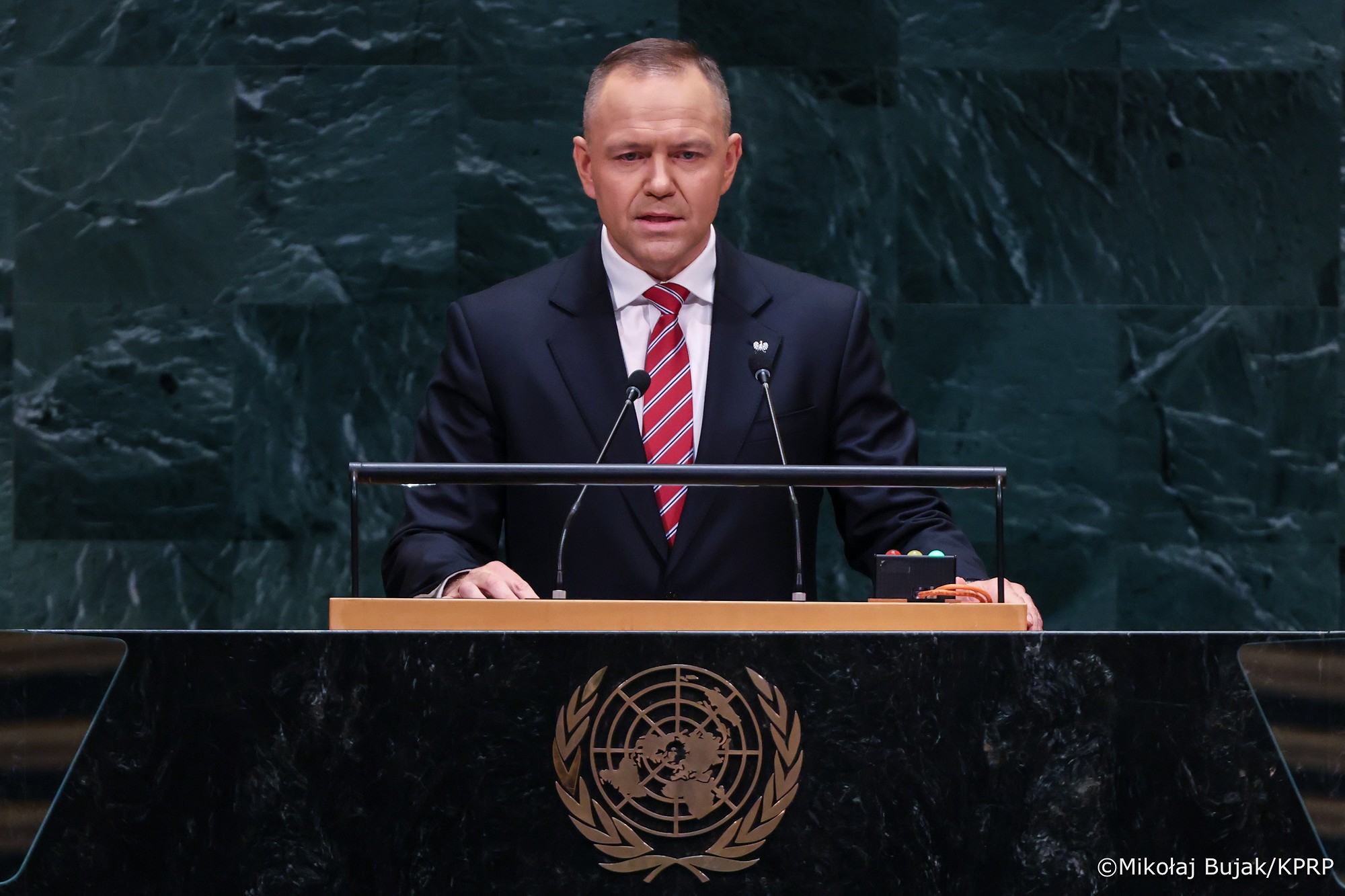
Speaking in New York during the general debate of the 81st session of the UN General Assembly on Wednesday, Nawrocki described Russia’s worldview as “imperial and neo-colonial” and said Moscow was challenging the right of nations to decide their own futures.
He said such an approach amounted to an attempted return to a “concert of powers” in which stronger states dominate smaller ones.
- Find more news from Poland on our Homepage .
“The force of law should decide, not the law of force,” Nawrocki said.
It was Nawrocki’s second address to the UN General Assembly since becoming president. He spoke at the 80th session on 23 September 2025, when he described that appearance as his first before the assembly as Poland’s head of state.
Poland says military build-up is for deterrence
Nawrocki connected Poland’s present security policy directly with the country’s historical experience of domination by the Soviet Union.
He argued that Poland had learned that freedom and sovereignty could not defend themselves and said Warsaw was determined to counter threats posed by what he called the Kremlin’s increasingly aggressive policies.
But he insisted that Poland was not seeking a confrontation with Russia.
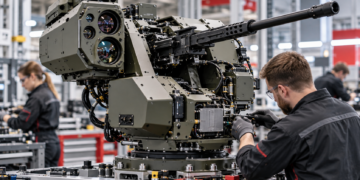
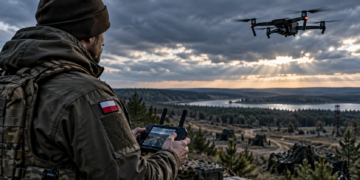
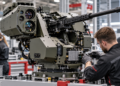
“We are strengthening our alliances, developing our army and modernising its equipment not to wage war, but to prevent it,” Nawrocki said.
“Our goal is deterrence and defence.”
The president also reaffirmed NATO as Poland’s central security guarantee, describing the alliance as the guarantor of European security and stressing the importance of maintaining unity across both sides of the Atlantic.
The remarks come as Poland continues a major expansion and modernisation of its armed forces while security concerns on NATO’s eastern flank remain elevated because of Russia’s war against Ukraine.
Nawrocki accuses Russia of wider destabilisation
Nawrocki portrayed Russia’s challenge as extending beyond conventional military operations.
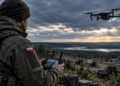
He accused Moscow of attempting to conquer a neighbouring country, destabilising the wider region and disregarding UN General Assembly resolutions. He also blamed Russia for hybrid operations, sabotage and other destabilising activity.
The president further accused Russia of conducting cyberattacks and exploiting migration pressure as part of a broader strategy intended to weaken states and undermine public trust.
Those characterisations were presented by Nawrocki as Poland’s assessment of Russian activity rather than as findings made by the United Nations in Wednesday’s debate.
He argued that military and hybrid aggression required a sustained international response, warning that a failure to respond adequately could encourage further acts.
Poland calls for stronger UN and G20 role
Russia was the central security theme of the speech, but Nawrocki also used the address to set out a broader Polish foreign-policy agenda.
He called for reform of the United Nations, arguing that the organisation needed to be capable not simply of discussing violations of international law but of responding to them and ensuring accountability.
“Reform of the UN cannot be reduced to declarations,” he said.
You May Also Be Interested In
Nawrocki also renewed Poland’s push for a permanent role in the G20.
He argued that Central Europe remained underrepresented in the grouping and said Poland wanted to provide a voice for the region, pointing to its economic transformation and the development of the Three Seas Initiative as evidence of Central Europe’s growing international importance.
Poland is participating in G20 work this year following an invitation from the United States and is preparing to attend the group’s summit in Miami in December, Nawrocki said.
Two-state solution and UN peacekeeping
On the Middle East, Nawrocki reaffirmed Polish support for a two-state solution intended to allow Israel and Palestine to coexist peacefully.
He also backed stable funding and clearer mandates for UN peacekeeping missions, including responsibilities connected with protecting civilians and rebuilding state institutions. Polish troops are currently serving with a UN mission in Lebanon.
The president also discussed demographic decline, migration, environmental policy and artificial intelligence.
He called for international rules governing the development and use of AI, arguing that emerging technologies should serve people and should not become tools for manipulation, destabilisation or attacks on the international order.
But the central argument of the address returned repeatedly to international law and Russia.
Nawrocki told the assembly that Poland’s historical experience had shaped its view that sovereignty required both credible defence and an international system capable of imposing consequences when states violate its rules.
“Poland will always be on the side of law, responsibility, human beings and freedom,” he said at the end of the speech.