
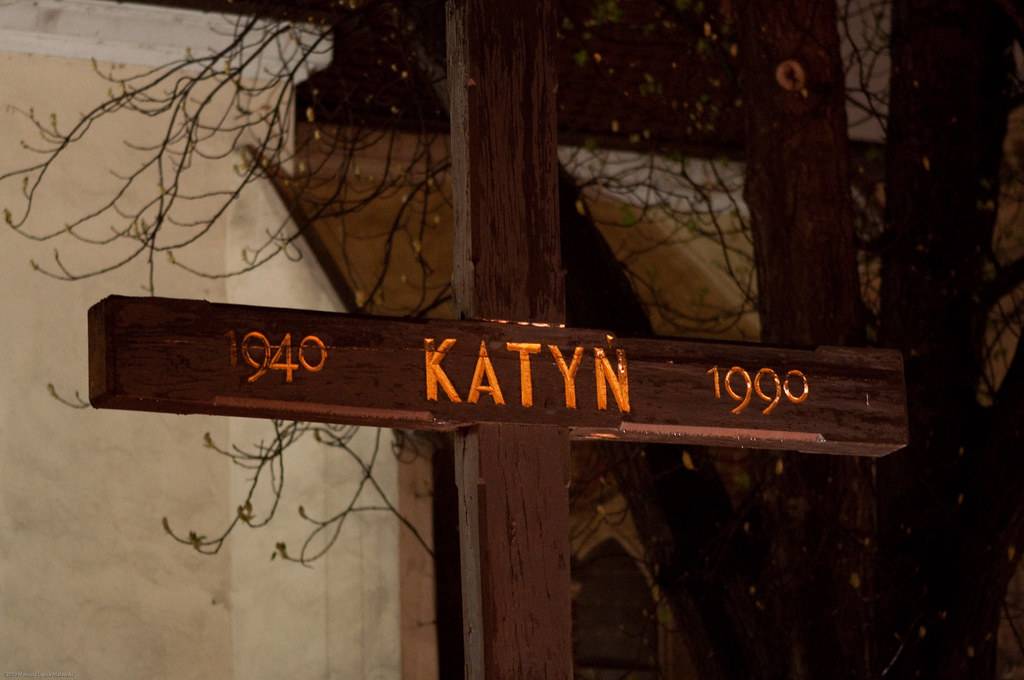
On Sunday, April 13, Poland marked the 85th anniversary of the Katyń Massacre, a somber occasion commemorating one of the darkest chapters in the nation’s history. Speaking at a ceremony in Kraków, President Andrzej Duda described the massacre as a premeditated act of genocide targeting Poland’s elite by the Soviet regime during World War II.
“This was genocide,” Duda said solemnly after laying a wreath at the Katyń Cross in Kraków’s Father Adam Studziński Square. “They murdered with premeditation an important part of Poland’s elite. They managed to kill them, but they never succeeded in erasing their extraordinary heroic stance from the memory of their loved ones and our nation.”
Remembering the Victims
The Katyń Massacre refers to the systematic execution of over 22,000 Polish military officers, intellectuals, and state officials by the Soviet NKVD in 1940. The victims were prisoners held in camps such as Kozelsk, Starobelsk, and Ostashkov, as well as detainees from Soviet-occupied eastern Poland. Most were killed with a gunshot to the back of the head and buried in mass graves in locations such as Katyń Forest, Miednoje, and Kharkiv.
- Find more news from Poland on our Homepage .
The victims of the Katyń Massacre represented a cross-section of Poland’s pre-war elite. They included military officers (nearly half of Poland’s officer corps), academics, doctors, engineers, lawyers, teachers, and other professionals who were instrumental in shaping the Second Polish Republic. Among those killed were 20 university professors, 300 physicians, several hundred lawyers and engineers, and more than 100 writers and journalists. This deliberate targeting of Poland’s intellectual and professional class was aimed at crippling the nation’s ability to rebuild itself as a sovereign state.

Over 25% of all Poles with higher education degrees were among the victims. This loss not only deprived Poland of its immediate leadership but also had long-term consequences for the country’s intellectual and cultural development. The massacre effectively erased a generation of leaders who could have played pivotal roles in post-war reconstruction and governance.
President Duda emphasized that these individuals represented the backbone of pre-war Polish society—teachers, doctors, scientists, and military officers who had fought valiantly to defend their homeland against both Nazi Germany and the Soviet Union. Their deaths were part of a deliberate strategy to weaken Poland by eliminating its intellectual and leadership class.
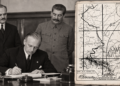
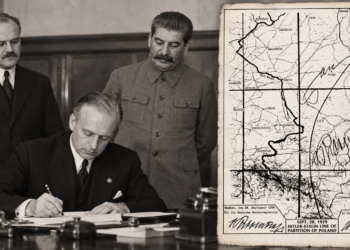
“These two totalitarian regimes—Nazi Germany and Soviet communism—could not tolerate the existence of a Polish state between them,” Duda remarked. He cited Soviet Foreign Minister Vyacheslav Molotov’s infamous description of Poland as a “bastard child of the Treaty of Versailles” to underscore the contempt both regimes held for Polish sovereignty.
The loss of these leaders also had a symbolic impact on Polish national identity. Katyń became a powerful symbol of Polish suffering under totalitarian regimes and a rallying point for anti-communist sentiment. During the communist era, Soviet authorities suppressed any discussion of the massacre, attributing it falsely to Nazi Germany. This suppression further alienated Poles from their Soviet-imposed government
A Legacy of Lies
Duda also highlighted how the crime was compounded by decades of denial and disinformation by Soviet authorities.
For years, Moscow falsely attributed responsibility for the massacre to Nazi Germany.
The discovery of the Katyń Massacre in 1943 led to a sharp deterioration in relations between the Polish government-in-exile in London and the Soviet Union. When Nazi Germany uncovered the mass graves in Katyń Forest and publicized the atrocity, Poland requested an investigation by the International Red Cross. Stalin rejected this request, accusing Poland of colluding with Nazi Germany—a claim that severed diplomatic ties between the two governments
For decades after the massacre, Soviet authorities engaged in an extensive cover-up, falsely attributing responsibility for the killings to Nazi Germany. This propaganda effort was accepted by communist governments in Poland until the late 1980s, further exacerbating tensions between Poles and their Soviet-imposed rulers. The denial of responsibility deepened mistrust, as many Poles viewed it as an attempt to erase their history and silence their suffering.
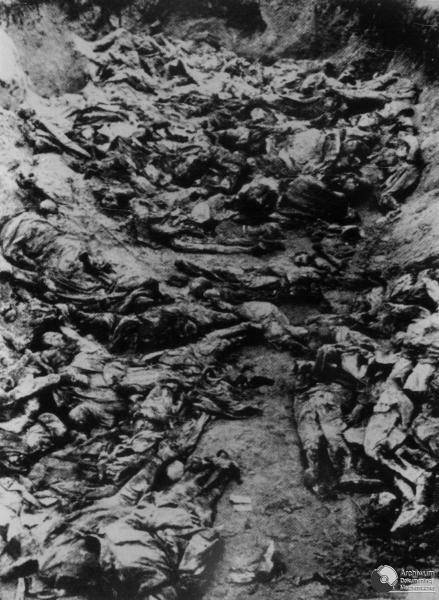
It wasn’t until 1990 that Soviet leader Mikhail Gorbachev officially acknowledged NKVD culpability for the massacre. This admission marked a turning point but did not fully resolve the historical grievances surrounding Katyń
“This crime left indelible marks on our nation’s history,” Duda said. “It stained the communist and Soviet regime not only with the blood of patriots but also with lies they tried to impose on our people and the world—attempting to distort and erase memory of that horrific murder.”
The president drew parallels between past Soviet propaganda and contemporary Russian efforts under Vladimir Putin to manipulate historical narratives about Katyń. He criticized Putin’s attempts to downplay Soviet responsibility or frame it as an isolated act ordered solely by Joseph Stalin.
Honoring Sacrifice Amid Tragedy
The anniversary also served as a moment to reflect on more recent tragedies tied to Katyń. Duda recalled how 15 years ago, in 2010, a Polish delegation led by then-President Lech Kaczyński died in a plane crash near Smolensk while en route to commemorate the 70th anniversary of the massacre. The crash claimed 96 lives, including many relatives of Katyń victims.