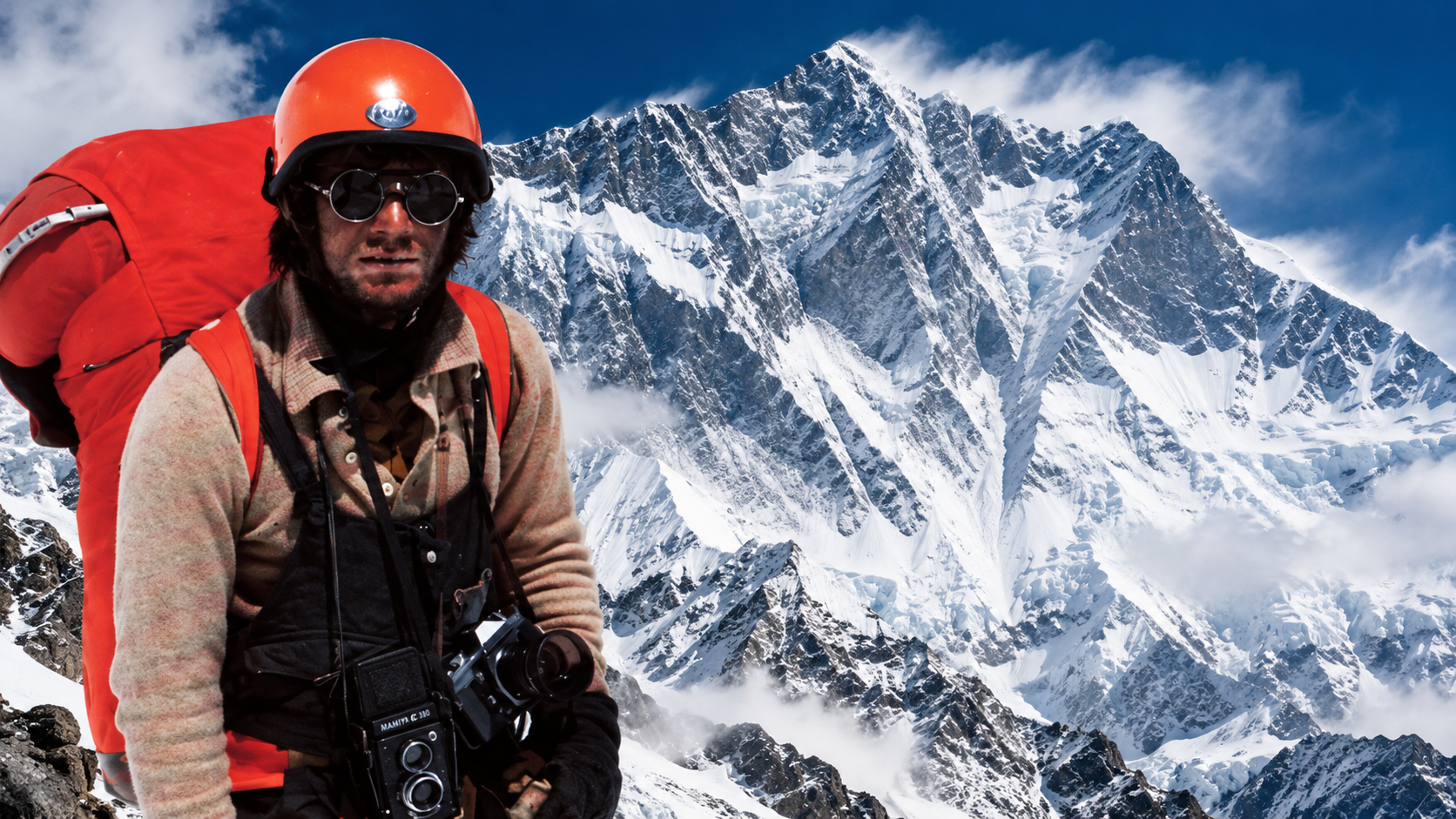
On 24 October 1989, Polish mountaineer Jerzy Kukuczka died during an attempt on Lhotse, the world’s fourth-highest mountain.
He was climbing with Ryszard Pawłowski on the mountain’s then-unclimbed south face when he fell to his death at an altitude of more than 8,000 metres. Kukuczka was 41 years old.
For Poland, Kukuczka was far more than an elite climber. He became one of the defining figures of the country’s extraordinary Himalayan generation — the group of mountaineers who, often with limited resources but exceptional ambition, built an outsized Polish reputation in the world’s highest mountains.
- Find more news from Poland on our Homepage .
His death on Lhotse marked not only a personal tragedy, but the loss of one of the central personalities of that era.
From the Tatras to the world’s highest mountains
Kukuczka was born in Katowice-Bogucice on 24 March 1948. His path into mountaineering began as a teenager on the limestone crags of southern Poland before progressing to the Tatras and then the greater ranges.
He developed his skills in an environment that placed a premium on endurance, improvisation and difficult climbing. By the 1970s, Kukuczka was taking part in expeditions outside Europe, and in 1977 he made his first Himalayan attempt on Nanga Parbat.
Two years later he reached the summit of Lhotse, beginning the extraordinary sequence of eight-thousand-metre ascents that would make him one of the most famous climbers in the world.
The second man to climb all 14 eight-thousanders
In 1987, Kukuczka became only the second person in history, after Reinhold Messner, to climb all 14 of the world’s mountains above 8,000 metres.
The bare statistic, however, does not explain why his achievements are regarded with such admiration in the mountaineering world.
Kukuczka repeatedly chose difficult routes, climbed in winter and established new lines. Thirteen of his 14 eight-thousander summits were achieved without supplementary oxygen, and four came in winter.
His partnership with climbers including Wojciech Kurtyka became legendary for bold alpine-style ascents. He established new routes on some of the Himalayas and Karakoram’s most formidable mountains and built a reputation not simply for reaching summits, but for finding harder and more original ways to reach them.
That approach became one of the defining features of the Polish Himalayan school of the 1970s and 1980s.
Poland’s extraordinary Himalayan generation
Polish climbers of the period became particularly associated with winter mountaineering and difficult new routes at extreme altitude.
They frequently operated with fewer financial resources than expeditions from wealthier Western countries, but developed a reputation for determination, technical skill and willingness to tackle objectives that others considered exceptionally risky.
Kukuczka stood at the centre of that tradition.
His achievements included major winter ascents and pioneering new lines on eight-thousanders. His 1986 ascent of K2 with Tadeusz Piotrowski by what became known as the Polish Line remains one of the most famous routes in Himalayan climbing.
By the time Kukuczka completed all 14 eight-thousanders, he had already reached the summit of what was then considered the ultimate statistical achievement in high-altitude mountaineering.
But he did not stop.
Why return to Lhotse?
Lhotse had particular significance in Kukuczka’s career.
He had climbed the mountain successfully in 1979, but a decade later he returned for a completely different objective: its immense south face.


At the time, the wall remained unclimbed and was regarded as one of the greatest outstanding challenges in Himalayan mountaineering.
Kukuczka joined forces with experienced Polish climber Ryszard Pawłowski for the attempt.
It was characteristic of Kukuczka that, even after completing all 14 eight-thousanders, his ambitions had shifted towards increasingly difficult routes rather than simply adding more conventional summits to his record.
The south face represented exactly the sort of challenge that had defined his career: steep, technically demanding, remote and still unconquered.
The fatal attempt
On 24 October 1989, Kukuczka and Pawłowski were high on the south face.
Surviving accounts agree that Kukuczka fell during the climb and died. Contemporary and later biographical accounts also refer to a rope failure during the accident, although detailed reconstructions of exactly how and why the rope failed vary and should be treated cautiously.
The expedition ended immediately.
Kukuczka’s death came only two years after he had completed all 14 eight-thousanders and at a point when he was already regarded as one of the leading mountaineers of his generation.
He was 41.
A legacy larger than a list of summits
Kukuczka’s reputation rests partly on extraordinary numbers: 14 eight-thousanders, numerous new routes, winter ascents and thirteen of those peaks climbed without supplementary oxygen.
But his legacy reaches beyond statistics.
He became one of the clearest symbols of the era when Polish climbers transformed their country into a major force in world mountaineering.
His methods reflected both the strengths and the dangers of that tradition: ambition, self-reliance, willingness to accept hardship and a constant search for routes that had not been climbed before.
That is why the circumstances of his death remain so closely connected to the way he is remembered.
Kukuczka did not die trying simply to repeat an achievement he had already mastered. He died attempting one of the great remaining problems of Himalayan climbing.
More than three decades later, his name remains central to the history of both Polish and international mountaineering.
The anniversary of 24 October 1989 therefore commemorates more than the death of an exceptional athlete. It recalls a climber whose ambitions helped define an entire era of Polish Himalayan exploration.