Polish forensic researchers have uncovered the remains of approximately 60 people in a newly investigated mass grave at the site of a former German prisoner-of-war camp in north-western Poland. The discovery at Stalag II D in Stargard is part of an investigation to identify people who died during the Second World War and determine the circumstances of their deaths. Researchers believe the latest burial site dates to December 1941, while earlier excavations have also uncovered civilian victims deported from Warsaw in 1944.
The discovery was confirmed during the fifth phase of archaeological and forensic investigations led by Professor Andrzej Ossowski of the Pomeranian Medical University in Szczecin.
In an announcement published on 22 October, the university initially reported finding remains of approximately 50 people during the latest phase of work.
- Find more news from Poland on our Homepage .
However, in comments to Radio Szczecin later that day, Ossowski said the number discovered in the newly examined grave had reached 60.
The figures are preliminary and could change as excavation and forensic analysis continue.
The findings add to a wider investigation that has so far recovered remains of approximately 400 people from the former camp grounds.
A mass grave dating to December 1941
The latest excavation is concentrated on a collective burial site that researchers have provisionally dated to December 1941.
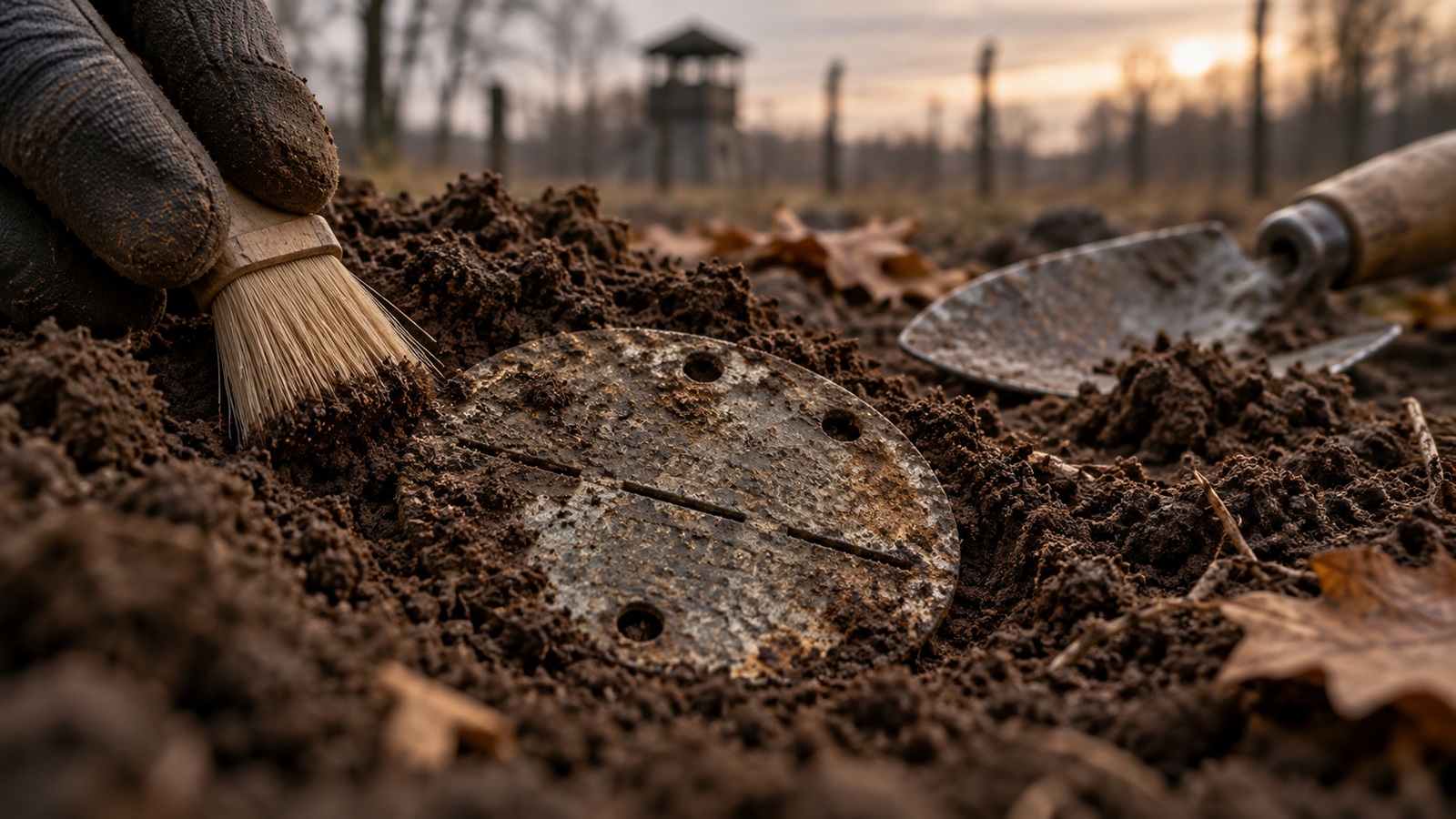
Ossowski said the team had recovered military identification tags and other personal objects that could help establish when the grave was created and who was buried there.
Among the items were buttons believed to come from Polish military uniforms, as well as spoons and small pieces of clothing.
The presence of Polish military items near two sets of remains suggests that Polish prisoners of war were among those buried in the grave.
However, these findings do not establish the identities or nationalities of all those recovered.
Researchers are examining surviving identification tags alongside historical records to determine whether individual prisoners can be named.
The team is also investigating how the people died.
Dr Dagmara Lisman, a researcher at the university, told Radio Szczecin that the remains examined had not shown obvious injuries caused by bullets or weapons.
She suggested that hunger, disease, harsh living conditions and exhausting forced labour were likely causes of death among prisoners held at the camp.
Those conclusions remain preliminary. The investigation has not established the individual cause of death for every person recovered.
One of Nazi Germany’s major prisoner-of-war camps
Stalag II D operated in Stargard between 1939 and February 1945.
The town, now part of Poland’s West Pomeranian province, was within Germany during the Second World War.
The camp was established after Germany’s invasion of Poland in September 1939 and became one of the larger prisoner-of-war facilities within the Third Reich.
According to the West Pomeranian Governor’s Office, its prisoners included soldiers from Poland, France, Belgium and the Soviet Union.

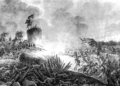
Polish soldiers captured during the 1939 campaign, including men serving under General Franciszek Kleeberg, were among those detained.
Many prisoners were subsequently sent to perform forced labour across Pomerania.
The camp held people of several nationalities, whose treatment and living conditions varied during different stages of the war.
Investigators believe that understanding the location, chronology and contents of the mass graves may help reconstruct what happened to those who never returned home.
Children and civilians from the Warsaw Uprising also buried at the site
One of the most significant findings from earlier excavations was that Stalag II D’s burial grounds contained more than military prisoners.
Researchers also uncovered remains of civilians deported from Warsaw after the defeat of the Warsaw Uprising in 1944.
Following the uprising, German authorities expelled much of Warsaw’s surviving civilian population, sending people to transit camps, forced-labour facilities and other detention sites.
Some eventually reached Stargard.
Among the objects recovered during previous investigations were children’s shoes, a religious medallion and a small wooden cross discovered near a child’s remains.
These findings demonstrate that the burial grounds also contain victims who were not serving soldiers.
The Pomeranian Medical University’s research programme is therefore investigating the histories of both military and civilian victims.
The civilian burials linked to the 1944 Warsaw Uprising must be distinguished from the newly examined mass grave dated to December 1941.
Although both form part of the wider investigation, they represent different periods of the camp’s history.
DNA technology could help restore victims’ identities
The investigation involves archaeologists, forensic pathologists, anthropologists, geneticists and criminal investigators.
Their work extends beyond carefully removing and documenting human remains.
After excavation, specialists examine bones and surviving personal objects to establish possible ages, biological sex, identifying characteristics and evidence relevant to the circumstances of death.
Military identification tags can sometimes provide a direct connection to surviving historical records.
Genetic analysis offers another possibility, particularly where a person’s identity cannot be established through objects or documents alone.
The Pomeranian Medical University is using its Regional Centre for Digital Medicine to support advanced DNA analysis.
Its researchers have developed methods for obtaining genetic material from sources that can remain preserved long after death.
These include dental calculus, commonly known as tartar, and the tiny bones of the middle ear.
Both can offer useful material for genetic testing in difficult forensic cases.
According to the university, these techniques are contributing to improvements in the identification of historical remains and may also have applications in modern forensic investigations.
However, recovering usable DNA is not the same as identifying an individual.
A confirmed identification may also require comparison with relatives’ genetic material, archived records or other independent evidence.
No newly recovered victim from the latest excavation has yet been publicly identified by name in the announcements reviewed.
Plans for a war cemetery in Stargard
The latest research phase has received PLN 130,000 from the West Pomeranian regional governor’s budget.
Deputy Governor Dawid Krystek visited the excavation site alongside university representatives and confirmed that regional authorities intend to support further investigations.
He said the objective extends beyond recovering remains.
Authorities hope eventually to establish a war cemetery where those buried at the former camp can be commemorated with dignity.
The proposal was confirmed in the regional government’s announcement, although no final construction timetable or completed cemetery project has been announced.
Researchers intend to continue investigating the grounds in future years, while laboratory analysis of previously recovered remains is also expected to continue.
The scale of the undertaking means that identifying every person buried at the site may prove impossible.
Nevertheless, each recovered identification tag, personal belonging or usable DNA sample offers another opportunity to establish the fate of someone who disappeared during the war.
More than eight decades after Stalag II D ceased operating, Polish researchers are continuing to uncover evidence of the lives lost there — and working to ensure that at least some of the victims can finally be remembered by name.