

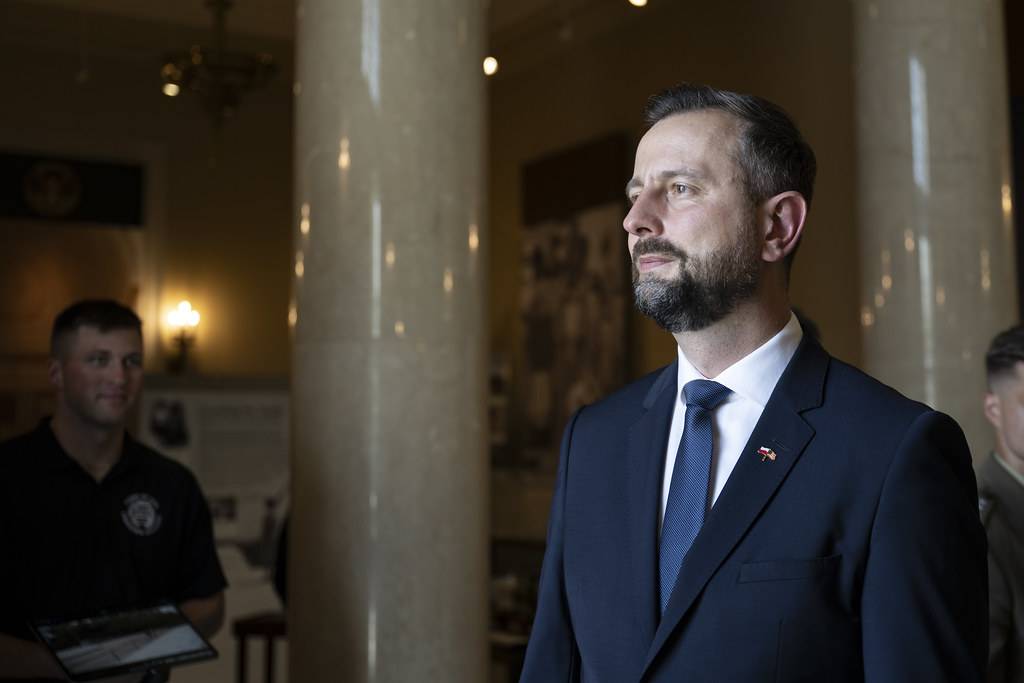
Polish Defence Minister Władysław Kosiniak-Kamysz has said war is the “worst-case scenario” Poland must prepare for as Russia escalates its military and hybrid activities near NATO’s eastern frontier.
Speaking on Polsat News on Tuesday evening, the deputy prime minister said Poland’s rearmament, stronger alliances and efforts to improve public resilience were intended precisely to prevent such a scenario.
“The worst-case scenario is war,” Kosiniak-Kamysz said when asked about Prime Minister Donald Tusk’s recent warning that Poland must be prepared for even the most serious developments.
- Find more news from Poland on our Homepage .
“War is always the worst thing that can happen to us. Everything we are doing — armament, public awareness, resilience, alliances — is intended to ensure that there is no war. But the Russian Federation is escalating,” he added.
His comments follow several days of heightened security activity around Poland’s eastern border and Baltic coast.
Tusk said on Sunday that the coming weeks and months were likely to bring intensified Russian activity and that Warsaw could not exclude the possibility that some of that escalation would affect Polish territory.
The warning came after Russian drone strikes hit targets in western Ukraine around two kilometres from the Polish border, including infrastructure close to the Dorohusk-Yahodyn crossing.
Poland subsequently increased security at major border crossings with Ukraine, with military engineers constructing protective barriers and observation posts at Dorohusk, Medyka and Korczowa.
Separately, Polish troops recovered a suspected Russian military drone from the Baltic Sea near Rusinowo on Monday. Preliminary examination indicated that it was a Russian military unmanned aircraft, although further analysis is continuing.
Kosiniak-Kamysz said the government had considered the possibility of a wider conflict since taking office.
“The war is taking place right next to our border,” he said. “It is not behind some great wall. We are separated by centimetres from where drones are falling and people are dying.”
He also referred to recent drone incidents elsewhere on NATO’s eastern flank and argued that Moscow’s behaviour showed the threat was not confined to Ukraine.
“Russia will not stop at Ukraine,” Kosiniak-Kamysz said.
That remains the Polish defence minister’s assessment rather than an established prediction of Russian military plans. NATO governments have repeatedly warned, however, about the risk posed by Russian conventional and hybrid operations while strengthening military deployments along the alliance’s eastern flank.
Kosiniak-Kamysz said Russia had become more confident in recent months, contrasting what he described as improving sentiment in Moscow with a more difficult strategic situation for Kyiv.
At the same time, he cautioned against allowing fear to become part of Russia’s strategy.
“Fear and anxiety are what Russia wants to create,” he said, arguing that Russian propaganda seeks to undermine trust inside European states, weaken alliances and deepen divisions between societies.
The minister said one of the most difficult questions facing NATO countries was determining the point at which hostile Russian activity below the threshold of conventional attack crosses into warfare.
Polish officials have increasingly focused on so-called hybrid threats, including sabotage, cyberattacks, GPS interference, disinformation and drone provocations.
The defence ministry said in August that Poland must be prepared for increasingly difficult scenarios and warned that Russian hybrid operations could include provocations involving captured or repurposed aircraft.
You May Also Be Interested In
Tusk similarly said after Sunday’s strikes near the Ukrainian border that Russian escalation was becoming a reality and that Polish institutions would operate at an increased level of readiness.
Kosiniak-Kamysz also addressed Poland’s relationship with the United States, saying Washington’s expectation that European NATO members should assume greater responsibility for their own defence extended beyond any particular US administration.
He argued that US strategic priorities increasingly include China, the Indo-Pacific, the Arctic and the Western Hemisphere, making stronger European defence capabilities essential.
According to Kosiniak-Kamysz, Poland and Germany are now regarded by the Pentagon as leading European countries in terms of military rearmament.
Poland has substantially increased defence spending since Russia launched its full-scale invasion of Ukraine in February 2022 and has ordered new tanks, artillery systems, aircraft, air-defence equipment and other weapons from suppliers including the United States and South Korea.
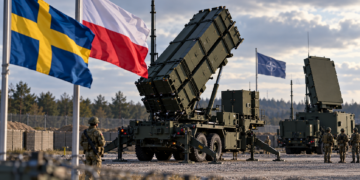
Warsaw has also expanded the East Shield programme along its borders with Russia and Belarus and is strengthening air defence and military infrastructure on NATO’s eastern flank.
Kosiniak-Kamysz said the objective of those preparations was deterrence rather than expectation that war was inevitable.
“Do not be afraid,” he said. “Be prepared.”