

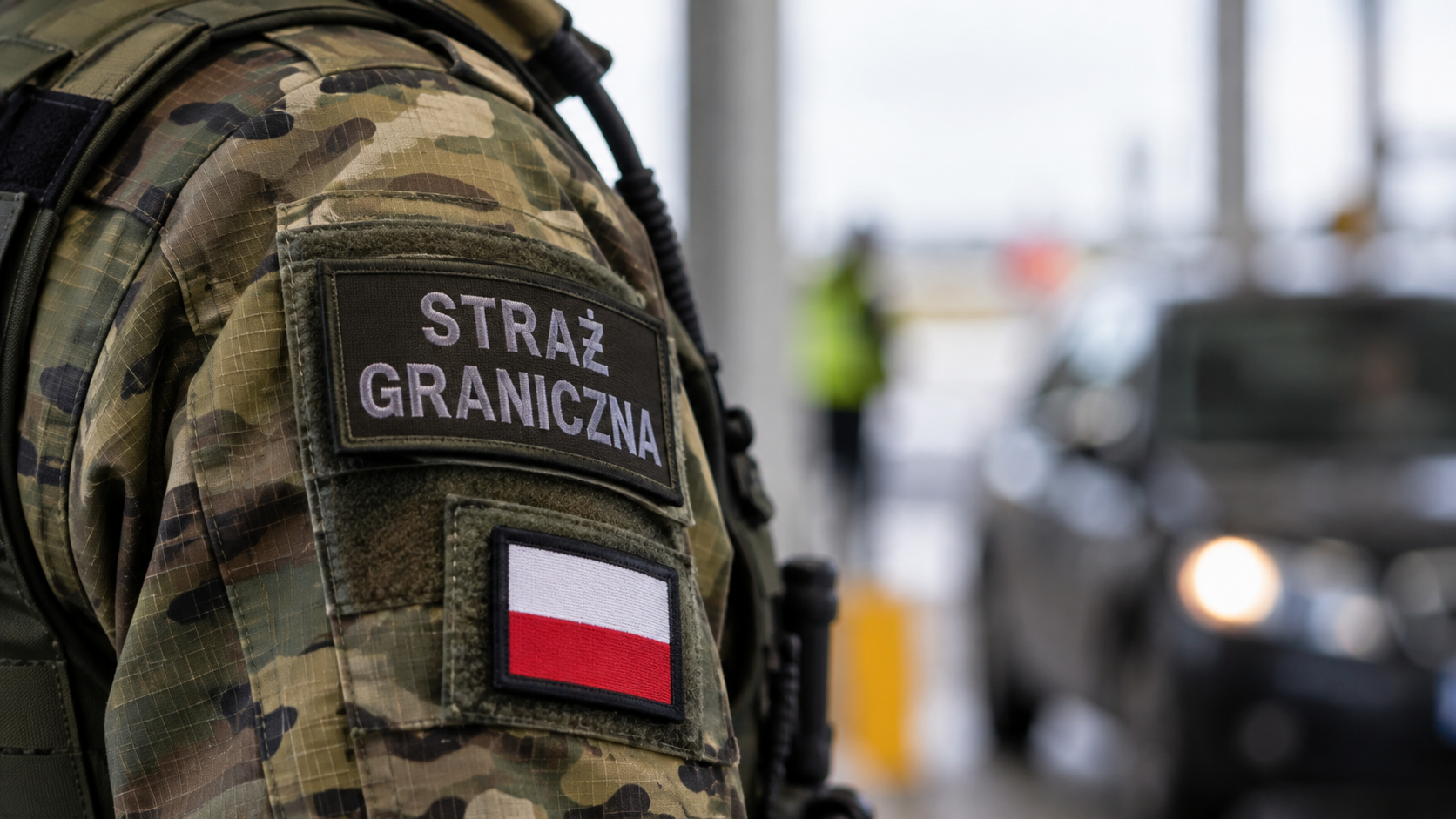
Poland’s Border Guard identified almost 8,300 foreigners who breached rules governing entry or residence in the country between January and the end of August 2026, an increase of nearly 40% from the same period last year, according to figures provided by the service to Rzeczpospolita.
Major Anna Sobieska-Tekień, spokeswoman for Border Guard Headquarters, told the newspaper that the comparable figure for January to August 2025 was almost 6,000. Just over 9,300 cases were recorded during the whole of last year.
That means the number recorded in the first eight months of this year was already close to the total for all 12 months of 2025.
- Find more news from Poland on our Homepage .
Ukrainian citizens formed the largest group, at around 2,200, followed by Colombians at approximately 1,400. The figures also included 748 Georgians, 400 Belarusians and 354 Moldovans.
The figures should not be confused with attempted illegal crossings of Poland’s external border. They concern foreigners identified as breaching Polish rules on the conditions of entry and residence, including people already inside the country whose legal basis for remaining there had expired or was otherwise invalid.
Border Guard cases published during 2026 illustrate the range of circumstances involved. Some foreigners have overstayed the period during which they were legally permitted to remain, while others have entered as tourists but undertaken work without the required authorisation.
In August, for example, the Border Guard reported that two Colombian citizens checked in Krosno had exceeded their permitted period of stay. Both were ordered to return and received one-year bans on entering the Schengen area.
Employment controls have also uncovered significant numbers of violations involving Colombian workers. In May, the Silesian Border Guard said it had checked the employment status of 2,522 foreigners since the beginning of 2026 and found that 802 were working illegally.
Separate data from Warmia and Mazury show a similar pattern. Border Guard officers there reported in July that almost 500 foreigners had been found working contrary to the rules during the first half of the year, with Colombians accounting for 55% of those cases.
Illegal employment and illegal residence are not, however, interchangeable categories. A foreigner can have permission to remain in Poland while lacking permission to perform particular work, and the nationwide figure of almost 8,300 cited by the Border Guard relates specifically to breaches of entry and residence rules.
The increase also comes while Poland has tightened controls at its external borders. The Interior Ministry said earlier this year that the Border Guard had refused entry to thousands of foreigners who lacked the right to enter Poland or were flagged in the Schengen system. The government has separately reported a steep reduction in successful unauthorised crossings from Belarus.
Those figures measure different phenomena and cannot be directly combined with the almost 8,300 entry-and-residence violations. They nevertheless underline the distinction between preventing unauthorised entry at the border and identifying people who no longer meet the legal conditions for remaining in Poland.
The Border Guard has not, in the material located by Poland-24, published a nationwide January-to-August dataset providing a detailed breakdown of how each of the almost 8,300 cases arose. The national totals and nationality figures were supplied directly by Border Guard Headquarters to Rzeczpospolita, while individual Border Guard units have separately published details of enforcement operations throughout the year.