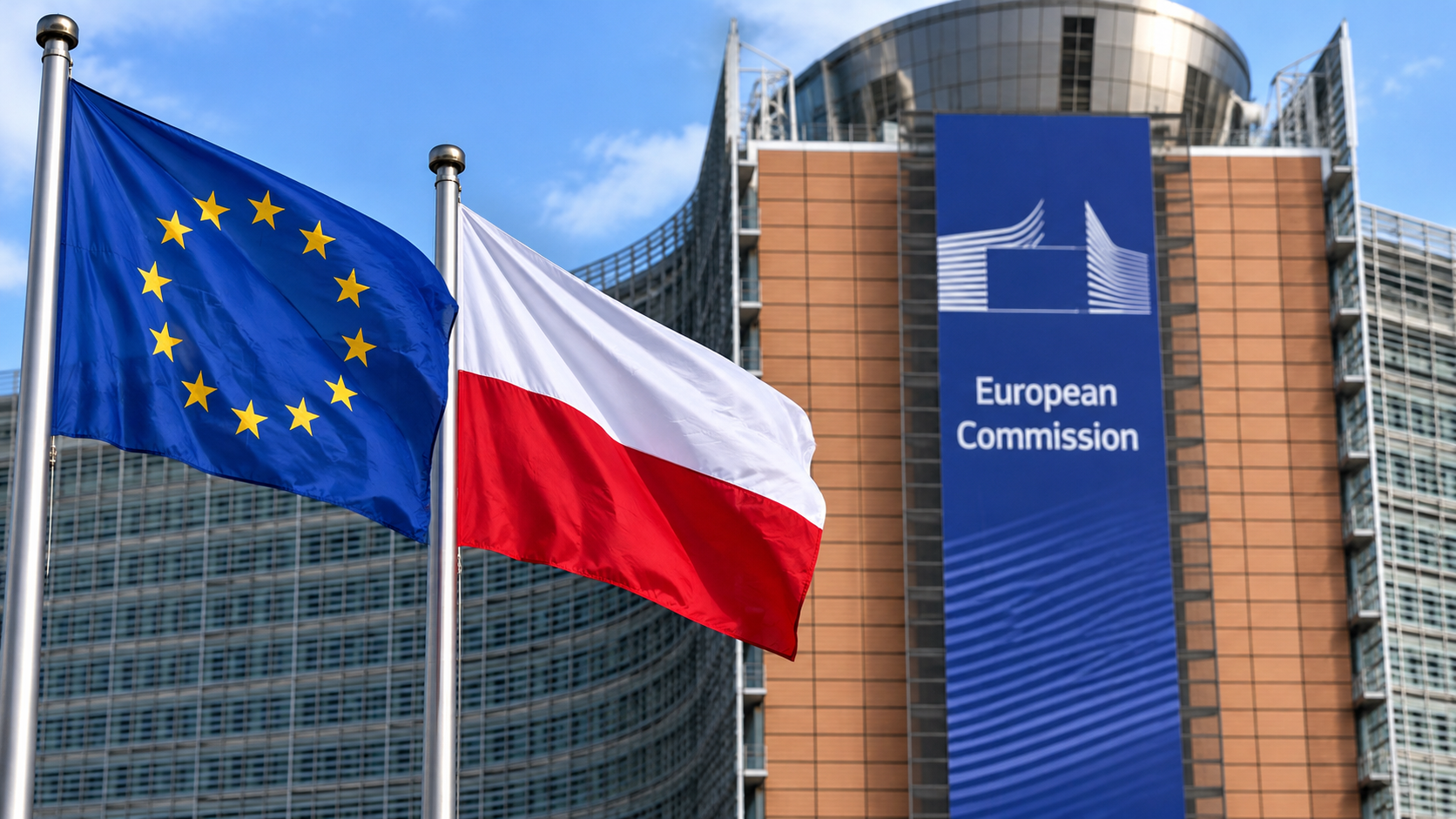
The European Commission has formally confirmed that Poland qualifies to seek another year’s exemption from the European Union’s migration solidarity mechanism, potentially allowing the country to avoid accepting relocated asylum seekers or making financial contributions throughout 2027.
The announcement on Friday, 6 November, confirms expectations reported last month and follows a new assessment of migration pressures across the European Union.
Brussels has again recognised Poland as a country facing a significant migratory situation, citing the cumulative impact of migration pressures over recent years.
- Find more news from Poland on our Homepage .
The decision means Warsaw can request a full or partial reduction in its contributions to the EU’s annual solidarity mechanism for 2027.
However, the final exemption must still be approved by the Council of the European Union, representing member-state governments.
The European Commission’s official announcement confirms that Poland is among six countries eligible for such reductions.
EU recognises Poland’s continuing migration pressures
Poland was named alongside Austria, Bulgaria, Croatia, Czechia and Estonia as countries experiencing a significant migratory situation because of accumulated pressures over the previous five years.
The Commission’s assessment considers factors including the number of people receiving temporary protection, asylum applications, pressure on migration and return systems, and responsibilities associated with protecting the EU’s external borders.
European Commissioner for Internal Affairs and Migration Magnus Brunner explained that Poland’s circumstances had not substantially changed since the previous assessment.
According to Polish Radio’s reporting on his remarks, Brunner specifically referred to Poland’s reception of people fleeing Russia’s war against Ukraine and the instrumentalisation of migration at its eastern border.
He said these factors continued to justify Poland’s classification among countries experiencing significant migration challenges.
Poland has provided temporary protection to large numbers of Ukrainians since Russia launched its full-scale invasion in February 2022.
The country has also faced sustained pressure along its border with Belarus, where Polish and EU authorities accuse the Belarusian government, supported by Russia, of facilitating irregular migration as a means of exerting political pressure.
Brussels has now formally recognised that these circumstances remain relevant when determining Poland’s obligations under the solidarity mechanism.
Confirmation follows October reports
The announcement confirms expectations that had been circulating in Brussels for several weeks.
On 22 October, Poland-24 reported that Poland was expected to retain its exemption from the EU migration solidarity mechanism in 2027, citing information obtained by the Polish Press Agency from EU sources.
At that stage, the Commission had not published its formal assessment, and Poland’s continued eligibility remained an anticipated outcome.
Friday’s announcement confirms that the Commission has retained the classification allowing Poland to request a reduction in its solidarity contributions.
It is a significant procedural development, although the final approval stage remains outstanding.
What does the exemption actually mean?
The EU’s Pact on Migration and Asylum, which began applying in June 2026, introduced a permanent solidarity mechanism intended to help member states facing disproportionate migration pressures.
You May Also Be Interested In

Under the system, governments can contribute through relocating eligible asylum applicants, providing financial support, taking responsibility for asylum claims or offering other forms of assistance.
The mechanism requires solidarity between participating countries, but it does not require every government to accept relocated migrants.
Countries facing significant migration challenges themselves can request a reduction in their contributions.
For Poland, a full reduction for 2027 would mean it would not have to pledge migrant relocations, financial payments or alternative solidarity contributions to the annual pool.
The arrangement would cover 1 January to 31 December 2027.
It would extend the position Poland already holds for 2026.
In December 2025, EU governments approved the first annual solidarity arrangements, with Poland receiving a reduction that brought its contribution to zero.
The Council’s published decision for 2026 confirms that Poland’s adjusted contribution was zero.
However, an exemption from solidarity contributions does not mean Poland is exempt from the entire EU migration pact.
Other provisions covering asylum procedures, border screening and responsibility for processing applications continue to apply.
What happens next?
The Commission has now presented its proposal for the 2027 solidarity pool, but the proposed contributions of individual member states have not yet been made public.
Poland can formally request a full reduction based on its recognised migratory situation.
The Council must then agree on the annual solidarity arrangements and determine the legally binding contributions of member states.
The Commission’s classification provides the legal basis for seeking relief, but does not automatically guarantee that Poland will receive a complete reduction.
The final decision is expected before the new solidarity period begins in January 2027.
The arrangements will also be reassessed annually. Poland’s eligibility for relief in 2028 will depend on a further examination of its migration circumstances.
For now, Friday’s announcement confirms that Brussels continues to recognise Poland’s particular circumstances and has opened the way for the country to retain its exemption for another year.