

Poland is reinforcing several major border crossings with Ukraine after Russian drone attacks struck infrastructure close to NATO territory, adding blast protection and new positions for personnel at key transit points.
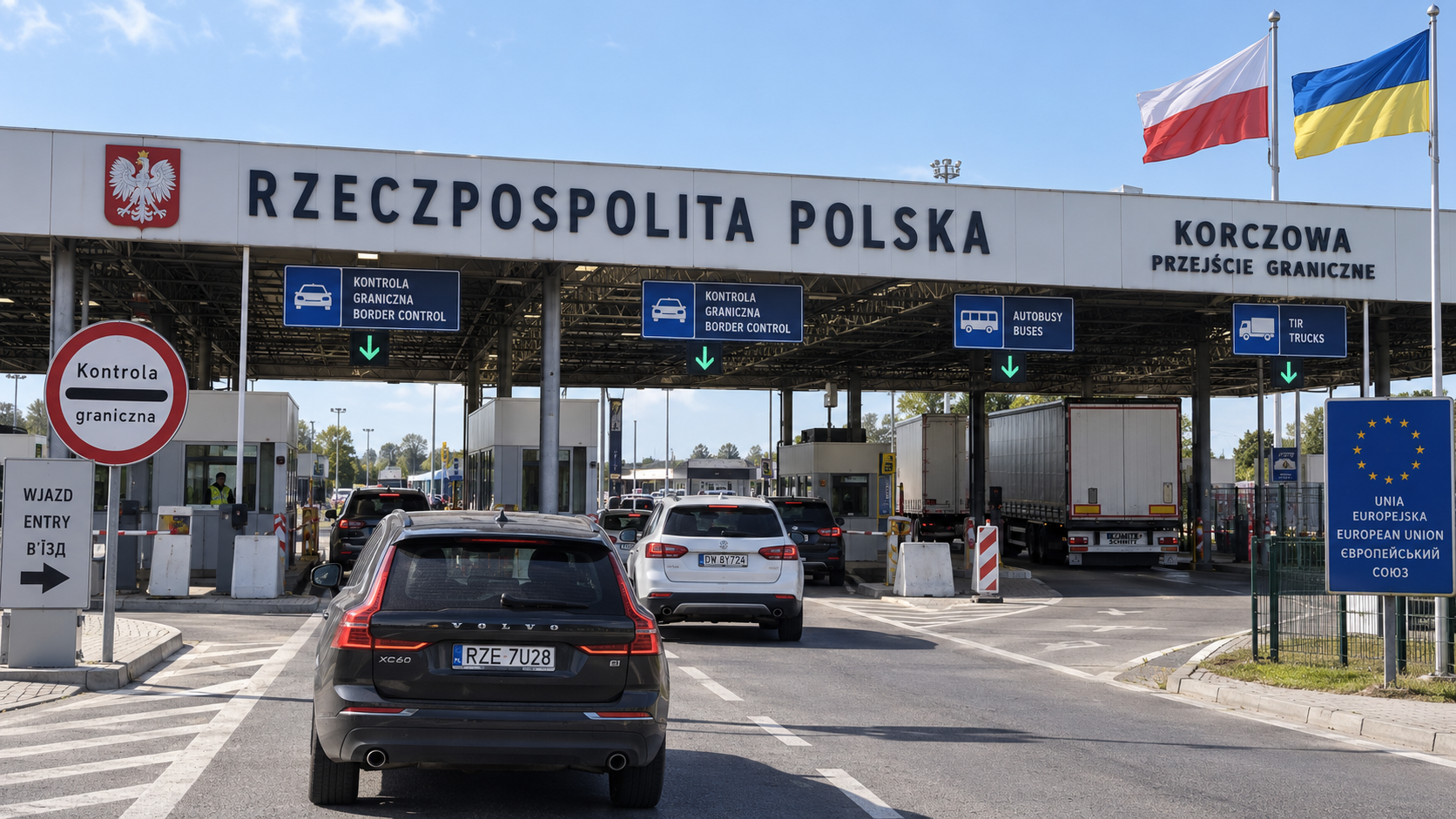
The measures have been reported at Dorohusk, Medyka and Korczowa, three of the most important crossings linking Poland and Ukraine.
Polish military engineers from the 18th Engineer Regiment are involved in the work, according to Reuters, which reported that protective structures are being built around parts of the border infrastructure.
- Find more news from Poland on our Homepage .
The measures include wire-mesh containers filled with sand or gravel, commonly used as blast walls, as well as observation and guard positions intended to provide greater protection for personnel working at the crossings.
Defence Minister Władysław Kosiniak-Kamysz said the steps were being taken in response to the growing risk created by Russian attacks increasingly close to Poland’s border.
Recent strikes have hit Ukrainian transport and logistics infrastructure near the frontier, including a passenger train and a truck close to border routes used by civilians, freight and international aid.
The attacks occurred on Ukrainian territory. There is no evidence that the Russian strikes themselves hit Polish territory.
The reinforcement work should also not be confused with the construction of a new permanent border barrier.
The measures described so far are protective works around individual crossing facilities, designed to reduce the vulnerability of personnel and infrastructure to explosions or nearby attacks.
There has also been no indication that Dorohusk, Medyka or Korczowa are being permanently closed because of the new defences.
Official Polish border information continued to show traffic operating through the Ukrainian frontier on 17 September, including at Korczowa and Medyka, while Dorohusk remained open for freight traffic. Dorohusk has not handled regular passenger traffic since 2022.
Key crossings between Poland and Ukraine
Dorohusk, in Lublin province, is one of Poland’s principal road freight crossings with Ukraine and connects with Yahodyn on the Ukrainian side.
Medyka, near Przemyśl in south-eastern Poland, is one of the busiest passenger crossings between the two countries.
Korczowa, farther north-west, is another major road crossing and an important route for freight and passenger traffic.
Together, the crossings form part of the transport network that has become increasingly important since Russia launched its full-scale invasion of Ukraine in 2022.
They carry civilian traffic and commercial goods while also forming part of the wider logistics network connecting Ukraine with the European Union.
That makes their continued operation important not only for Ukraine but also for Polish border regions and European trade.
Protection rather than closure
The distinction between reinforcing a crossing and closing it is significant.


Blast walls and protected guard posts are intended to allow personnel to continue working in a more dangerous environment. They do not, by themselves, indicate that Poland is preparing to shut the border or convert the crossings into military facilities.
Reuters reported that the Polish army regarded the engineering work as necessary to protect staff and maintain security as Russian attacks move closer to Poland.
The measures follow growing concern in Warsaw about the vulnerability of border infrastructure.
Prime Minister Donald Tusk said earlier in September that Poland expected Russia to target or disrupt crossings linking Poland and Ukraine, warning that attacks on transport routes could also be intended to weaken Ukraine economically.
That concern intensified after Russian strikes hit Ukrainian infrastructure close to the Polish frontier.
A drone attack on a passenger train near the border was condemned by European officials, while another strike hit a truck near the Dorohusk-Yahodyn crossing and temporarily disrupted operations on the Ukrainian side.
The Polish government has not announced that the new defences constitute a permanent redesign of the border-crossing system.
No publicly accessible Polish Border Guard or Ministry of Defence document located by Poland-24 sets out the full scope, timetable or permanent status of the works at each crossing.
The reinforcement should therefore be understood, for now, as a developing security measure intended to protect existing border infrastructure rather than the creation of a new fortified frontier.