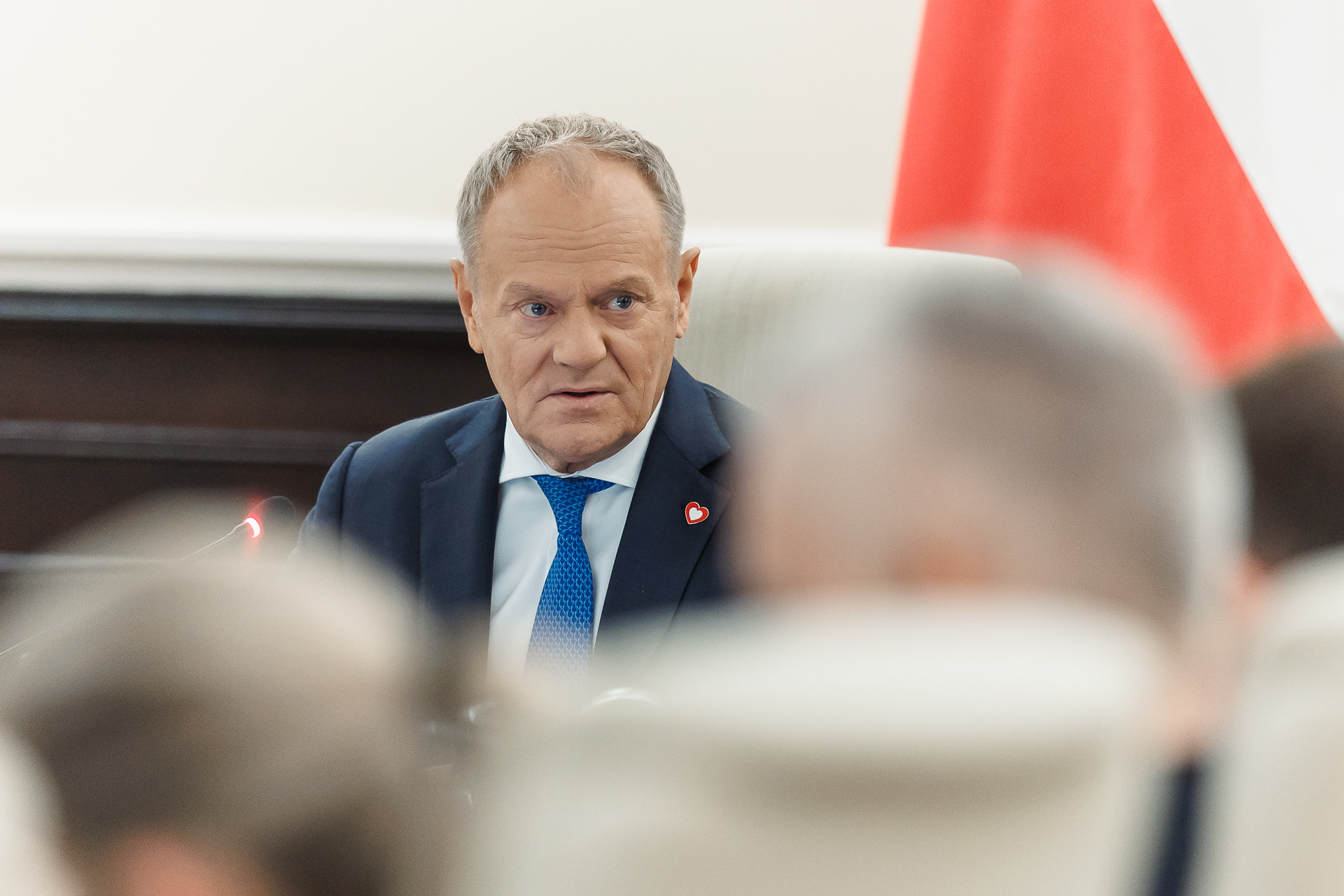
Polish Prime Minister Donald Tusk has accused Russia of an apparently deliberate provocation after three aerial objects entered Polish airspace during a major overnight attack on Ukraine, in an incident that prompted military alerts, the deployment of fighter jets and consultations with NATO allies.
Speaking at a news conference in Warsaw on Friday, 20 November, Tusk said the Polish authorities were increasingly convinced that the incident was not accidental.
The prime minister described the events as another escalation by Russia and said he had discussed the situation with NATO’s secretary general and several European leaders.
- Find more news from Poland on our Homepage .
According to Radio ZET’s report of his remarks, Tusk said the objects that had fallen on Polish territory were Russian.
He added that the circumstances did not appear to be coincidental and suggested the incident was an intentional provocation.
His statement represents a significant escalation in the Polish government’s assessment of events that initially emerged on Friday morning as reports of an unidentified object falling near the village of Chmielek, close to the Ukrainian border.
Although Polish officials have attributed the objects to Russia, the prime minister’s assessment of deliberate intent has not yet been supported by a publicly released forensic or intelligence report establishing Moscow’s precise intentions.
Poland reports three Russian airspace violations
Earlier on Friday, Deputy Prime Minister and Defence Minister Władysław Kosiniak-Kamysz confirmed that Polish airspace had been breached by three objects during Russia’s attacks against Ukraine.
Speaking at a news conference, the defence minister said the preliminary evidence indicated that two of the objects were missiles and the third was probably a jet-powered drone.
According to Reuters’ reporting on the defence minister’s announcement, Kosiniak-Kamysz described the incident as a Russian provocation.
The assessment went considerably further than the military’s initial statements, which had referred to suspected incursions involving unidentified aerial objects.
Polish forces had detected several objects approaching the country’s eastern border during the overnight Russian bombardment.
Air Force General Ireneusz Nowak subsequently reported that 11 aerial objects had posed a potential threat to Polish airspace, with three entering Polish territory.
The military’s provisional assessment identifies two possible missiles and one suspected jet-powered drone, but specialist examinations of recovered material remain important for establishing exactly what crossed the border.
Explosion near village in eastern Poland
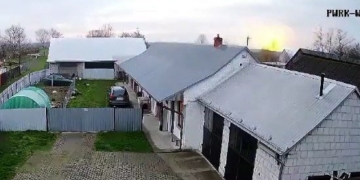
The incident first attracted widespread attention when residents of Chmielek and nearby villages in Biłgoraj county reported a loud explosion shortly after 6.30 am.
An unidentified aerial object was subsequently reported burning near a field and woodland close to Nowy Lipowiec.
Local police, firefighters, military personnel and specialist investigators were deployed to the area.
According to Radio Lublin’s reporting from the scene, access was initially difficult because the object continued burning.
The Polish military examined radar recordings and eyewitness information to establish the object’s trajectory and whether additional locations had been affected.
Reports subsequently emerged of suspected impacts in other parts of south-eastern Poland.


No injuries were reported in the initial accounts from the Chmielek area.
The discovery occurred during a large-scale Russian attack on Ukrainian cities and infrastructure, including targets in western Ukraine near Poland.
The Polish authorities activated military aircraft and air-defence systems in response to the approaching aerial threat.
Tusk consults NATO over Russian escalation
Following the airspace violations, Tusk convened a special security meeting involving senior government ministers, military commanders and intelligence officials.
The prime minister confirmed that he had also spoken with NATO’s secretary general and exchanged views with several European leaders.
Poland is a member of NATO, whose collective defence arrangements are intended to deter attacks on allied territory.
Repeated incursions involving Russian drones and missiles have raised concerns about the security of the alliance’s eastern flank, particularly as Moscow continues its war against Ukraine.
Tusk’s latest comments indicate that the Polish government is treating Friday’s incident as more than an isolated navigational error.
However, consultations with NATO officials do not themselves establish that Poland has formally invoked Article 4 of the North Atlantic Treaty, which provides a mechanism for allies to consult when a member considers its security threatened.
No new Article 4 invocation or collective military response has been confirmed in the reporting examined for this article.
Defence minister links incident to European military exercises
The timing of the airspace violations has attracted particular attention because European troops are currently participating in military exercises in south-eastern Poland.
The exercises involve forces from several European countries and are intended to prepare for a possible multinational deployment to Ukraine following a future peace settlement.
According to the Associated Press’s reporting on the exercises and airspace incident, Kosiniak-Kamysz suggested that the Russian actions might have been timed to coincide with the military activity.
The exercises involve approximately 2,800 personnel from participating European countries, with Poland providing logistical support.
The manoeuvres are designed to test military coordination and preparation for a potential post-war security mission.
The defence minister’s comments raise the possibility that Moscow intended to send a message during the exercises.
However, a direct operational connection between the exercises and the airspace violations has not been independently demonstrated.
Tusk previously warned Russia could test NATO
Friday’s developments are particularly significant because Tusk had warned earlier this year that Russia might deliberately send drones or missiles into NATO countries while presenting the incidents as accidents.
In an address to Poland’s parliament on 17 September, the prime minister said Polish and allied intelligence assessments pointed to a risk of Russian strikes against countries supporting Ukraine.
According to the Polish government’s published account of that warning, Tusk argued that Moscow could seek to undermine confidence in NATO’s collective defence commitments through incidents falling short of openly declared military attacks.
His warning concerned the possibility of drones or missiles entering allied territory, potentially causing damage, while Russia maintained that any violation had been unintended.
The prime minister argued that such a strategy could test the willingness of NATO governments to respond collectively.
The warning forms important context for Tusk’s assessment of Friday’s events, although it does not independently prove that the latest incident was planned in advance.
No continuing aerial threat, investigation ongoing
Poland’s Government Security Centre issued emergency alerts during Friday morning’s incidents, warning residents in parts of the country’s south-east of a possible aerial threat.
Air-raid sirens sounded in several locations before the warnings were cancelled.
Authorities subsequently confirmed that there was no continuing threat from the air, although investigations and specialist examinations of the suspected impact sites continued.
The military, police and prosecutors are working to establish the precise characteristics and trajectories of the objects.
Their findings will help determine whether the incidents resulted from deliberately directed incursions, equipment failures or other circumstances.
For the Polish government, the immediate assessment is nevertheless serious.
Tusk has publicly attributed the objects to Russia and indicated that the circumstances point towards a deliberate provocation.
What remains to be established is the precise nature of the objects and the evidence supporting the government’s assessment of Russian intent.
The findings could carry important implications for Poland’s security discussions with NATO and its European partners.