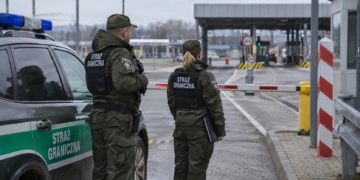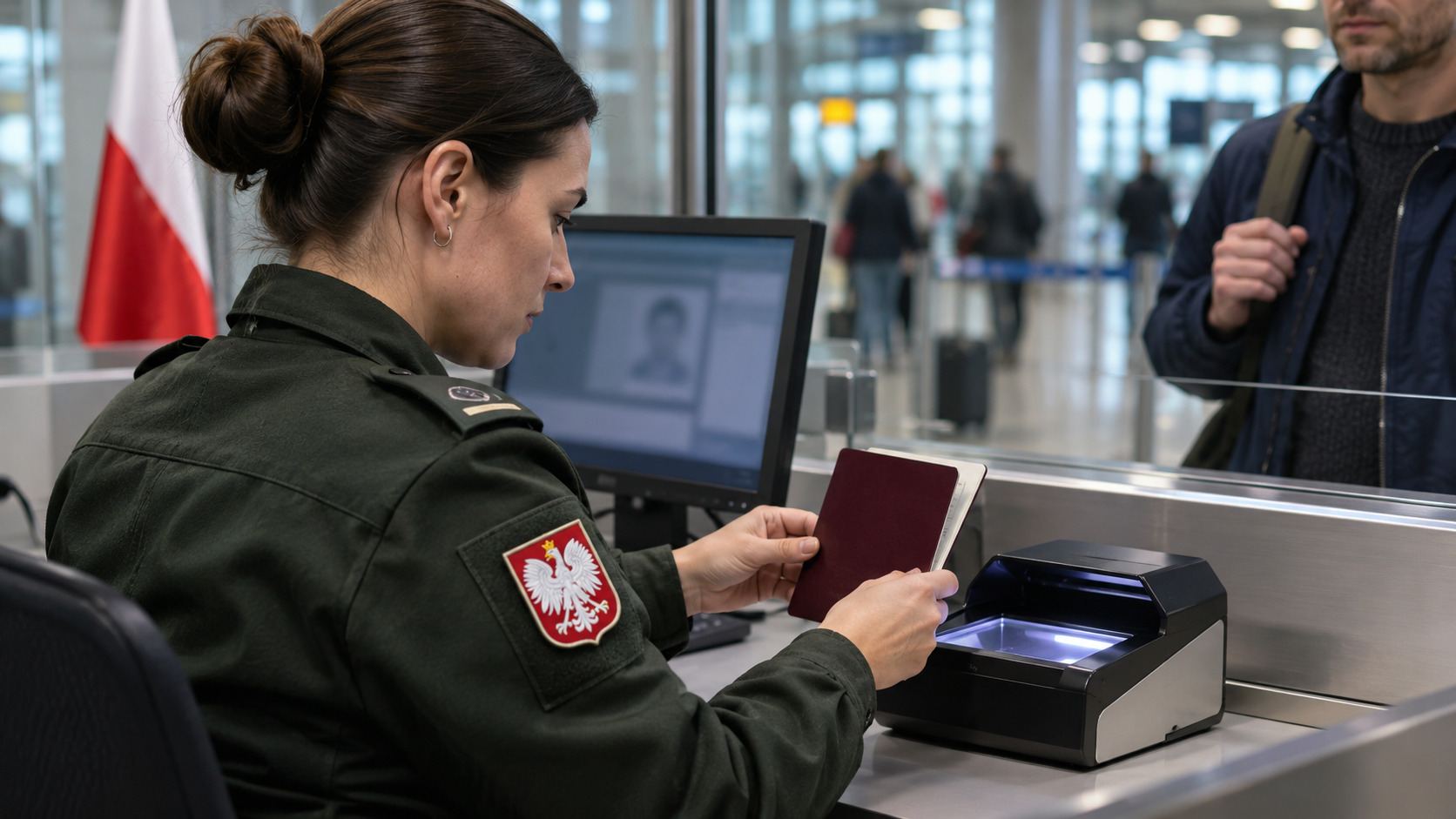
Poland is moving ahead with plans to strengthen pre-arrival screening of visa-exempt foreign travellers and establish a national register of foreigners, following government approval of legislation designed to improve border security and the exchange of immigration information between public authorities.
The Council of Ministers approved the draft legislation on 10 November 2026, setting out Poland’s arrangements for participating in the European Travel Information and Authorisation System (ETIAS).
The proposed law would give Poland’s Border Guard responsibility for administering the national elements of ETIAS, including examining applications requiring further scrutiny and cooperating with authorities in other European countries.
- Find more news from Poland on our Homepage .
It would also establish a National Register of Foreigners, bringing together information currently held across different Polish administrative systems.
According to the Ministry of the Interior and Administration’s announcement, the changes are intended to improve the detection of security risks, irregular migration and attempts to use multiple identities.
The government submitted the bill to parliament on 13 November. On 17 November, it was referred to the Sejm’s Administration and Internal Affairs Committee for its first reading.
The legislation has not yet been adopted, and ETIAS is not currently operational.
How Poland’s ETIAS system would work
ETIAS is an EU-wide travel authorisation system established under European legislation adopted in 2018.
Once operational, it will generally require eligible travellers from visa-exempt non-EU countries to obtain electronic authorisation before travelling to participating European countries for short stays.
This includes many visitors travelling on British, American, Canadian and Australian passports.
The system is designed to screen applications before travel for potential security threats, irregular migration risks and certain public-health concerns.
Under the Polish government’s proposal, the Border Guard would operate the national ETIAS unit and deal with applications referred for additional examination.
It would also coordinate consultations with other Polish authorities and ETIAS units in other participating European countries.
The draft provides for relevant public authorities, including the police, prosecutors, courts, provincial governors and the Office for Foreigners, to obtain access to ETIAS information within the limits of their statutory responsibilities.
Certain law-enforcement and security bodies would also be able to request access for purposes connected with preventing, detecting or investigating terrorism and other serious crimes.
The proposal includes an appeals procedure. People refused an authorisation, or whose authorisation is revoked or annulled, would be able to request reconsideration electronically, subject to the procedure and deadlines established by the legislation.
A new National Register of Foreigners
The second major element of the bill concerns the creation of a National Register of Foreigners, known in Polish as the Krajowy Rejestr Cudzoziemców.
The government says information about foreign nationals is currently distributed across separate administrative databases, making it more difficult for officials to obtain a complete picture when carrying out their duties.
The proposed register would bring together information from existing public administration systems.
This would include identity details, documents held by foreign nationals, and information about applications and administrative decisions relating to residence and employment in Poland.


The government says the register would reduce unnecessary duplication, improve access to relevant records and help authorities detect cases where the same person appears under different identities.
According to the Interior Ministry’s explanation of the proposals, the system is intended to improve the efficiency of immigration administration as well as support border-security operations.
The register would be a Polish domestic information system, distinct from ETIAS, which operates under EU rules.
Its establishment would not, by itself, change the immigration status of individual foreign nationals or create a new general requirement for everyone living in Poland to obtain an ETIAS authorisation.
What British and American visitors should know
For travellers, the most immediate practical development will eventually be the introduction of ETIAS across participating European countries.
According to the European Union’s official ETIAS guidance, eligible travellers will apply online through the official website or mobile application once the system becomes operational.
The EU has established a standard application fee of €20, with exemptions including applicants under 18 and those over 70.
An approved authorisation will normally remain valid for three years, or until the travel document linked to it expires, whichever comes first.
ETIAS is intended for short stays, generally within the existing limit of 90 days in any 180-day period.
It is not a visa, residence permit or work authorisation. Travellers who already hold qualifying residence documents, and certain other exempt categories, will not need to apply.
An ETIAS authorisation will also not guarantee entry, as border authorities will continue to assess whether travellers meet the applicable entry conditions.
Importantly, no ETIAS applications are being accepted at present.
The Polish government’s information for travellers in the United Kingdom refers to implementation in 2027. However, the EU has not yet announced a definitive operational start date and says it will provide advance notice before applications open.
Visitors should therefore rely on official EU information rather than unofficial websites claiming that an ETIAS application is already required.
What happens next in parliament?
The government’s ETIAS implementing bill is proceeding through the Polish legislative process as Sejm print No. 3371.
According to the Sejm’s official legislative record, the legislation was received on 13 November and referred for its first reading in the Administration and Internal Affairs Committee on 17 November.
The committee has been given a deadline of 16 December to present its report.
That deadline does not mean the law will necessarily be adopted or take effect on that date.
The legislation must still complete the relevant parliamentary stages before it can become law.
For the government, the proposals form part of broader efforts to improve Poland’s capacity to manage immigration information, detect potential security threats and coordinate border checks with European partners.
For international travellers, the immediate position remains unchanged: ETIAS is not yet operational, and Poland’s approval of domestic legislation does not introduce a new travel-authorisation requirement today.