Poland has signed a PLN 17.3 million contract to prepare the expansion of one of its busiest motorways, with plans to add a third lane along a 24-kilometre section of the A4 between Katowice and Kraków. The agreement marks a significant step towards modernising the heavily used transport corridor, where more than 50,000 vehicles travel daily and passenger-car tolls are due to disappear next year.
The General Directorate for National Roads and Motorways (GDDKiA) confirmed on Monday, 2 November, that Katowice-based engineering company Autostrada II had been awarded the contract to design the expansion between Dulowa and the Balice I junction, west of Kraków.
The company will prepare the technical documentation, secure necessary administrative approvals and obtain a building permit before construction can begin.
- Find more news from Poland on our Homepage .
According to GDDKiA’s official announcement, the project will involve widening the motorway using land already reserved within the central strip separating its two carriageways.
Construction is currently scheduled to begin in 2030, meaning motorists will not see the additional lanes immediately.
Third lane planned for one of Poland’s busiest motorways
The A4 is a major east–west transport artery connecting southern Poland’s industrial and economic centres with international routes towards Germany and Ukraine.
The Katowice–Kraków section carries significant commuter, tourist and freight traffic.
GDDKiA estimates that more than 50,000 vehicles use the corridor on an average day, with traffic volumes exceeding that figure in some locations.
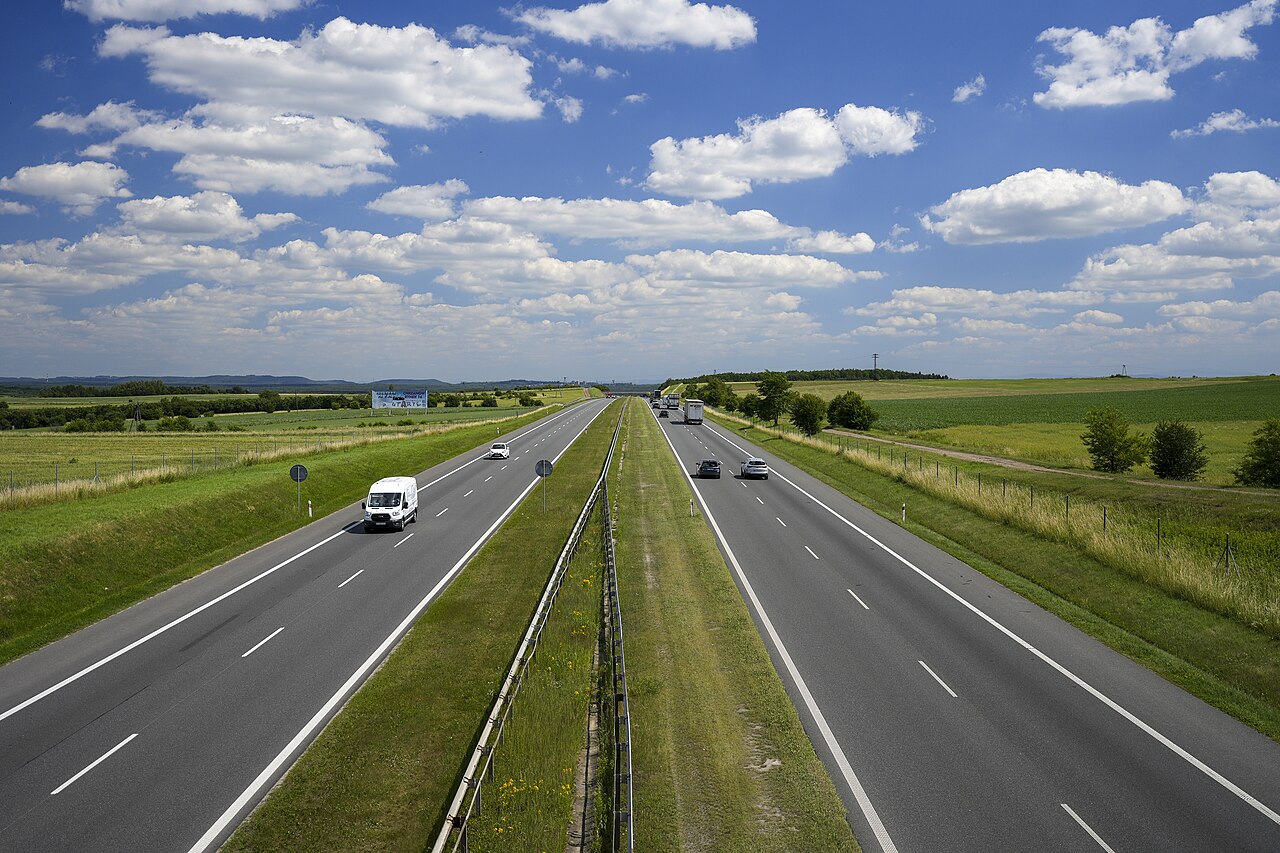
The existing motorway has two traffic lanes in each direction across much of the route.
The proposed expansion would provide an additional lane in each direction, increasing capacity on a corridor where congestion has become a persistent concern.
The contract signed on Monday covers approximately 24 kilometres between Dulowa, near Trzebinia, and the Balice I junction near Kraków’s airport.
It is the first design contract signed as part of a broader programme to expand the motorway between Katowice and Kraków.
The design company will also examine how the expansion affects surrounding infrastructure.
Its responsibilities include preparing plans for improvements at the Rudno motorway junction and assessing whether four motorway service areas — Aleksandrowice, Morawica, Rudno and Grojec — need to be enlarged.
Drainage systems and other infrastructure will also need to be adapted to accommodate the wider carriageways.
Motorway tolls to disappear for passenger cars in March 2027
The expansion plans coincide with a major change in the motorway’s management.
Since 1997, the Katowice–Kraków section has been operated under a private concession by Stalexport Autostrada Małopolska.
Motorists currently pay tolls at plazas in Brzęczkowice and Balice.
However, the concession expires on 15 March 2027, after which responsibility for managing the route will pass to GDDKiA.
The roads authority has confirmed that passenger cars and other vehicles weighing up to 3.5 tonnes will no longer be charged to use the motorway after the concession ends.


Motorcycles are also included in the planned toll exemption.
According to GDDKiA’s explanation of the forthcoming toll changes, this will bring the route into line with other motorways managed by the state, where light vehicles already travel without tolls.
The position for heavier commercial vehicles is different, as Poland operates a separate road-charging system for qualifying heavy traffic.
For regular motorists travelling between Kraków and Katowice, the end of the concession represents a significant change after three decades of toll collection.
The disappearance of tolls and the construction of additional lanes are, however, separate developments.
The route is expected to become free for eligible vehicles in 2027, while physical expansion work is not planned to begin until 2030.
Balice toll plaza included in design plans
One element of the newly commissioned design is preparation for demolishing the existing Balice toll collection infrastructure.
The contractor must determine how the motorway should be adapted once the toll plaza is no longer needed for its current purpose.
Removing the toll infrastructure is part of the wider modernisation programme, although the signing of the design contract does not establish when demolition will take place.
The design must also account for the motorway’s existing structures and the engineering requirements of adding a third lane.
GDDKiA intends to make use of the central reservation where possible, reducing the need to expand the motorway beyond its existing corridor.
The precise engineering solutions will be determined during the design process.
Wider expansion divided into three sections
The Dulowa–Balice project is one of three sections into which GDDKiA has divided the planned Katowice–Kraków expansion.
The remaining sections cover the stretch between Byczyna and Dulowa, and the western section between Brzęczkowice and Byczyna.
The westernmost part is being prepared by GDDKiA’s Katowice branch, while the Byczyna–Dulowa stretch will require separate design work.
The middle section may also be affected by plans for a future bypass of Chrzanów and Trzebinia.
One option under consideration would involve creating a new Dulowa junction linking the A4 with national road DK79 and adding parallel local-traffic carriageways.
Those arrangements remain dependent on decisions about the bypass project and should not be treated as final.
GDDKiA previously outlined the three-section expansion strategy when launching the tender process for the Dulowa–Balice design in March 2026.
The contractor was selected in September, with the formal agreement now signed in November.
Construction planned for 2030
The next stage will focus on engineering design, obtaining permits and completing the administrative preparations required for construction.
The PLN 17.3 million agreement covers that preparatory work, not the cost of physically widening the motorway.
The overall construction budget and a confirmed completion date for the Dulowa–Balice expansion have not yet been announced.
For drivers, the changes will therefore arrive in stages.
The most immediate development will be the end of the private concession in March 2027, removing tolls for passenger cars and other qualifying light vehicles.
The longer-term project will seek to increase the motorway’s capacity and improve journeys between two of southern Poland’s largest urban and economic centres.
With the first design contract now signed, GDDKiA has moved the expansion from procurement into detailed preparation, although several years of planning and construction still lie ahead.