

For generations, Europeans searching for a summer beach holiday have instinctively looked south.
National Geographic is suggesting another direction.
The travel magazine has selected Sopot on Poland’s Baltic coast as one of six European destinations particularly suited to the growing “coolcation” trend — holidays built around milder temperatures, outdoor activity and escaping the increasingly intense heat experienced in traditional Mediterranean destinations.
- Find more news from Poland on our Homepage .
Sopot appears alongside the Icelandic Highlands, Norway’s Lofoten Islands, Glasgow, Finland’s Lake Saimaa and Estonia’s Saaremaa.
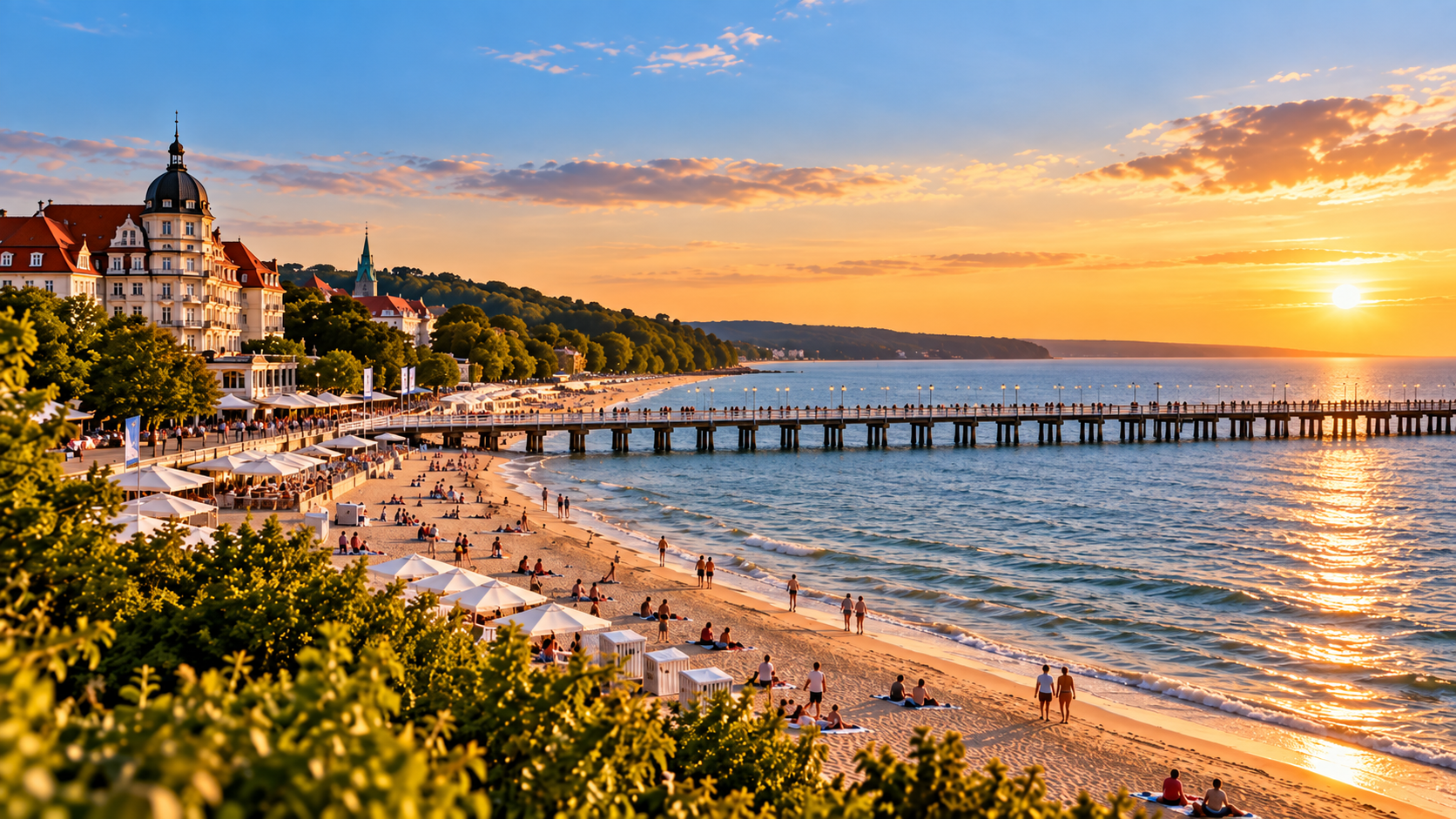
National Geographic’s description gets quickly to the attraction: “long stretches of golden sand with a cooler summer climate.”
For anyone who knows Sopot, that assessment makes sense.
The city developed as a Baltic health resort during the 19th century. Its official tourism history dates its transformation to 1823, when Jean Georg Haffner established bathing facilities and helped turn what had been a small settlement into an increasingly fashionable spa destination. By the interwar years, visitors from across Europe were arriving at a resort sometimes nicknamed the “Riviera of the North”.
Two centuries later, the underlying appeal has not disappeared.
Sopot still has a broad sandy beach, villa-lined streets, the Grand Hotel and a compact centre leading directly towards the sea. National Geographic also points readers towards Bohaterów Monte Cassino Street — universally known as Monciak — and the distinctive Krzywy Domek, or Crooked House.
Then there is the pier.
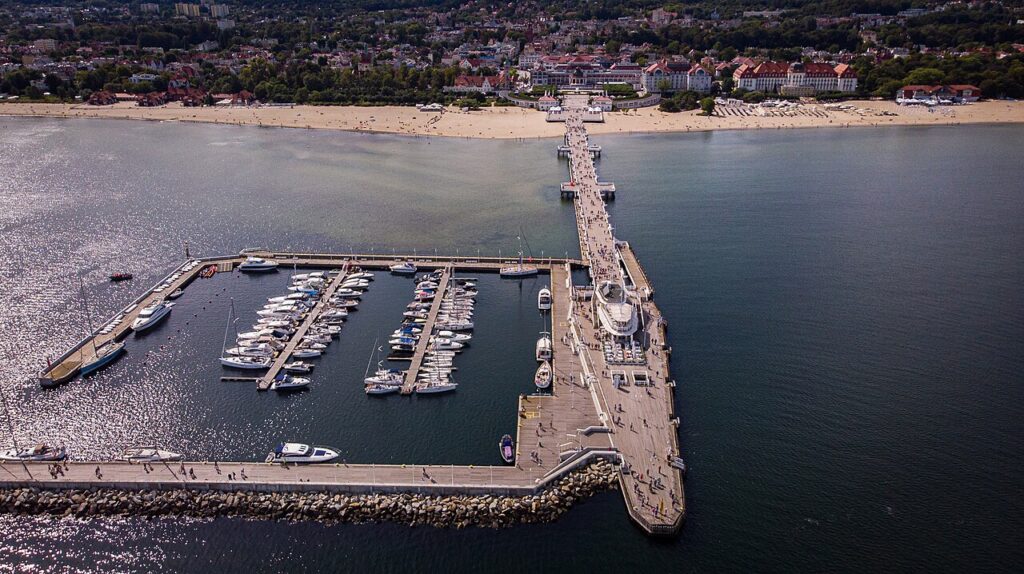
Sopot’s tourism authority confirms that the wooden pier stretches 511.5 metres into the Baltic, making it the longest wooden pier in Europe. Its origins date to the 1820s, although it was repeatedly extended before reaching its present length.
National Geographic even gets one of the smaller details right: a day on the Polish coast is difficult to complete without gofry, the large waffles traditionally topped with fruit, whipped cream or both.
But the broader point is more interesting than any individual attraction.
The “coolcation” trend is changing the geography of the European summer holiday. National Geographic notes that travellers are increasingly choosing destinations where lower temperatures make walking, cycling, hiking and sightseeing comfortable throughout the day rather than forcing them indoors during periods of extreme heat.
That creates an opportunity for the Baltic coast.
Sopot cannot promise the Mediterranean climate of southern Spain or Greece — and increasingly, that is precisely the point.
It offers the beach without necessarily demanding the heat: sea air, golden sand, parks, historic architecture, cafés and a resort tradition that existed long before the word “coolcation” was invented.
National Geographic has therefore not discovered a new resort.
It has discovered a new reason for international travellers to appreciate an old one.