Poland and South Korea have launched construction of a new guided-rocket factory in western Poland, marking a major step towards manufacturing advanced missile ammunition domestically rather than relying entirely on overseas deliveries.
The facility, being developed by Polish defence technology company WB Group and South Korea’s Hanwha Aerospace, will produce precision-guided rockets for the Polish Army’s Homar-K multiple rocket launcher systems.
A formal groundbreaking ceremony took place in Gorzów Wielkopolski on Wednesday, 4 November, attended by representatives of both countries’ defence industries, the Polish government, the military and local authorities.
- Find more news from Poland on our Homepage .
The factory is expected to comprise more than 60 buildings and create over 250 jobs, with the first rockets scheduled for assembly in 2029 and full-scale production planned for 2030.
It will be operated by Hanwha WB Advanced System (HWBAS), a joint venture established to bring Korean missile technology and manufacturing expertise to Poland.
Poland launches its first large-scale guided rocket factory
The project is intended to give Poland a domestic manufacturing capability for a class of guided rocket ammunition that has not previously been produced in the country on this scale.
According to the Polish Ministry of National Defence’s announcement, the factory forms part of a broader strategy to strengthen the Polish armed forces’ access to ammunition and reduce the risks associated with dependence on foreign suppliers.
Deputy Defence Minister Magdalena Sobkowiak-Czarnecka attended the ceremony on behalf of Defence Minister Władysław Kosiniak-Kamysz.
In a letter to participants, Kosiniak-Kamysz said the experience of Russia’s war against Ukraine had demonstrated the importance of maintaining sufficient supplies of modern rocket artillery ammunition.
He argued that even advanced military systems cannot remain effective without reliable supplies of the ammunition they require.
The government sees domestic production as a way to strengthen Poland’s ability to replenish stocks, maintain military readiness and withstand disruptions to international supply chains.
The new facility is also expected to give Polish engineers and technicians experience in manufacturing advanced guided weapons.
Factory will manufacture rockets with an 80-kilometre range
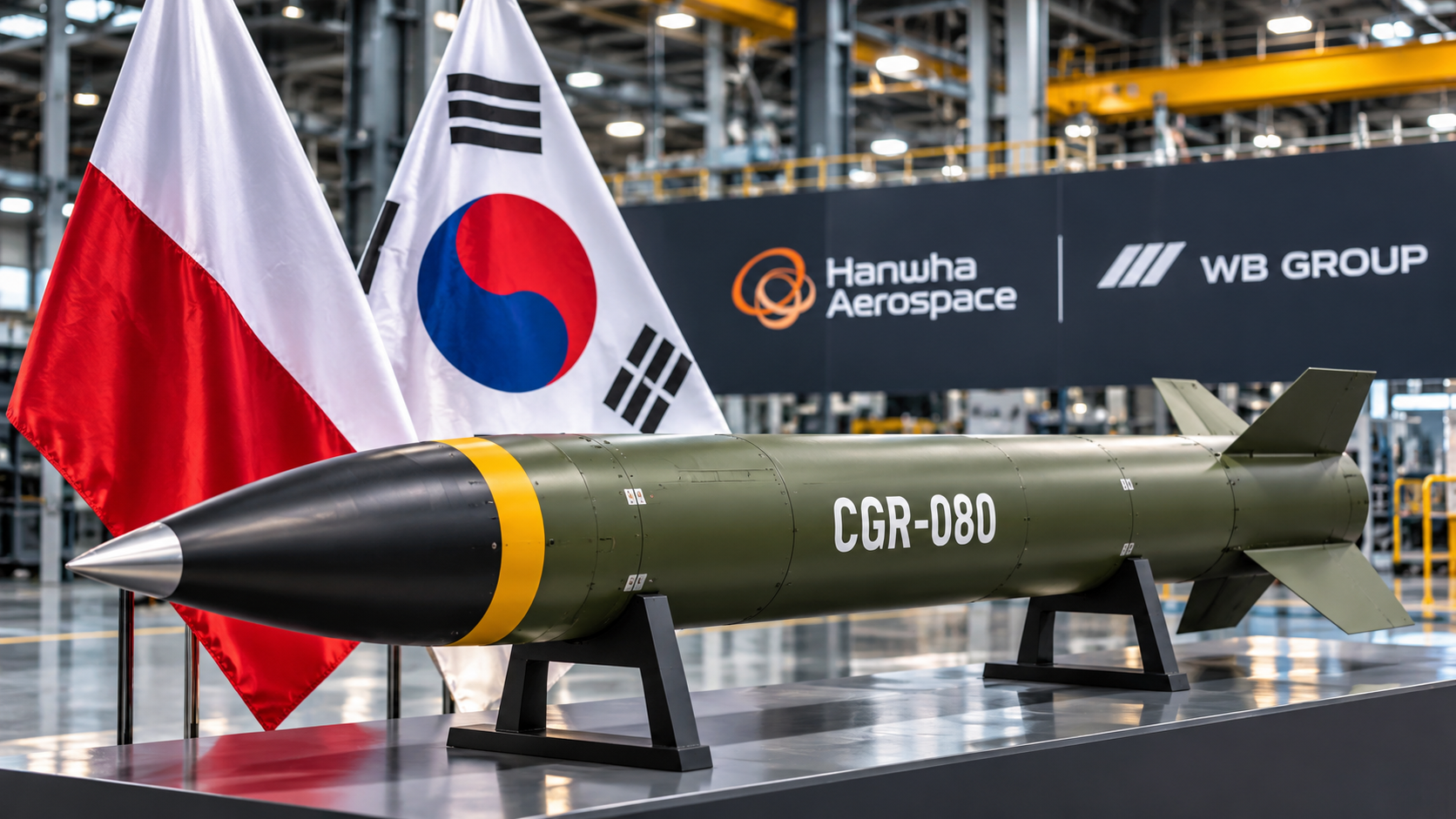
The plant’s initial production will focus on the CGR-080, a precision-guided rocket developed by Hanwha Aerospace.
The weapon has a stated range of approximately 80 kilometres and is designed for the K239 Chunmoo multiple rocket launcher, which Poland operates in a locally adapted configuration known as Homar-K.
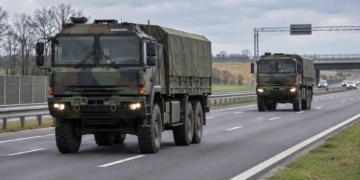
The Homar-K system combines South Korean rocket technology with Polish military equipment, including locally manufactured Jelcz truck chassis and Polish command-and-control components.
It forms part of Poland’s extensive efforts to modernise its rocket artillery and increase the ability of land forces to engage targets at longer distances.
In September, Poland-24 reported on the establishment of a new 3,000-strong Polish rocket artillery brigade, equipped with Homar-K systems as part of the army’s expanding long-range firepower.
The new Gorzów factory is intended to help sustain those capabilities by producing ammunition on Polish territory.
Poland has ordered hundreds of Chunmoo launcher modules through agreements with Hanwha Aerospace, alongside substantial quantities of guided rockets.
Producing ammunition domestically could reduce reliance on deliveries from South Korea, although the extent of that independence will depend on how much of the manufacturing process and component supply chain is ultimately transferred to Poland.
You May Also Be Interested In


First rockets planned for 2029, mass production in 2030
The factory is being developed on a site of approximately 1.16 million square metres, equivalent to around 116 hectares.
According to South Korean reporting on Hanwha Aerospace’s construction plans, the company aims to complete the facility in 2028.
The next phase will involve installing production equipment, transferring technology, training staff and completing the testing and certification necessary for manufacturing guided rockets.
Initial production is expected in late 2029, followed by full-scale manufacturing in 2030.
The Kostrzyn-Słubice Special Economic Zone, which has been involved in preparing the investment, independently confirmed that assembly of the first rockets is planned for 2029.
The facility will be Hanwha Aerospace’s first guided-rocket production plant in Europe.
Its planned capabilities could eventually extend beyond the initial CGR-080 design, although additional rocket types would require further development and the relevant production arrangements.
The companies have also identified potential opportunities to supply other allied countries in the future. No specific export orders from the new factory have been announced.
PLN 14 billion contract underpins the investment
The construction project follows a major ammunition procurement agreement signed by Poland and the Polish-South Korean consortium on 29 December 2025.
The contract, worth approximately PLN 14 billion gross, covers the supply of thousands of CGR-080 precision-guided rockets to the Polish armed forces.
Under the agreement, the missiles will be manufactured in Poland, with deliveries scheduled to begin in 2030.
The agreement published by Hanwha Aerospace Europe identifies the Polish Armament Agency as the customer and a consortium led by HWBAS as the supplier.
The PLN 14 billion figure refers to the ammunition procurement contract, rather than the standalone cost of constructing the new factory.
A separate, verified overall construction budget has not been publicly established in the official announcements examined.
HWBAS was established in September 2025, with Hanwha Aerospace holding a 51% stake and Poland’s WB Electronics holding 49%.
The ownership structure gives the South Korean defence company a majority interest while placing significant industrial participation within Poland.
Hanwha Aerospace will provide missile-manufacturing technology and technical expertise, while WB Group will contribute its experience in Polish military systems, electronics, engineering and industrial integration.
The companies intend to develop manufacturing capabilities progressively, supported by technology transfer and workforce training.
More than 250 jobs planned in Gorzów Wielkopolski
Beyond its military significance, the factory represents a substantial industrial investment in western Poland.
The project involves more than 60 planned buildings and is expected to create over 250 jobs.
The workforce is expected to include engineers, production specialists, technicians and other skilled employees required to manufacture and maintain advanced guided weapons.
The companies also intend to work with local contractors during construction and develop links with Polish suppliers once production begins.
According to WB Group’s official account of the groundbreaking, president Piotr Wojciechowski emphasised that the project would create opportunities for Polish specialists and businesses.
The company expects the facility to contribute to the development of a wider industrial network, involving contractors, component suppliers and technical service providers.
Gorzów Mayor Jacek Wójcicki also welcomed the project as an opportunity to strengthen the city’s industrial future.
The development has been supported by local authorities and the Kostrzyn-Słubice Special Economic Zone, which helped prepare the investment.
For the region, its longer-term significance will depend on the scale of recruitment, the development of domestic supply chains and whether additional manufacturing activities follow.
A new phase in Polish-South Korean defence cooperation
Poland has become one of South Korea’s most important European defence customers, purchasing equipment including K2 tanks, K9 self-propelled howitzers and Chunmoo rocket artillery systems.
Those acquisitions have formed part of a rapid expansion of Polish military capabilities following Russia’s invasion of Ukraine.
The Gorzów factory represents a further stage in that relationship.
Rather than purchasing finished weapons exclusively from overseas, Poland is seeking to acquire the ability to manufacture and support important elements of its military equipment domestically.
Hanwha Aerospace, meanwhile, is expanding its industrial presence in Europe through cooperation with Polish companies.
The partners have identified the development of additional guided ammunition as a longer-term possibility, with any future products dependent on further engineering, commercial and regulatory arrangements.
For Poland, the immediate objective is to establish a reliable domestic supply of rockets for its growing Homar-K fleet.
Construction is now underway, but the central test of the investment will come when the factory begins manufacturing and delivering ammunition.
Under the current schedule, the first rockets should be assembled in 2029, with regular production and deliveries expected from 2030.