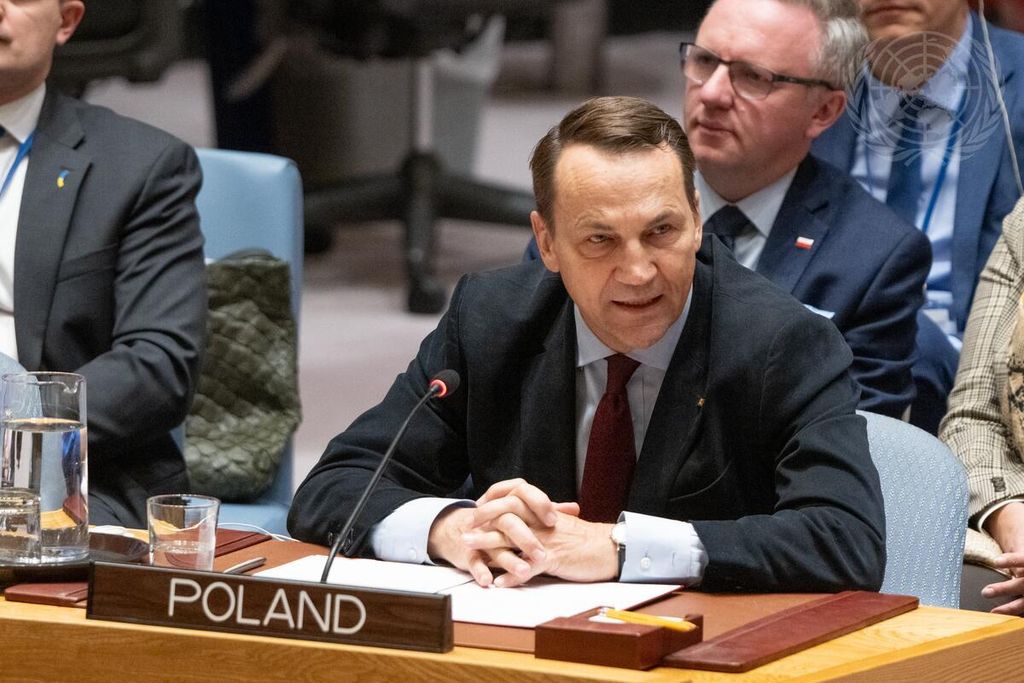
Poland has warned its European allies against negotiating with Russia without involving the countries most directly exposed to its security threats, as diplomatic efforts to end the war in Ukraine intensify ahead of another round of US-mediated talks.
Foreign Minister Radosław Sikorski said European governments must ensure that Eastern Europe and Scandinavia have a meaningful voice in negotiations affecting the continent’s future security arrangements.
Speaking to journalists in Warsaw on Thursday, 5 November, Sikorski expressed concern that diplomatic initiatives involving Moscow could proceed without sufficient representation from countries bordering Russia or Ukraine.
- Find more news from Poland on our Homepage .
The comments, reported by Euronews on Friday, come as European leaders debate who should represent the continent in negotiations involving Washington, Kyiv and Moscow.
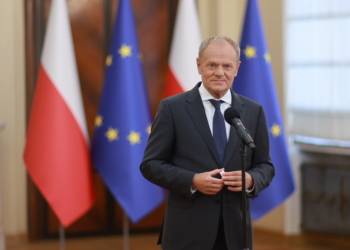
Polish Prime Minister Donald Tusk also warned that Russia’s security threat was likely to increase, while Energy Minister Miłosz Motyka rejected the possibility of restoring Russian gas imports as part of a diplomatic settlement.
Eastern Europe must have a seat at the negotiating table
Sikorski’s central concern is that agreements between Western governments and Russia could affect the security of countries that have not participated directly in the negotiations.
He warned against decisions being made “over the heads of the east Europeans”.
Speaking during a discussion attended by Euronews journalist Jorge Liboreiro, Sikorski stressed that the concerns of countries bordering Russia must be taken into account.
“You cannot leave Eastern Europe and Scandinavia out of the conversation,” he said.
He highlighted the geographical exposure of Poland, the Baltic states, Finland and Norway, arguing that the countries concerned collectively represent approximately 120 million people.
Poland shares a border with Russia’s Kaliningrad exclave, as well as Ukraine and Belarus.
The Polish government has repeatedly argued that decisions concerning Russia’s future military posture, European security guarantees and the terms of any settlement in Ukraine would have direct consequences for its national security.
Sikorski’s remarks do not represent opposition to negotiations with Moscow in principle.
Instead, he is demanding that countries most exposed to Russian military and hybrid threats have a role in determining Europe’s negotiating position.
New Ukraine peace talks scheduled for Abu Dhabi
The warning comes ahead of a new round of talks involving Ukraine, Russia and the United States, scheduled to take place in Abu Dhabi on 10–11 November.
According to Reuters’ reporting on the planned meeting, the discussions are expected to address possible steps towards ending the war, security arrangements and humanitarian measures.
The United States is leading the diplomatic initiative, with further consultations involving European representatives taking place separately.
France, Germany and Britain have been involved in discussions with American officials over Ukraine’s future security guarantees and reconstruction.
However, the existence of several overlapping diplomatic formats has prompted questions about how the European Union should participate and who should be authorised to speak on its behalf.
Sikorski argued that European participation should be organised through a legitimate institutional framework, rather than through arrangements that leave some member states without a voice.
You May Also Be Interested In
The Polish foreign minister referred to the EU’s Treaty of Lisbon, which establishes the roles of the European Council president and the EU’s High Representative for Foreign Affairs and Security Policy in representing the Union externally.
The relevant responsibilities are set out in Articles 15 and 27 of the Treaty on European Union, although the precise composition and mandate of any delegation to peace negotiations would still require political agreement.
Sikorski also indicated that Britain should be involved in the broader European discussions.
Poland supports Italy’s demand for a unified European approach
Sikorski’s position partly aligns with concerns raised by Italian Prime Minister Giorgia Meloni.
On 5 November, Meloni sent a letter to European Council President António Costa criticising the lack of coordination between European initiatives concerning Ukraine.
According to the Italian news agency ANSA, she urged EU leaders to agree on a representative and a clear negotiating mandate by December.
Her concern is that separate discussions by different groups of European governments and officials could undermine Europe’s ability to present a coherent position.
Meloni also objected to the possibility of commitments being negotiated without a mandate from governments that would subsequently be expected to implement them.
Sikorski expressed agreement with her call for clearer representation, while emphasising the importance of countries on Europe’s eastern and northern flanks.
The question is expected to be discussed during the informal European Council meeting in Dublin on 13 November, following the US-mediated talks in Abu Dhabi.
No agreement has yet been announced on a single European negotiating representative.
Tusk warns Russian threats could escalate
During the same discussions with journalists in Warsaw, Prime Minister Donald Tusk raised concerns about Russia’s intentions and the prospects for a negotiated settlement.
Tusk argued that European governments should remain cautious about interpreting diplomatic activity as evidence that Russian President Vladimir Putin is prepared to bring the war to an end.
He suggested that the approaching winter could reduce Moscow’s immediate incentive to reach an agreement, particularly as Russian forces continue attacking Ukraine’s energy infrastructure.
The Polish prime minister also warned that intelligence available to Poland and its allies indicated the possibility of further escalation in Russian threats against European countries.
He identified Poland and the Baltic states as particularly exposed.
Tusk referred to the increasingly complex security environment around Poland’s borders, where military threats, cyberattacks and suspected hybrid operations can occur simultaneously.
Earlier this week, Poland-24 reported on a major Polish security operation near the border with Russia’s Kaliningrad exclave, following warnings about possible sabotage and other hostile activity.
Polish authorities said the operation involved cooperation between police, military personnel, border guards and intelligence services.
The government has repeatedly accused Russia of using hybrid activities to destabilise countries supporting Ukraine. Individual suspected incidents remain subject to investigation and should not automatically be attributed to Moscow without supporting evidence.
Tusk’s latest comments reflect the government’s assessment of the threat rather than confirmation of a specific new Russian military operation against Poland.
Poland rejects returning to Russian gas
The diplomatic discussions have also revived disagreement over Europe’s future energy relationship with Russia.
According to Euronews, US negotiators have explored economic incentives that could form part of a settlement, including the possibility of restarting Russian gas deliveries to Europe.
No agreement to restore those supplies has been announced.
Polish Energy Minister Miłosz Motyka rejected the idea, arguing that renewed dependence on Russian energy would again expose European countries to political and economic pressure from Moscow.
He also warned that restoring Russian gas imports could undermine wider transatlantic relations.
Poland has consistently opposed returning to Russian energy supplies, even as European governments have debated the economic costs of permanently separating themselves from Moscow’s energy sector.
In October, Poland-24 reported that Warsaw and Berlin had rejected a return to Russian gas, reinforcing their opposition to renewed energy dependence.
The European Union has already adopted measures to phase out Russian gas imports, with transitional arrangements extending into 2027.
The Council of the European Union’s published policy sets out restrictions affecting Russian liquefied natural gas and pipeline supplies.
Reversing that direction would have significant legal and political implications, beyond the terms of any agreement negotiated by the United States.
European leaders face decisions on Russia negotiations
The immediate diplomatic timetable now includes the 10–11 November negotiations in Abu Dhabi and the 13 November informal gathering of EU leaders in Dublin.
For Poland, the central issue is not simply whether negotiations with Russia take place, but whether European governments can agree on a common position that reflects the interests of countries most directly affected by the war.
Warsaw is seeking assurances that European security arrangements will not be determined exclusively through discussions involving the largest Western European states, the United States and Russia.
Sikorski’s warning also highlights a broader disagreement over how the EU should exercise its diplomatic influence when its member states face different geographical and security risks.
The latest statements do not establish a new negotiating format or announce a Polish role in the upcoming talks.
They do, however, make clear that the Polish government intends to challenge any diplomatic process that it believes excludes Eastern European security interests.