

Russia is currently unable to launch an invasion of a NATO country because its forces remain constrained by Ukraine’s resistance, according to one of Poland’s most senior representatives within the alliance — but he warned that Moscow is instead escalating hybrid activity below the threshold of war in an attempt to weaken and test the West.
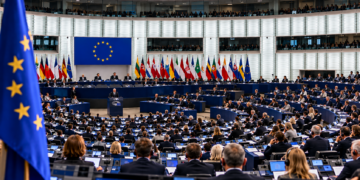
Lieutenant General Piotr Błazeusz, Poland’s military representative to the NATO and EU Military Committees, gave the assessment in Brussels on Thursday as the European Parliament’s Security and Defence Committee held an extraordinary closed-door discussion on the strategically important Suwałki Gap.
Speaking to journalists around the meeting, Błazeusz said Russia’s conventional options were currently constrained by the continuing war in Ukraine. In comments reported by Polish Radio from PAP, he said Moscow was not presently capable of beginning an invasion of a NATO member.
- Find more news from Poland on our Homepage .
NATO’s official biography confirms that Błazeusz has served since August as Poland’s military representative to the alliance and the EU Military Committee, representing the Polish armed forces in senior military structures in Brussels.
His assessment does not mean he believes the Russian threat has disappeared.
‘Testing the West’ below the threshold of war
Błazeusz said Russia could continue trying to create problems for NATO countries without crossing directly into conventional war.
He described Moscow as escalating through hybrid activities below the threshold of armed conflict, aimed partly at weakening Western states and preparing conditions for possible future actions that could test how NATO and European governments respond.
That distinction has become increasingly important in NATO and EU security planning.
Hybrid operations can include sabotage, cyberattacks, disinformation, interference with critical infrastructure and other hostile activity deliberately structured to remain below the level that would clearly constitute an armed attack.
The European Parliament itself adopted a resolution in September describing hybrid operations as coordinated actions designed to appear isolated and remain below the threshold of armed conflict while still being capable of destabilising EU states. The resolution identified Russia as the most significant state actor behind hybrid threats against the Union.
NATO military leaders have issued similar warnings. In September, the alliance’s Military Committee said Russian airspace violations, drone incidents and hybrid activity were continuing to test allied resolve.
Suwałki threat remains ‘constant’
Błazeusz said the particular security challenge surrounding the Suwałki Gap remains constant and clearly recognised within both NATO and the EU.
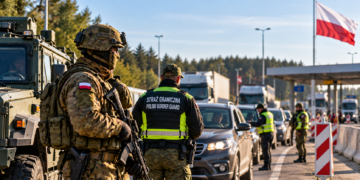
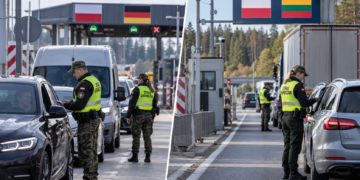
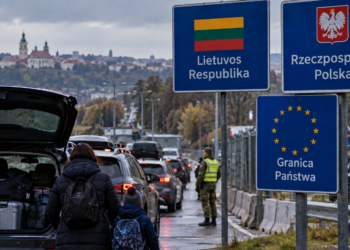
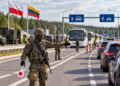
The corridor runs along the Polish-Lithuanian frontier between Belarus and Russia’s Kaliningrad region. Its strategic importance comes from the fact that it provides the main land connection between the Baltic states and the rest of NATO territory.
NATO describes the Suwałki Gap as the strategic stretch linking Estonia, Latvia and Lithuania with the rest of allied territory. A US-led multinational NATO battlegroup based at Bemowo Piskie in northeastern Poland trains specifically to reinforce the region in a crisis.
Błazeusz said NATO already has defence plans allowing it to adjust rapidly if the threat increases.
He also highlighted powers available to Supreme Allied Commander Europe, currently US General Alexus Grynkewich, which he said allow NATO’s military command to react more quickly as threats develop rather than waiting for the final political decisions associated with activating the alliance’s collective-defence mechanisms.
NATO handles military defence, EU has other tools
Błazeusz also outlined how he believes NATO and the European Union should divide their roles when dealing with Russia.
He said NATO should remain responsible for the military dimension of deterrence and defence, while the EU has additional tools capable of imposing pressure, including economic sanctions and measures in the information sphere.
Closer cooperation between the two organisations, he argued, would make it harder for Moscow to calculate how the West would respond and could create additional strategic problems for Russia.
That argument is particularly relevant to hybrid activity because many of the possible responses — sanctions, cyber resilience, infrastructure protection and action against disinformation — sit partly or primarily outside NATO’s traditional military role.


General calls for stronger language towards Moscow
Błazeusz also addressed Russia’s latest threats against European defence manufacturers.
On Wednesday, Russian Foreign Ministry spokeswoman Maria Zakharova said factories in European countries producing weapons for Ukraine should be considered potential military targets for Russia. Reuters reported that her comments were made in response to a question concerning Poland’s potential role in producing Patriot missile interceptors for Ukraine.
Błazeusz said Western governments should respond with more forceful political language.
He stressed that this was primarily a matter for political leaders rather than serving military officers, arguing that Western states should communicate in terms Moscow understands and be prepared to accept a degree of risk while making clear that they possess the ability to respond.
His remarks came only a day after Russia also issued a nuclear warning linked to Kaliningrad, saying it could use its full arsenal if NATO attempted to isolate the Russian exclave. NATO rejected the suggestion that it was preparing such an operation and described itself as a defensive alliance.
NATO also says there is no imminent invasion threat
Błazeusz’s assessment broadly aligns with the public position presented by NATO Secretary General Mark Rutte this week, although the two statements are not identical.
Rutte said on Wednesday there was “no imminent threat to NATO territory” and argued that any major Russian military build-up towards Poland, Finland or the Baltic states would be visible to the alliance. He nevertheless stressed that NATO continues preparing for both conventional and hybrid threats.
Rutte also said Russia was using hybrid and so-called grey-zone activity in an attempt to divide NATO members and distract attention from Ukraine.
The NATO secretary general has separately noted that Russia continues expanding its military-industrial capacity and remains the alliance’s long-term security threat, even if a full-scale invasion of NATO territory is currently assessed as highly unlikely.
Ukraine remains central to the calculation
Błazeusz placed particular emphasis on Ukraine’s role in limiting Russia’s current ability to open another conventional front.
His assessment is that the Ukrainian armed forces are tying down enough Russian military capacity to make an invasion of a NATO state unrealistic at present.
That does not amount to a prediction about what Russia could be capable of in future.
Both NATO officials and European governments have continued investing in eastern-flank defence because Russia is expanding its armed forces and defence production even while fighting in Ukraine.
The significance of Thursday’s message from the Polish general is therefore twofold.
He does not assess Russia as currently capable of launching a conventional invasion of NATO territory.
At the same time, he believes Moscow is already applying pressure through less conventional means — and that those actions are designed to weaken Western countries, probe their reactions and potentially prepare the environment for more serious challenges later.
For the Suwałki Gap, Błazeusz’s conclusion was consequently not that the danger has disappeared, but that its strategic vulnerability remains a permanent factor in NATO and EU planning.