

Russia has formally warned NATO that it could resort to nuclear weapons if alliance members attempted to isolate Kaliningrad, the heavily militarised Russian exclave wedged between Poland and Lithuania, in one of Moscow’s most explicit recent nuclear warnings directed at the alliance.
In an informal diplomatic document sent to NATO and reviewed by Reuters, Moscow said it regarded attempts to separate Kaliningrad from the rest of Russia as potentially leading to direct armed conflict.
The document said Russia could use the full range of military capabilities available to it, including nuclear weapons, in defence of the region. It also raised the possibility of strikes against decision-making centres in NATO member states from the beginning of any conflict.
- Find more news from Poland on our Homepage .
The warning is conditional. NATO has not announced a blockade of Kaliningrad, nor is there evidence that an attack on the territory is imminent.
NATO rejected Moscow’s description of its activities. According to the Reuters report on the warning, the alliance said its exercises and military deployments posed no threat to Russian territory and criticised what it described as irresponsible nuclear rhetoric.
NATO Secretary General Mark Rutte also sought to play down suggestions that the warning meant nuclear conflict was imminent.
Speaking in Brussels on Wednesday, Rutte said NATO’s assessment of the immediate Russian threat had not changed and that there was no imminent threat to NATO territory. Reuters reported his remarks, including his statement that any Russian move against Poland, Finland, the Baltic states or another ally would be expected to involve a visible military build-up beforehand.
The Kremlin, however, has made clear that the warning was deliberate.
Kremlin spokesman Dmitry Peskov said Russian diplomats were reminding what he called European “hotheads” of Moscow’s existing nuclear policy. Reuters reported that Peskov presented the messages as a restatement of rules Russia had already adopted rather than a newly announced nuclear doctrine.
Russia’s current nuclear doctrine dates from November 2024, when President Vladimir Putin approved an updated version of the country’s Basic Principles of State Policy on Nuclear Deterrence.
The Kremlin says the doctrine defines the circumstances in which Russia could move towards the use of nuclear weapons and identifies protection of Russian sovereignty and territorial integrity as central to the policy.
Why Kaliningrad matters to Poland
Kaliningrad is geographically separated from the rest of Russia and sits directly on NATO’s northeastern flank.
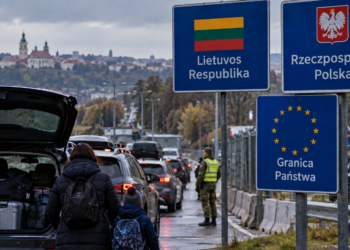
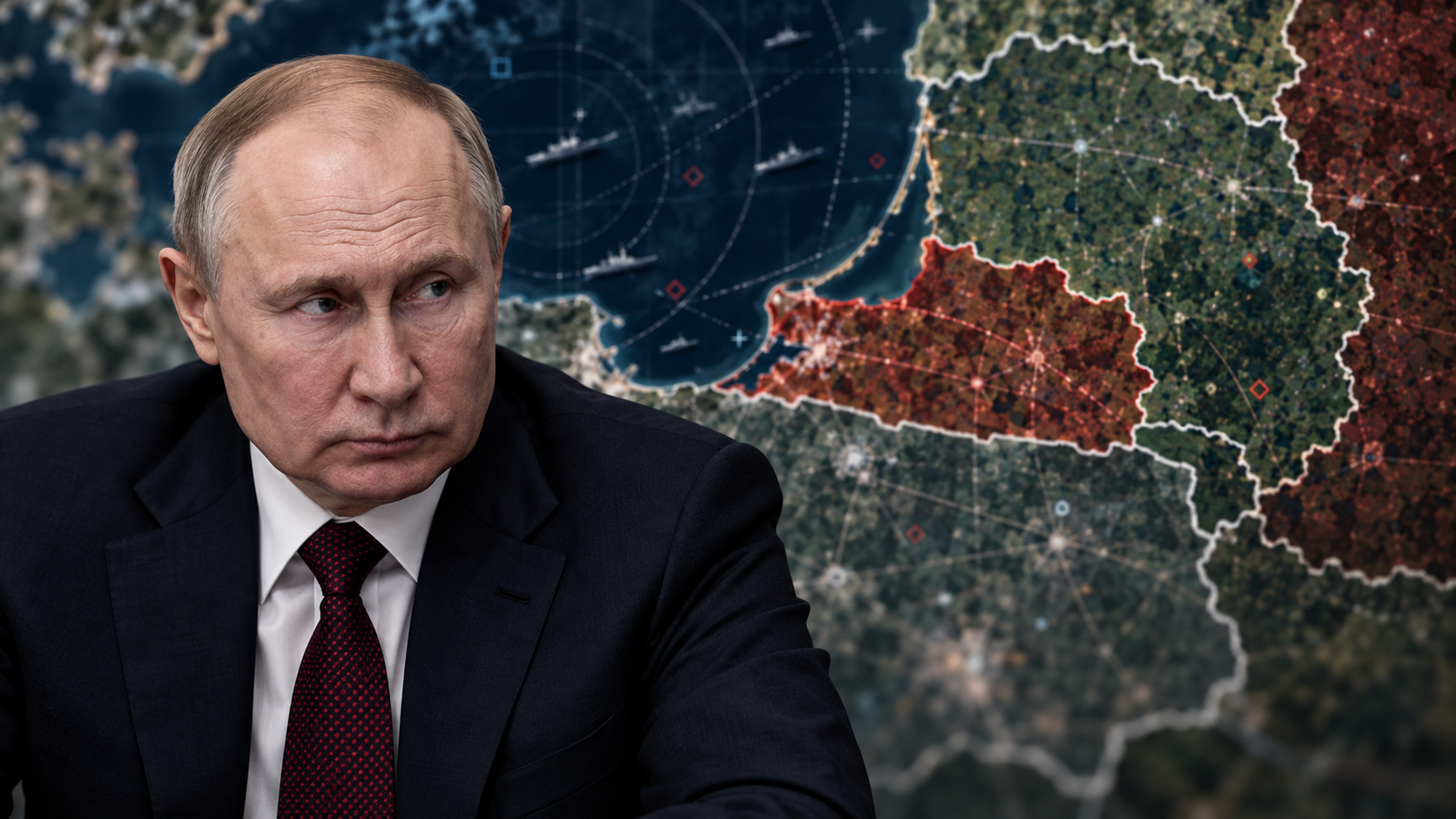
A Reuters explainer on the exclave notes that the region borders Poland to the south and Lithuania to the north and east, while its western side opens onto the Baltic Sea. Around one million people live there.
Its position gives the territory enormous strategic importance.
Russia has stationed substantial naval, missile and air-defence forces in Kaliningrad, allowing it to project military power across the Baltic region and towards northern and central Europe.
At the same time, the exclave’s geography makes it potentially difficult for Moscow to reinforce and supply during a major conflict.
Immediately to its east lies the Polish-Lithuanian frontier around the Suwałki Gap, the narrow land connection between Poland and Lithuania that links the Baltic states with the rest of NATO territory.
Kaliningrad has consequently featured prominently in NATO and Russian military planning for years.
Those tensions have intensified since Russia’s full-scale invasion of Ukraine in 2022 and the subsequent accession of Finland and Sweden to NATO.
The same Reuters account said a Western military source described an unannounced operation around Kaliningrad in August involving dozens of NATO aircraft, intended to demonstrate capabilities that could disrupt the region’s radar, communications and air defences in the event of a conflict.


Russia has cited such activity, alongside NATO exercises and statements by European officials, as evidence that the alliance is preparing options involving Kaliningrad.
NATO says those conclusions are false and describes its operations as defensive.
Moscow points to possible isolation of Kaliningrad
Russia has also circulated warnings through its embassies in several European countries in recent days.
Those statements accuse NATO of developing scenarios that could leave Kaliningrad isolated during a confrontation.
Earlier this year, according to Reuters reporting on the region, remarks by Lithuanian Foreign Minister Kęstutis Budrys about NATO’s ability to destroy Russian military installations in Kaliningrad drew an angry response from Moscow.
NATO has meanwhile increased its military presence in the Baltic Sea, particularly following suspected attacks and damage affecting undersea energy and communications infrastructure.
The alliance says those deployments are aimed at protecting critical infrastructure rather than preparing a blockade of Russian territory.
Does the warning mean Russia and NATO are closer to war?
The immediate evidence does not show that either side is preparing to begin a direct Russia-NATO conflict.
In Reuters reporting of Rutte’s comments, his public assessment on Wednesday was explicitly that there is no imminent threat to allied territory.
The more serious risk is one of escalation or miscalculation.
Kaliningrad sits in an exceptionally concentrated military environment involving Russian forces, Polish and Lithuanian territory, NATO aircraft and naval forces, Baltic infrastructure and the strategically important Suwałki corridor.
Security specialists cited by Reuters said incidents involving drones, military aircraft, critical infrastructure, missile deployments or actions interpreted by Moscow as an attempted blockade could potentially create a crisis.
Former Russian diplomat and nuclear analyst Nikolai Sokov told Reuters that Moscow may regard measures Western governments consider to be below the threshold of war very differently, creating the possibility that the two sides could misread one another’s intentions.
That distinction is important.
Wednesday’s warning does not mean Russia has announced plans to use nuclear weapons against Poland or another NATO member. It establishes, however, that Moscow is explicitly telling the alliance that it considers an attempt to isolate Kaliningrad a scenario in which nuclear weapons could enter its military calculations.
For Poland, that places an already sensitive Russian territory on its northern border even more firmly at the centre of the confrontation between NATO deterrence and Moscow’s efforts to define the limits of Western military pressure in the Baltic.