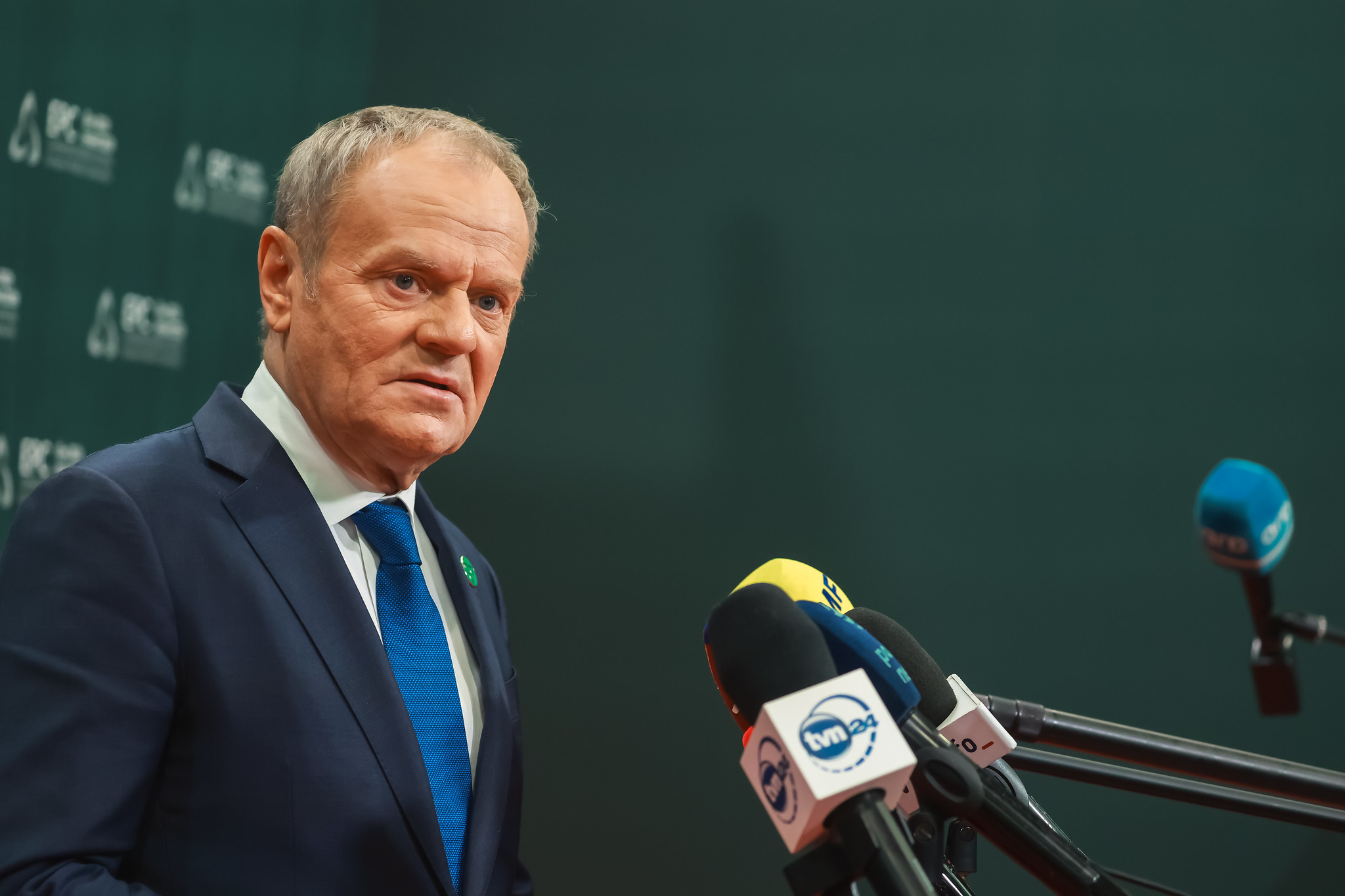
Polish Prime Minister Donald Tusk said on Friday, 27 November, that Poland had secured assurances from fellow European leaders that revenues from the EU’s carbon-emissions trading system should remain in the Polish budget rather than be redirected to Brussels. His announcement followed a summit on the European Union’s next seven-year budget, although no final agreement or legally binding exemption for Poland has yet been adopted.
Speaking to journalists after the European Council meeting in Brussels, Tusk said Poland had successfully argued against a proposal to transfer part of the proceeds from emissions allowances into the EU budget.
The prime minister maintained that his counterparts understood why the proposed changes were unacceptable to Warsaw and had committed to treating Poland differently.
- Find more news from Poland on our Homepage .
According to Rzeczpospolita’s account of his press conference, Tusk described the outcome as achieving everything Poland had sought at this stage of negotiations.
Tusk also said Poland could receive approximately €2 billion more in EU funding for agriculture and regional development under the proposed 2028–2034 budget than in the current financial period, even after the reductions being discussed in Brussels. He maintained that Poland would remain the largest beneficiary of EU funds, although the final budget has yet to be agreed.
He particularly emphasised discussions involving the EU’s six largest economies, including Poland.
However, he also acknowledged that the wider budget negotiations remained difficult and that the preliminary understandings would still need to be finalised.
Why does Poland want to keep its ETS revenues?
The dispute concerns the European Union Emissions Trading System, known as ETS.
Under the system, electricity generators and certain industrial businesses must obtain allowances covering their greenhouse gas emissions.
Some allowances are sold through auctions, generating substantial revenues that currently help finance national climate and energy policies, alongside existing EU-level programmes.
The European Commission’s proposed budget for 2028–2034 would introduce a new source of EU revenue based on these proceeds.
Its original proposal would redirect 30% of relevant ETS1 auction revenues to the EU budget.
Across the European Union, the Commission estimated that this mechanism could generate approximately €9.6 billion annually.
Poland has opposed transferring part of its national ETS revenue to Brussels, arguing that the money should remain available for domestic investment.
For Warsaw, the issue is particularly important because carbon-market revenues can help finance energy infrastructure, modernisation and the transition towards lower-emission technologies.
Keeping those funds under national control would allow Poland to retain more resources for these priorities.
EU had already offered Poland a transitional arrangement
The negotiations had already produced some concessions before Thursday’s summit.
On 21 November, European Council President António Costa presented a revised budget proposal that included special transitional arrangements for countries eligible for support from the EU’s Modernisation Fund.
Poland is among those countries.
Under Costa’s published proposal, the contribution of eligible countries’ ETS1 revenues to the EU budget would begin at 0% in 2028 and increase gradually to 30% by 2034.


This arrangement was intended to ease the financial impact on countries facing significant energy-transition costs.
Tusk’s latest remarks suggest Warsaw is seeking more favourable treatment than the previously published gradual phase-in.
However, no revised legal text confirming that Poland would retain its full national share throughout the budget period has yet been published.
The precise scope of the assurances Tusk says he received therefore remains to be established.
EU summit ends without a final budget agreement
Despite the Polish prime minister’s positive assessment, the Brussels summit did not produce an agreement on the EU’s next long-term budget.
European Council President António Costa confirmed after the meeting that leaders remained divided over the overall size of the budget, the distribution of funding and proposed new sources of EU revenue.
He indicated that negotiations would continue.
The next European Council meeting is scheduled for 17–18 December.
The EU’s long-term budget requires unanimous agreement among member states and the consent of the European Parliament. Changes to the Union’s own revenue system are subject to additional approval requirements, including national ratification where applicable.
Consequently, Tusk’s announcement should be understood as a reported political assurance rather than confirmation of a completed EU budget agreement.
What happens next?
The ETS dispute forms part of a wider disagreement about how the European Union should finance its priorities between 2028 and 2034.
Alongside carbon-market revenues, Warsaw has been pressing for the protection of EU funding for regional development and agriculture.
Poland is concerned that cuts to these programmes, combined with new contributions to the EU budget, could reduce the resources available for domestic investment.
For Tusk, securing favourable treatment on ETS revenues would represent an important negotiating achievement.
However, the final outcome will depend on whether the commitments he described are incorporated into an agreement accepted by all 27 member states.
Until then, Poland’s future share of carbon-market revenues remains a matter of negotiation.