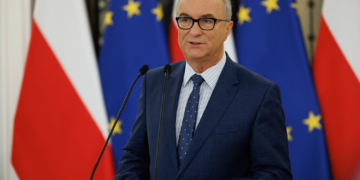


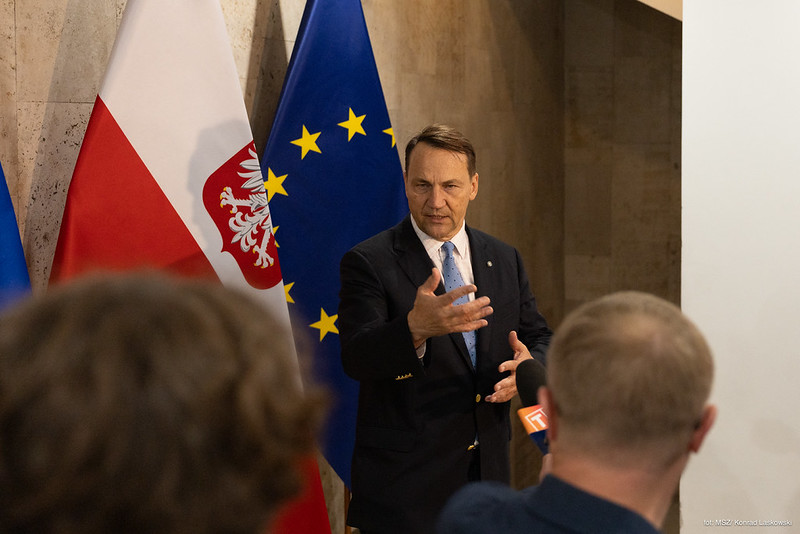
Polish Foreign Minister Radosław Sikorski has said Poland could defeat Russia “quite quickly” in the event of an attack, pointing to what he described as a decisive advantage in air power and Ukraine’s success in striking Russian energy infrastructure.
Speaking at the Yalta European Strategy conference in Kyiv, Sikorski framed the remarks as a hypothetical response to Russian aggression against Poland rather than a call for Polish military action.
“If Russia attacked us and we took our gloves off, I think we would defeat Russia quite quickly,” he said, arguing that Poland would have an “overwhelming superiority” in aviation.
- Find more news from Poland on our Homepage .
Sikorski also pointed to Ukraine’s campaign against Russian oil refineries. He said that if Ukrainian forces had managed to disable roughly half of Russia’s refining capacity over six months, Poland could potentially destroy the remainder in around six weeks.
The precise scale of the damage inflicted on Russian refining remains disputed. S&P Global Energy estimated that around 40% of Russian refining capacity was offline at the end of July, while other assessments have produced lower or higher figures depending on whether they measure damaged capacity, temporary shutdowns or actual reductions in output.
The remarks came during a period of heightened concern in Warsaw over Russian military activity close to Poland’s eastern border.
On Sunday, a Russian drone struck a train near Yahodyn in western Ukraine, close to the Dorohusk crossing into Poland. Ukrainian rail authorities said the Kyiv-Warsaw passenger service was hit around two kilometres from Polish territory, with no casualties reported. Another strike hit close to the border crossing, temporarily disrupting its operation.
Russia’s defence ministry said its forces had targeted railway infrastructure used to transport military cargo from Europe into Ukraine. Ukrainian officials, however, said a passenger train was among the objects struck.
The incident attracted additional attention because a train carrying former British prime minister Boris Johnson, former Swedish prime minister Carl Bildt and other Western figures had passed through the area shortly beforehand. Ukraine’s state railway operator suggested the diplomatic train may have been an intended target, although that has not been independently established.
Prime Minister Donald Tusk convened Polish security officials following the attacks and warned that incidents connected with Russia’s war were occurring increasingly close to Polish territory.
“Russia’s escalation is becoming a reality, and examples of it are getting closer and closer to our border,” Tusk said, adding that Poland would operate at an increased level of preparedness and had to be ready for a coordinated response with its allies.
Polish forces also increased air-defence readiness during Russian attacks on western Ukraine. Fighter aircraft, helicopters and surveillance assets were deployed, although the defence ministry said no violation of Polish airspace was detected during the operation.
The latest strikes follow warnings from Warsaw that Russia could increasingly target infrastructure connecting Ukraine with its Western neighbours.
Days before the Yahodyn attack, Tusk said Polish and Ukrainian services had prevented what he described as a “direct threat” to one border crossing. He did not disclose details but said Poland expected further attempts to disrupt routes that are important both to Ukrainian trade and to the movement of Western assistance.
Sikorski has meanwhile been pressing NATO allies to respond more assertively to Russian pressure on the alliance’s eastern flank. At the same Kyiv conference, he argued that NATO should conduct more forceful military exercises around Russia’s Kaliningrad exclave, where Moscow has transferred some conventional forces to support its war in Ukraine.
His assessment of Poland’s ability to defeat Russia should also be read within the country’s NATO membership. An armed attack on Poland could trigger the alliance’s Article 5 collective-defence mechanism, under which an attack on one member is regarded as an attack on all. Any real conflict between Russia and Poland would therefore involve calculations extending well beyond the military capabilities of the two countries alone.
Warsaw has significantly expanded defence spending and military procurement since Russia launched its full-scale invasion of Ukraine in February 2022, while successive Polish governments have treated deterrence on NATO’s eastern flank as a central security priority.
Sikorski has repeatedly said that Poland does not seek a military confrontation with Russia. At a meeting of EU foreign ministers earlier this month, he said Warsaw would support allies facing aggression while arguing that Moscow was already conducting hybrid operations against European states.
“We do not seek conflict with Russia, but Russia seems to be at hybrid war with us,” he said at the time.
The immediate focus is now on securing Poland’s frontier with Ukraine and assessing whether Russia’s increasingly frequent attacks on western Ukrainian transport infrastructure represent a broader attempt to disrupt the country’s links with NATO and EU members.