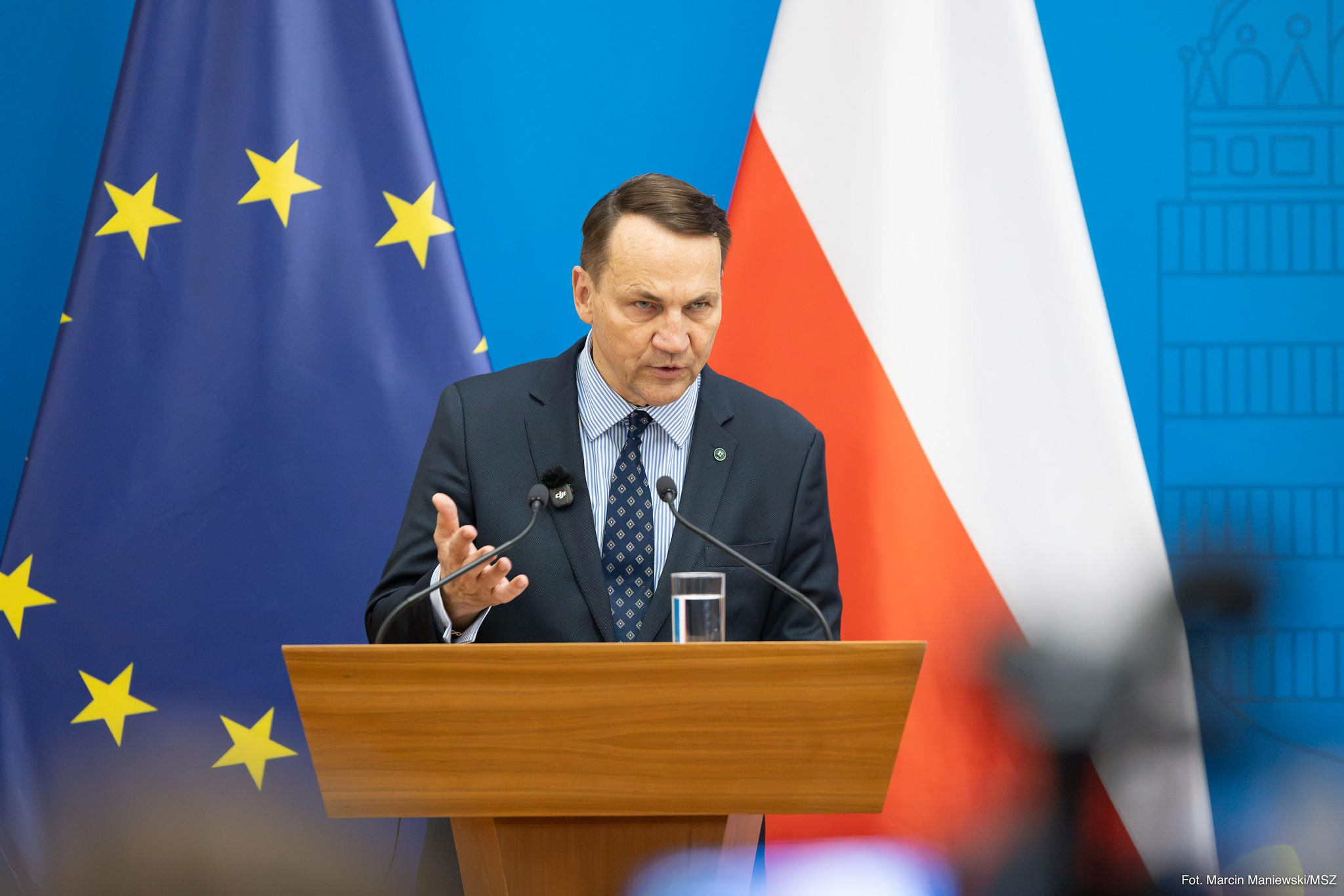
Poland has asked NATO allies to consider intercepting Russian missiles over Ukrainian territory before they reach the alliance’s borders, as Foreign Minister Radosław Sikorski argued that shooting down incoming threats at Ukraine’s request could fall within the principle of self-defence.
The proposal follows a series of Russian airspace violations involving Poland, including three cruise missiles that entered the country during a large-scale Russian attack on western Ukraine on 20 November.
According to Bloomberg, Warsaw raised the possibility of intercepting Russian missiles over Ukraine during discussions among NATO ambassadors in Brussels on Monday, 23 November.
- Find more news from Poland on our Homepage .
Some allies reportedly supported exploring the proposal, but the discussions remained preliminary and no operational decision was reached.
The development comes as Poland seeks stronger protection along NATO’s eastern flank amid growing concern about Russian missiles and drones crossing into allied territory.
Sikorski says interceptions could constitute self-defence
Speaking to Polish public radio’s Trójka station on Wednesday, 25 November, Sikorski was asked whether Poland and NATO should consider intercepting Russian missiles and drones while they were still over Ukrainian territory.
The foreign minister, who also serves as deputy prime minister, said that such action, if undertaken at Ukraine’s request against objects heading towards Poland, could fall within the definition of self-defence.
As reported by Polish Radio and the Polish Press Agency, Sikorski presented the possibility as a defensive measure rather than an immediate change in Polish military operations.
He noted that Ukraine had sought assistance with intercepting Russian aerial threats.
However, the minister did not announce that Polish aircraft or air-defence systems would begin engaging targets over Ukraine.
Any such operation would require further political and military decisions, including coordination with NATO allies.
Poland reportedly raises the proposal at NATO
Bloomberg reported on Wednesday that Poland had asked allied countries to examine whether Russian missiles approaching NATO territory could be intercepted before crossing the Ukrainian border.
The proposal was reportedly discussed at Monday’s meeting of NATO ambassadors in Brussels.
That meeting had been convened at Poland’s request following the Russian missile incursions of 20 November.
The Polish government’s official account of the NATO discussions confirms that Warsaw sought additional measures to strengthen airspace monitoring and defence.
The meeting also addressed the wider threat posed by Russian attacks on Ukraine and their consequences for neighbouring NATO countries.
The government statement did not publicly confirm an agreement to intercept missiles over Ukrainian territory.
The reported proposal would represent a significant change from the existing approach, under which NATO members primarily defend their own airspace without routinely engaging Russian missiles over Ukraine.
Three Russian missiles entered Poland on 20 November
The renewed debate follows an incident on Friday, 20 November, when three Russian Kh-101 cruise missiles entered Polish territory during an extensive attack on western Ukraine.
Polish authorities identified the impact locations as Nowy Lipowiec in Lublin province, and Rudnik nad Sanem and Mołodycz in Subcarpathian province.

According to the Polish Defence Ministry’s account of the incident, no injuries were reported on Polish territory.
The incursion prompted Warsaw to seek urgent consultations with its NATO partners.
At the extraordinary North Atlantic Council meeting on 23 November, Poland requested additional surveillance and reconnaissance capabilities.
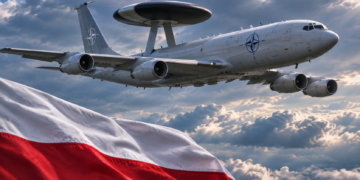
NATO subsequently announced plans to strengthen monitoring of Polish airspace, including the deployment of an airborne warning and control aircraft.
Another Russian drone crossed into Polish airspace
The security situation was further complicated when a Russian drone entered Polish airspace late on Monday, 23 November.
Polish military authorities said the unmanned aircraft was detected and tracked during Russian attacks on neighbouring Ukraine.
Permission to engage the aircraft was granted, but Polish forces ultimately refrained from firing as the drone changed course and returned towards Ukrainian territory.
Officials cited concerns about the possible consequences of shooting it down, including risks to civilians and property.
The incident highlighted the operational difficulties facing air-defence commanders when responding to fast-moving threats near populated areas.
It also added urgency to discussions about whether hostile missiles and drones should be intercepted before they cross into NATO territory.
NATO must balance defence and escalation risks
Intercepting Russian missiles over Ukraine would raise important military, political and legal questions.
Although Ukraine has requested additional international assistance in defending its airspace, NATO governments have so far avoided establishing a routine allied interception mission over Ukrainian territory.
Such an operation would require decisions about engagement authority, identification of targets, coordination with Ukrainian air defences and the potential consequences of direct military action against Russian weapons.
Polish Defence Minister Władysław Kosiniak-Kamysz has also emphasised that Poland and NATO are not at war with Russia, despite the serious security threats facing the alliance.
The distinction remains central to discussions about how far NATO’s defensive operations should extend.
For now, Poland’s proposal remains under consideration rather than an approved military policy.
Nevertheless, the debate illustrates growing pressure on NATO to reconsider how it protects its eastern members as Russian attacks increasingly threaten territory beyond Ukraine’s borders.