

A Russian missile or air strike against a weapons factory inside a NATO country would amount to an Article 5 collective-defence case, European Commissioner for Defence and Space Andrius Kubilius has said, responding to Moscow’s warning that European arms plants supplying Ukraine could become Russian military targets.
Kubilius made the remarks on Thursday after Russian Foreign Ministry spokeswoman Maria Zakharova warned that weapons factories in European countries producing arms for Ukraine should not assume that they were safe from Russian attack.
“If Russia will hit our factories in European territories, that would be Article 5,” Kubilius said in comments reported from Brussels, where he was attending a meeting of the European Parliament’s Security and Defence Committee.
- Find more news from Poland on our Homepage .
An aide to Kubilius subsequently clarified that he was referring specifically to a conventional air or missile strike against a factory, rather than automatically treating every act of sabotage or other hybrid operation as an Article 5 attack.
That distinction is important because NATO itself says whether an incident qualifies as an “armed attack” under Article 5 must be assessed on a case-by-case basis. The alliance also stresses that Article 5 does not automatically prescribe one identical military response from every member: each ally is obliged to assist but determines what action it considers necessary, which may or may not include armed force.
Kubilius is the European Commission’s Commissioner for Defence and Space. He is not a NATO official and does not have the authority to determine independently whether the alliance would invoke Article 5.
Russian warning followed Polish Patriot proposal
The dispute has direct relevance for Poland.
Zakharova issued the Russian warning while responding to a question about Warsaw’s proposal to host production of Patriot interceptor missiles intended to support Ukraine.
On 30 September, she said that weapons factories in European countries supplying Ukraine were “potential military targets for Russia” and warned that such facilities should not assume their location outside Ukraine made them safe.
Moscow argues that European states producing and supplying weapons for Ukraine are becoming directly involved in the war.
NATO governments reject that interpretation and maintain that providing military assistance to Ukraine does not make allied territory a legitimate target for Russian attack.
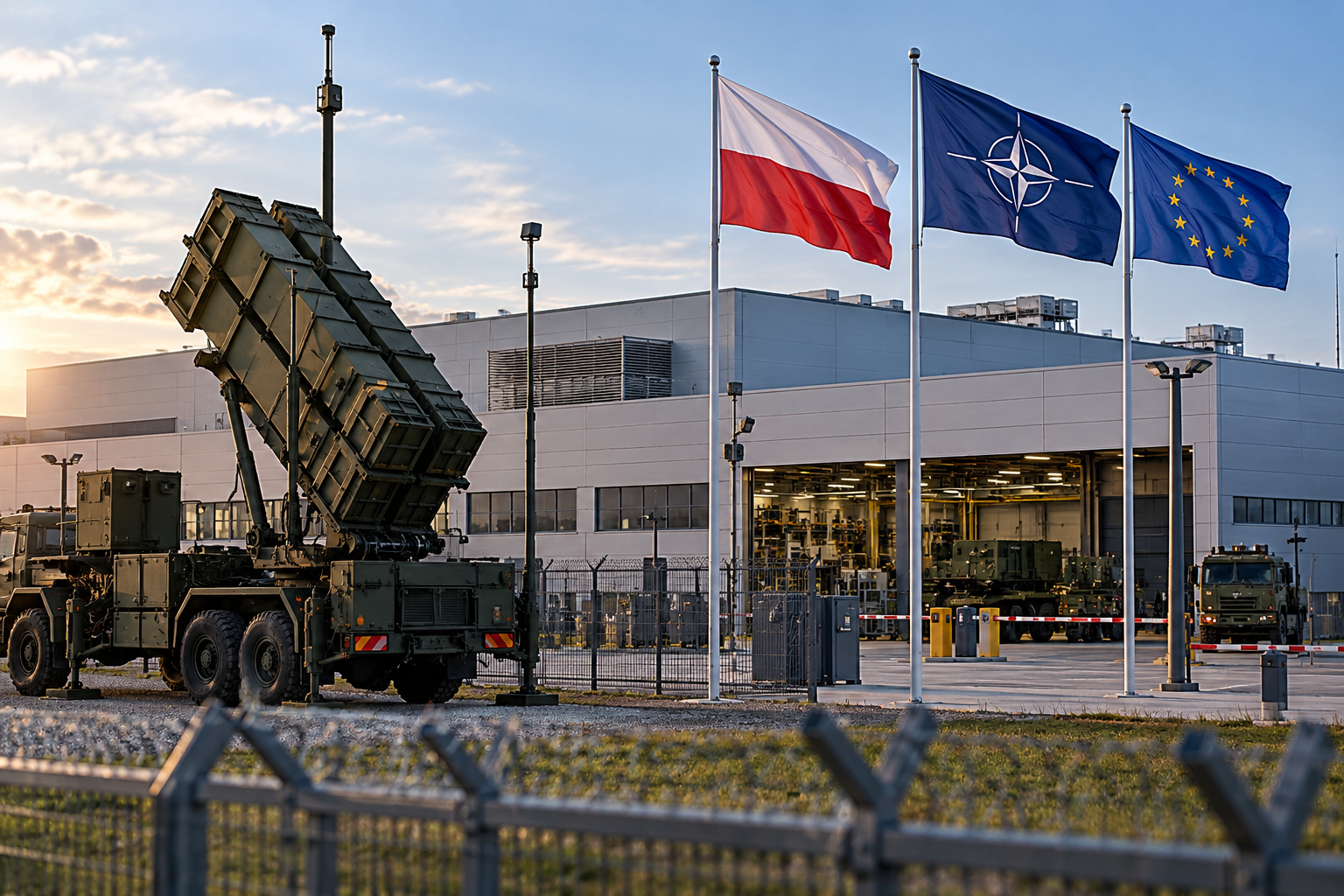
Poland recently renewed its proposal to locate Patriot interceptor production on Polish soil if the required US licensing and industrial agreements can be secured.
Deputy Defence Minister Magdalena Sobkowiak-Czarnecka has argued that Poland offers a safer production location than Ukraine, where defence-industrial plants remain exposed to Russian missile and drone attacks.
Poland is separately pursuing a longer-term ambition to establish Patriot missile servicing and production capacity for its own armed forces.
A direct strike would cross a different threshold
The latest exchange highlights the difference between the hybrid activity European governments increasingly attribute to Russia and an overt Russian military strike against NATO territory.
European governments have investigated sabotage, arson, cyberattacks and other suspicious incidents affecting defence companies and infrastructure, with some incidents publicly attributed to Russian intelligence services.
But an acknowledged Russian missile or bombing attack against a factory on the territory of Poland or another NATO member would be qualitatively different.
Article 5 of the North Atlantic Treaty states that an armed attack against one member in Europe or North America is considered an attack against all members.
NATO’s current guidance says the alliance would consider whether a particular incident constituted an armed attack and, if the attacked ally sought collective action, members would then provide assistance under the treaty.
That means Kubilius’s statement is a political assessment of how such an overt Russian attack should be treated, rather than a formal NATO decision made in advance.


His comments nevertheless underline how seriously European officials regard Moscow’s warning.
At NATO’s Ankara summit in July, allied leaders again reaffirmed their collective-defence commitment and stated that an attack on one ally would be treated as an attack on all.
Poland already expanding its defence industry
The dispute comes as Poland rapidly increases domestic defence production and deepens industrial cooperation with major US and European weapons manufacturers.
Polish companies are already involved in manufacturing components for the Patriot system, while Warsaw is seeking to move further into missile production and maintenance.
That industrial expansion is part of a much broader effort to increase Poland’s military capacity while supporting Ukraine.
The country also remains the main logistical gateway for Western military assistance entering Ukraine. The Polish Defence Ministry says more than 80% of donated military equipment for Ukraine passes through Polish territory.
Russian officials have repeatedly criticised that role.
Zakharova’s latest comments, however, move beyond criticism of weapons shipments by explicitly describing European manufacturing facilities themselves as potential Russian military targets.
Kubilius’s response sets out the opposite position: if Moscow were to turn that warning into an overt military strike on NATO territory, he believes the attack would cross the threshold from threats and hybrid confrontation into the alliance’s collective-defence framework.
For Poland, the exchange is particularly significant because the Russian warning emerged directly from discussion of a possible Patriot production facility on Polish soil.