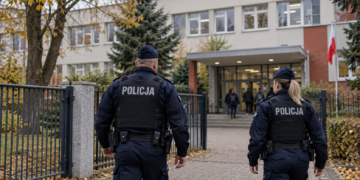


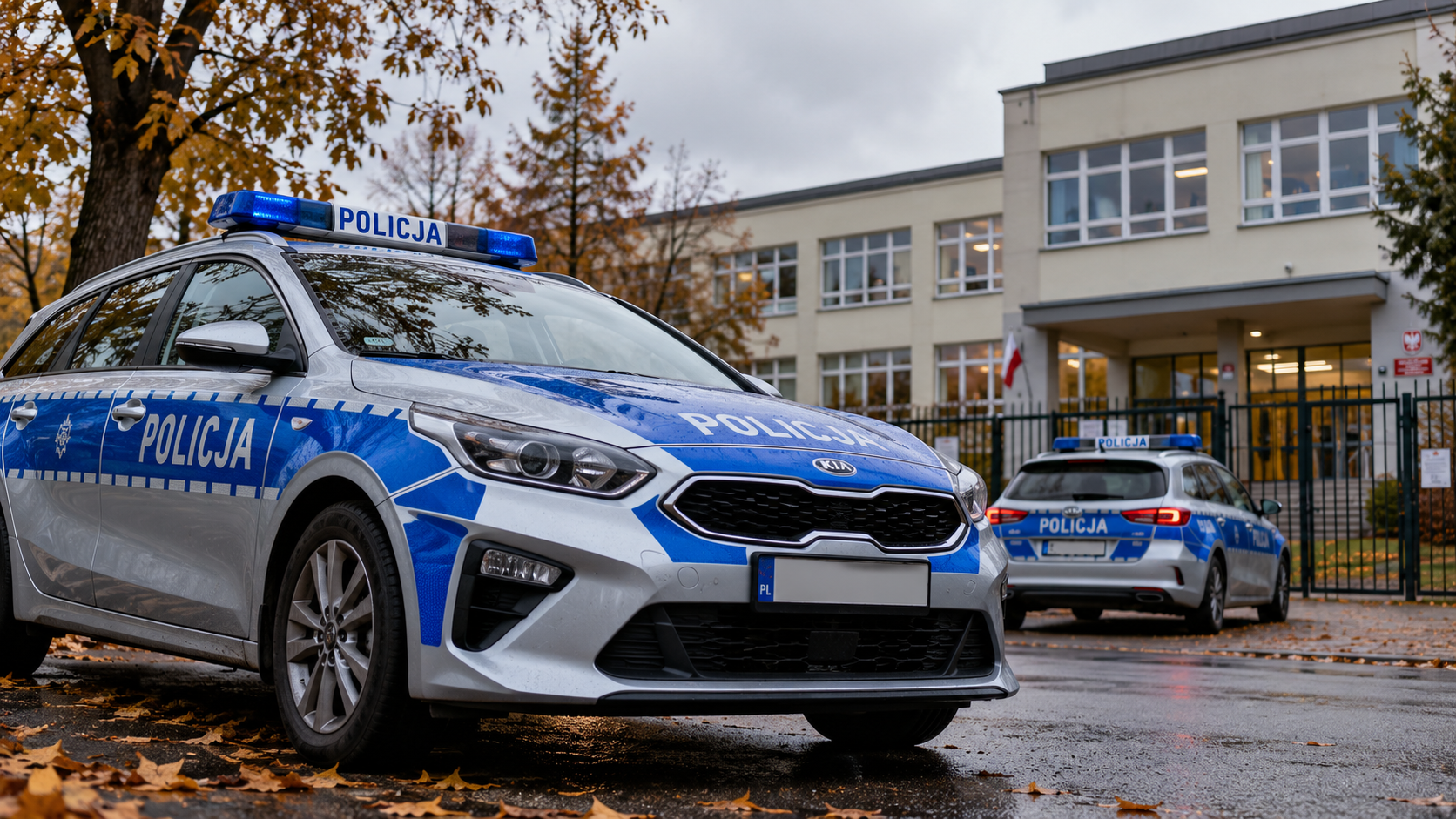
Polish police have detained 59 people and carried out nearly 35,000 security checks at educational establishments across the country following a nationwide operation launched in response to two serious school attacks and threats circulating online. Updated figures released on Friday evening, 9 October, show a sharp expansion of the response, with more than 24,000 police officers involved and 172 incidents under investigation over suspected criminal offences. Authorities have stressed that no evidence has emerged of an organised nationwide campaign of school attacks.
The figures, released by Poland’s National Police Headquarters, represent a substantial increase on the statistics presented by government officials earlier on Friday.
At midday, the Interior Ministry reported approximately 15,000 school checks and 19 detentions. By 5pm Polish time, the detention count had risen to 59, while the reported number of checks had more than doubled.
- Find more news from Poland on our Homepage .
According to the latest police figures reported by the Polish Press Agency, officers had identified 172 incidents requiring investigative action because of reasonable suspicion that an offence had been committed.
Police said they were continuing to investigate those incidents while maintaining round-the-clock monitoring of online threats and responding to new reports.
The figures describe the scale of the police response. They do not mean that 59 attacks were prevented or that all those detained were preparing acts of violence.
More than 24,000 officers involved in nationwide operation
The security operation was launched following two violent incidents at schools in Poland’s Mazovia region on 7 and 8 October.
The first occurred at a vocational school in Ostrołęka, where a 19-year-old attacked people with a knife, injuring nine others.
The following day, a 15-year-old former pupil attacked staff at a primary school in Leszczydół-Nowiny, near Wyszków. A 37-year-old school employee died, and two other people were injured.
The incidents prompted fears of further violence, particularly after social-media messages began circulating with claims about possible additional attacks.
Prime Minister Donald Tusk ordered an increased police presence around educational establishments.
In an official statement published on Friday, the Ministry of the Interior and Administration confirmed that more than 24,000 officers had been mobilised as part of the response.
Police were supported by municipal guards, while the Central Bureau for Combating Cybercrime (CBZC) worked with Poland’s Internal Security Agency (ABW) to monitor potential threats circulating online.
The operation included increased patrols around schools, inspections of educational facilities and checks on reports of potentially dangerous behaviour.
The evening figures indicate that the operation continued to expand throughout Friday.
The reported figure of nearly 35,000 checks should not automatically be interpreted as 35,000 distinct schools visited. The figures released so far do not provide a sufficiently detailed breakdown to establish whether repeat checks are included or how different types of educational establishments were counted.
Police investigate 172 incidents involving suspected offences
The national police headquarters reported that officers were taking investigative action in 172 incidents involving reasonable suspicion of criminal wrongdoing.
These included reports of threats directed at pupils or teachers, suspicious online activity and concerns about potentially dangerous objects being brought onto school premises.
Earlier on Friday, police reported several interventions involving teenagers suspected of making threats or possessing weapons at school.
Among the incidents was the detention of a 14-year-old in Warsaw’s Mokotów district after officers found a knife and firecrackers.

Police also investigated threatening videos and messages allegedly circulated by teenagers in other parts of Mazovia.
However, the 172 incidents reported on Friday evening should not be regarded as 172 confirmed crimes.
Likewise, the 59 detentions represent people taken into custody or otherwise detained during the operation, not individuals found guilty of an offence.
Authorities have not published a comprehensive breakdown establishing how many of those detained have been formally charged, their ages or the exact suspected offences in every case.
More than 300 reports of potential threats
The Interior Ministry also confirmed that police had received more than 300 reports of potential threats since Thursday, 8 October.
The reports came from adults and young people concerned about suspicious behaviour, online messages or the possibility of further incidents.
Interior Minister Marcin Kierwiński said police had checked the information received and would continue their preventive operation while concerns remained.
The reports are not equivalent to confirmed criminal incidents. Some may relate to unsubstantiated rumours, while others have led to formal police investigations.
Authorities have urged parents, teachers and pupils to report credible concerns directly to law enforcement rather than circulate unverified warnings online.
The rapid spread of threatening content has become a significant part of the investigation.
In one case, a 17-year-old from Przasnysz was charged after allegedly creating and circulating an AI-generated video containing threats relating to a school.
Police said the recording had spread beyond its original audience, contributing to concerns about further violence.
The teenager was charged with making a false alarm and criminal threats and placed under police supervision.
No evidence of coordinated school attacks
Despite widespread claims circulating online, Polish authorities have not established that the recent school attacks were connected or formed part of a coordinated campaign.
The government has also rejected claims that investigators have verified the existence of an organised online challenge encouraging attacks.
According to the Interior Ministry’s assessment, analysis of electronic devices seized during investigations had not substantiated the rumours about such a challenge.
Kierwiński said there was no firm evidence linking the incidents in Ostrołęka, Leszczydół-Nowiny and a separate case involving a suspected planned attack in Sierpc.
However, the authorities have not ruled out investigating possible connections as inquiries continue.
Deputy Prime Minister and Digital Affairs Minister Krzysztof Gawkowski also said there was no confirmed evidence of a coordinated nationwide operation.
The distinction remains important. Police are investigating individual threats and suspected offences, but the existence of an organised campaign has not been established.
Nearly 60 schools closed amid security concerns
The situation has also disrupted education across Poland.
Education Minister Barbara Nowacka confirmed that 59 schools were closed on Friday following the incidents and subsequent security concerns.
According to figures presented by the education minister, 45 closures occurred in Mazovia, the region where the two attacks took place.
Another nine schools closed in Kujawsko-Pomorskie, three in Świętokrzyskie, and one each in Podlaskie and Warmińsko-Mazurskie.
Nowacka explained that the closures were decisions taken by local authorities and school administrators, rather than a nationwide order issued by the Education Ministry.
Some affected establishments arranged alternative childcare or educational activities.
The minister also announced plans to strengthen school preparedness through additional exercises covering different emergency situations.
Police operation to continue
The Interior Ministry has said increased patrols, security checks and online monitoring will continue while authorities assess possible threats.
Police are also examining access controls at educational establishments and working with local authorities and school administrators to improve security arrangements.
The latest figures underline the scale of the national response to events that began at two schools in Mazovia but rapidly generated concerns across the country.
By Friday evening, tens of thousands of police checks had been reported, thousands of officers had been deployed and dozens of people had been detained.
Nevertheless, investigators have not established that the original attacks formed part of a coordinated campaign.
The immediate challenge for the authorities is to investigate credible threats, maintain school security and prevent unverified online claims from generating further public anxiety.